AIchips & hardwareNVIDIA GPUs
OpenAI reorganizes teams to build audio-based AI hardware products
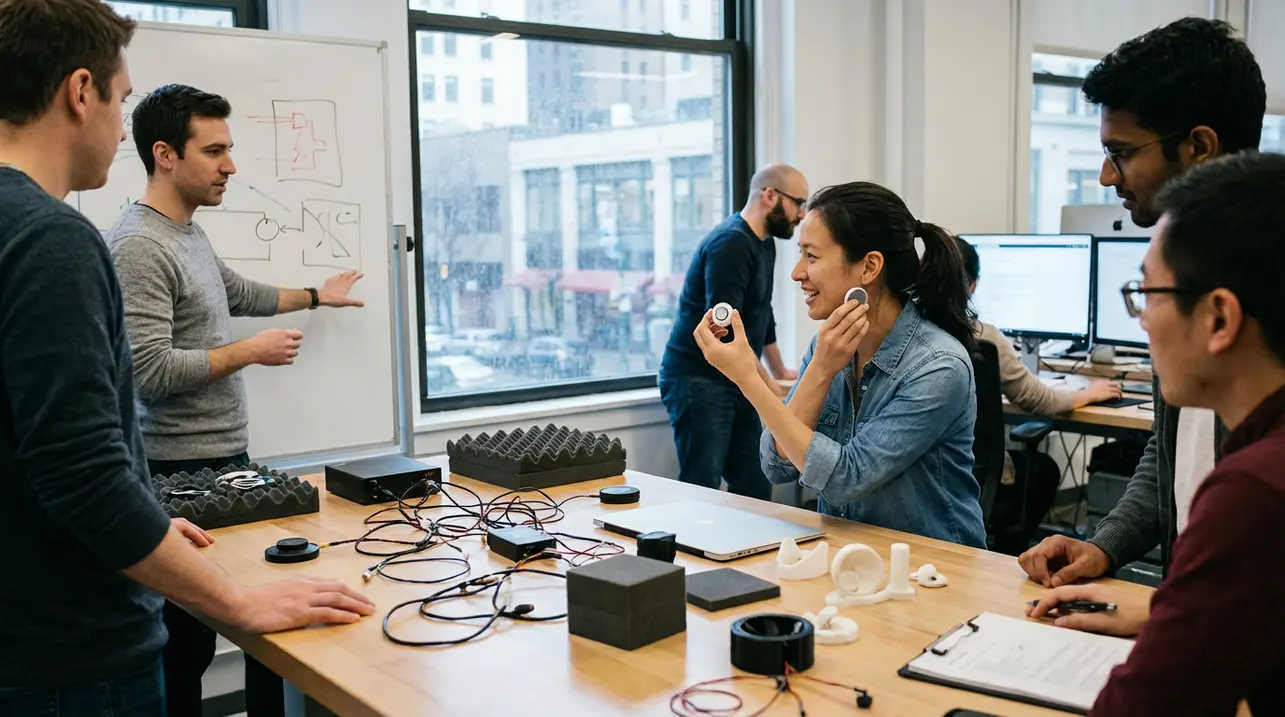
In a strategic pivot that signals a deeper commitment to a multimodal future, OpenAI has initiated a significant internal reorganization, redirecting talent and resources toward the development of audio-based AI hardware products. This move, while perhaps surprising to some, is a logical escalation in the industry's long-standing quest to move beyond the screen-dominated paradigm that has defined human-computer interaction for decades.The company's stated ambition—to change the fact that voice has lagged in adoption—is not merely about improving existing smart assistants but about architecting a fundamental shift in how we interface with artificial intelligence. The implications are profound, touching on everything from user privacy and data sovereignty to the very nature of ambient computing.Historically, voice interfaces have been hamstrung by a combination of technical limitations and user skepticism. Early iterations were often brittle, requiring precise commands and failing miserably in noisy environments, which eroded trust.Furthermore, the always-listening model of devices like smart speakers sparked legitimate privacy concerns, creating a psychological barrier to widespread, seamless adoption. OpenAI appears to be betting that its advances in core AI models, particularly in real-time speech recognition, natural language understanding, and acoustic reasoning, can now overcome these historical hurdles.By moving into dedicated hardware, they seek to control the entire stack—from the microphone array and onboard processing chips to the latent space of the large language model—optimizing each layer for a fluid, context-aware, and private audio-first experience. This isn't about building a better Alexa; it's about creating an AI companion that understands tone, nuance, and environmental context, potentially operating with minimal latency through edge computing.Experts in human-computer interaction note that the success of such an endeavor hinges on more than raw technical prowess. Dr.Elena Vance, a professor at MIT's Media Lab, commented, 'The hardware form factor is critical. Will it be wearable? A stationary home hub? Something entirely new? The device must feel like a natural extension of the user, not an intrusive gadget.OpenAI's challenge is to design an object that people want to have around, constantly, which is a design and sociological problem as much as an engineering one. ' From a competitive standpoint, this move positions OpenAI directly against giants like Apple, Google, and Amazon, all of whom have deeply entrenched ecosystems built around their voice assistants.However, OpenAI's potential advantage lies in the perceived superiority and flexibility of its foundational models. A hardware product powered by a model like o1 or a future iteration could offer reasoning and conversational abilities far beyond today's scripted responses, enabling complex, multi-turn planning, tutoring, and creative collaboration purely through voice.The business model itself is a fascinating open question. Will they adopt a traditional hardware-sales approach, a subscription for advanced AI features, or some hybrid? The reorganization suggests a dedicated, focused team is now wrestling with these very product-market fit questions.The risks are substantial. Hardware is a notoriously difficult, low-margin arena with long development cycles, a stark contrast to the rapid iteration of software.A failed product launch could damage the brand's elite software-centric reputation. Moreover, it intensifies scrutiny from regulators already concerned about AI dominance and data practices.Yet, the potential reward is the holy grail: creating the primary, intuitive gateway to AGI for the average person. If successful, OpenAI wouldn't just be selling a device; it would be defining the next dominant platform for human-AI interaction, making the conversational agent the central computer in our lives. This shift from pure software to integrated hardware is a bold, all-in bet that the future of AI isn't just on our screens, but in the very air around us, waiting for a question, a command, or simply a conversation.
#OpenAI
#audio AI
#hardware products
#speech synthesis
#voice assistants
#AI chips
#lead focus news