SciencemedicineClinical Trials
Mother's video of toddler's hip dysplasia recovery gains online support in China.
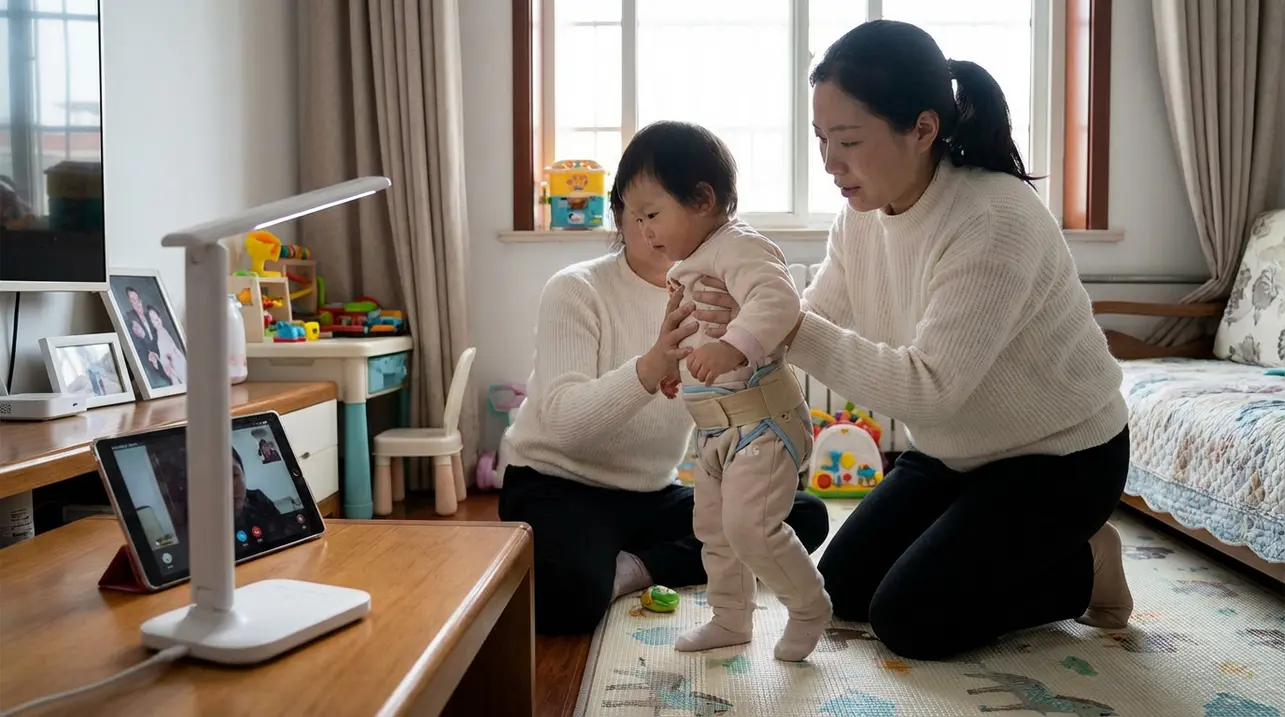
It’s a story that begins in the quiet, private world of a family home, a narrative far removed from the grand stages of politics or finance, yet one that has resonated with millions across China. A mother, whose name we might never know but whose journey we’ve all now shared a piece of, began documenting her toddler daughter’s recovery from developmental dysplasia of the hip (DDH).The little girl, affectionately nicknamed Tiantian, was diagnosed at just one year old, a moment that undoubtedly shifted the axis of her family’s world. What followed wasn’t just a medical protocol; it was a daily, intimate chronicle of resilience, captured in short videos that have since amassed over a million likes on Chinese social media, transforming a personal struggle into a collective touchstone.By last September, the videos showed a remarkable outcome: Tiantian’s problem was almost completely cured, her walking posture quite normal—a testament not just to modern orthopedics but to the profound, often unheralded, labor of caregiving. This phenomenon taps into something deeper than viral content; it speaks to a universal human yearning for narratives of overcoming, for witnessing the quiet heroism in ordinary life.In a digital landscape often criticized for fostering comparison and anxiety, here was a raw, unfiltered look at a challenge many families face but seldom discuss so publicly. DDH itself, a condition where the hip socket doesn’t fully cover the ball of the upper thighbone, affects roughly 1 in 1,000 newborns, with early detection and consistent, often arduous, non-surgical interventions like harnesses or braces being crucial for a full recovery.Tiantian’s story brilliantly illuminates this critical window of early childhood development, where parental diligence—the daily exercises, the careful monitoring, the emotional fortitude—becomes the primary therapy. The online outpouring of support reflects a societal shift in China, where platforms like Douyin are increasingly used not just for entertainment but for building communities of shared experience, offering solace and practical advice.One can’t help but reflect on the psychological burden carried by parents in such situations, the silent fears and relentless hope that accompany each step of rehabilitation. The mother’s decision to share this journey publicly is a modern act of vulnerability that has, in turn, created a space for empathy on a massive scale.It challenges the often-curated perfection of family life online, presenting instead a narrative of struggle and triumph that is both specific in its medical details and universal in its emotional arc. From a sociological perspective, this trend highlights how digital storytelling can democratize health narratives, reducing stigma and providing invisible support networks.
#medical recovery
#hip dysplasia
#toddler rehabilitation
#social media support
#China
#human interest story
#featured