SciencearchaeologyExcavations and Discoveries
Egypt’s Karnak Temple may have risen from water like a creation myth
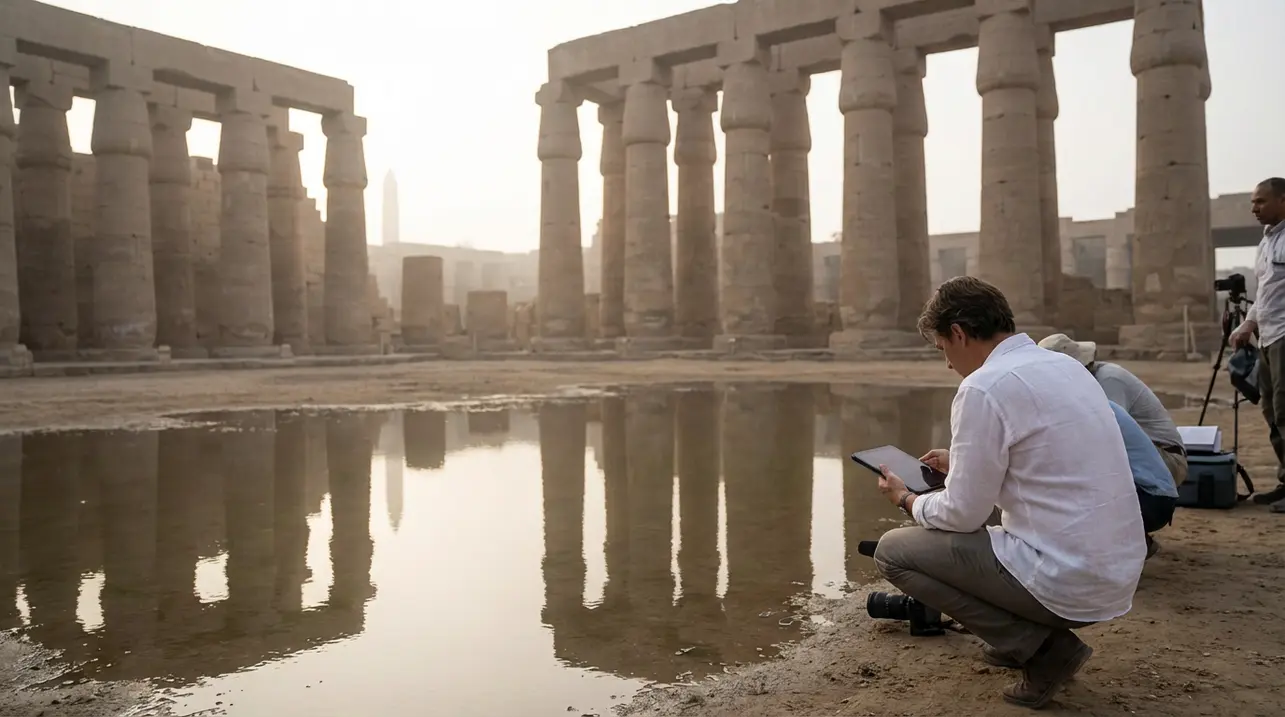
The story of Egypt’s Karnak Temple, that colossal testament to pharaonic ambition, has always been one of divine kingship and celestial alignment. But new geological research peels back another, even more profound layer, revealing a prologue written not by architects but by the Nile itself.It turns out the temple complex, dedicated to the god Amun-Ra, was constructed on a rare island of high ground, a fortunate anomaly sculpted over millennia as the river’s channels meandered and shifted. Before this natural podium emerged, the entire area was a perpetually flooded basin, utterly inhospitable for permanent settlement.This isn't just a neat bit of geographical trivia; it’s a revelation that catapults Karnak from a mere feat of engineering into the realm of living myth. The landscape’s evolution mirrors, with almost uncanny precision, the ancient Egyptian creation narrative central to their cosmology: the primordial mound, the *benben*, rising from the chaotic waters of Nun to become the first solid ground, the stage upon which the sun god initiated life.This suggests the site’s selection was an act of profound symbolic recognition, a deliberate anchoring of the state’s most important religious center to the very template of creation. Think of it as the ancient equivalent of building your capital on the spot where, according to legend, the world began.The practical advantages of a stable, elevated foundation are obvious, but the theological resonance is staggering. It means every priest who walked its halls, every pharaoh who made offerings in its inner sanctum, was literally standing on a terrestrial echo of the first moment of existence, directly connecting their rituals to the generative power of the cosmos.This discovery, led by researchers piecing together ancient riverbeds and sediment cores, forces us to reconsider the sophistication of early site selection. It wasn't merely about proximity to the Nile for transport or defense; it was a form of geomancy, reading the sacred script written in the land itself.The ‘island’ of Karnak became a permanent, monumental benben, with its pylons and obelisks mimicking the mound’s ascent. It also adds a poignant dimension to the temple’s epithet as “The Most Select of Places.” Select, indeed, by the forces of nature long before human hands laid a stone. This interplay between environment and belief system offers a powerful case study in how foundational myths are often rooted in observable, if awe-inspiring, natural phenomena.Similar parallels exist globally, from ziggurats in Mesopotamian floodplains representing sacred mountains to Mesoamerican pyramids aligned with celestial bodies. Karnak’s story, however, is uniquely tied to the life-giving, yet destructive, cycle of the Nile’s inundation.
#Karnak Temple
#Nile river
#ancient Egypt
#creation myth
#archaeology
#geology
#featured