SciencearchaeologyExcavations and Discoveries
Archaeological Find Challenges Viking Role in Early Irish Towns
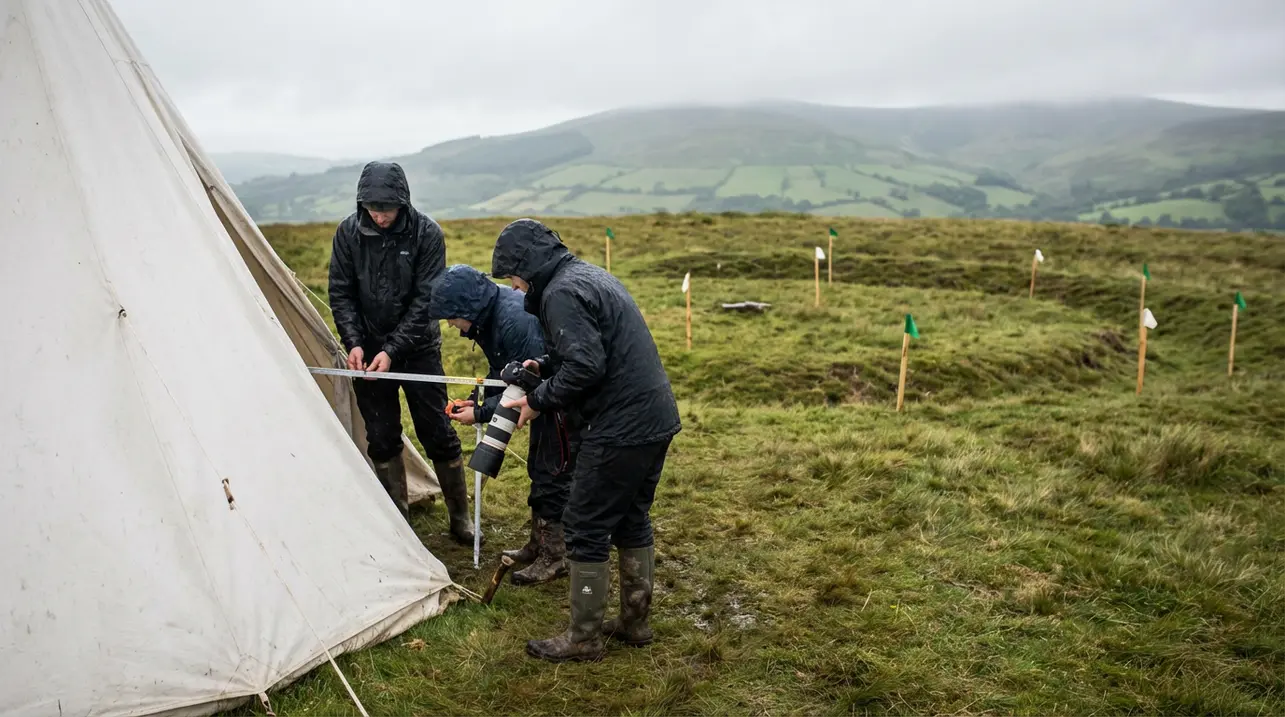
In the quiet, rolling hills of County Wicklow, a discovery is quietly rewriting the narrative of early medieval Ireland, challenging long-held assumptions about the Viking role in the genesis of its first towns. Dr.Dirk Brandherm and his team, employing advanced LiDAR technology, have identified over 600 suspected house platforms within the Brusselstown Ring, a massive hillfort in the Irish midlands. This isn't just a collection of old stones; it's a profound ecological and historical footprint, a complex urban-like settlement that appears to have thrived centuries before Viking longships ever darkened Irish shores.The implications are seismic, forcing a fundamental re-evaluation of a period often framed by the dichotomy of native Gaelic society and Norse invaders. For decades, the dominant historical narrative, supported by archaeological finds in places like Dublin, Waterford, and Limerick, positioned the Vikings as the primary catalysts for urbanization in Ireland.They were the bringers of trade, coinage, and the structured, densely populated settlements we recognize as towns. The Brusselstown Ring evidence, however, paints a picture of sophisticated indigenous social organization and economic activity on a scale previously unimagined for the early medieval period in Ireland.Imagine a landscape not of scattered, isolated ringforts, but of a coordinated, possibly seasonal, gathering place—a proto-urban center with hundreds of dwellings, hinting at craft specialization, administration, and a level of population density that rivals later Hiberno-Norse towns. This discovery is akin to finding a lost layer in a delicate ecosystem; it changes our understanding of the entire environment's development.The research, painstakingly pieced together from aerial surveys and ground-truthing, suggests these platforms could date from as early as the 6th or 7th centuries, a full two hundred years before the first recorded Viking raids. It speaks to a society capable of large-scale collective action, potentially for political assemblies, major religious festivals, or extensive trade fairs.Experts like Dr. Stephen Davis of University College Dublin note that this forces us to see the Viking towns not as alien implants, but as phenomena that grafted onto, and perhaps accelerated, pre-existing patterns of centralized gathering and exchange.The consequences of this find ripple beyond academia. It recalibrates Ireland's national story, elevating the complexity of its early kingdoms and chieftains, and challenges the simplistic 'civilizer versus barbarian' trope often attached to the Viking Age.The data, a silent testament etched into the earth by LiDAR, tells a story of endogenous growth and social complexity. It suggests that the seeds of urban life were sown deep within Irish soil, nurtured by local political and economic forces, long before external catalysts arrived.
#featured
#archaeology
#Vikings
#Ireland
#Brusselstown Ring
#house platforms
#historical discovery
#lead focus news