

Politics
Mike Johnson Squashes Another Internal Revolt Over Defense Bill
MA
Mark Johnson
6 months ago7 min read
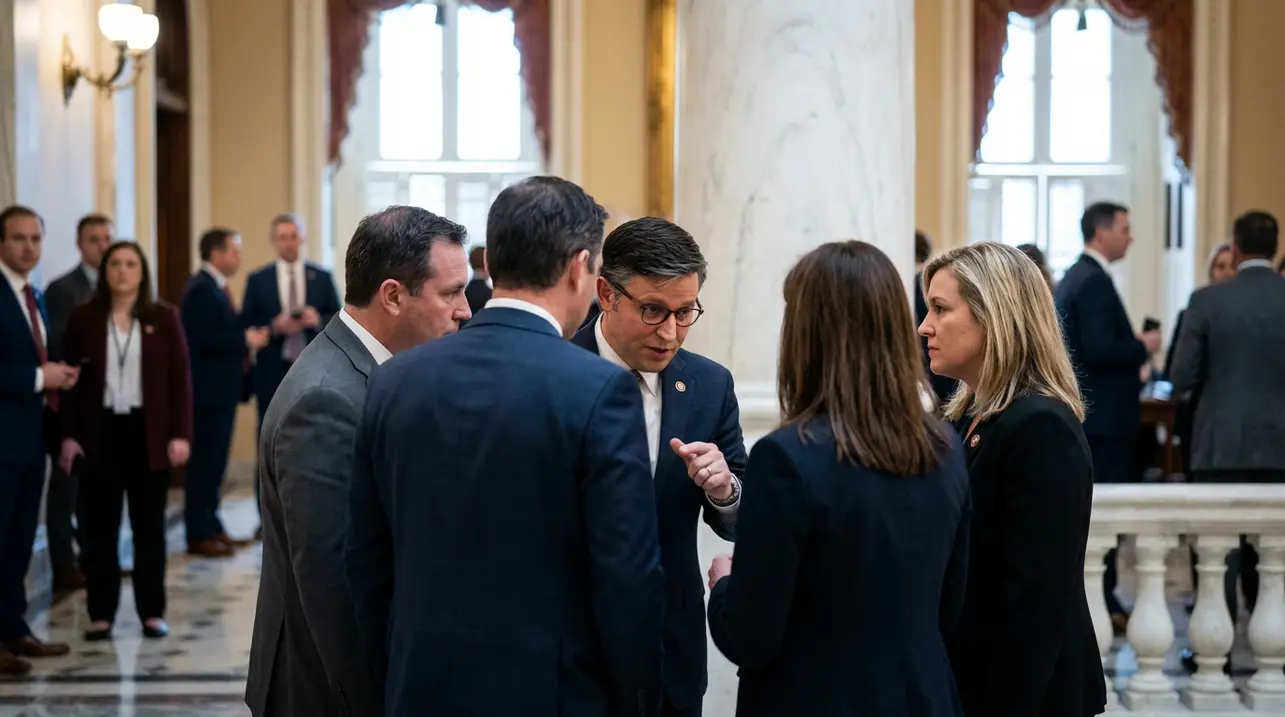
For the second time in as many weeks, Speaker Mike Johnson has been forced to deploy the full arsenal of his leadership team to quell a rebellion within his own ranks, this time over the procedural rule vote needed to advance the colossal $900 billion National Defense Authorization Act. This isn't just a routine legislative skirmish; it's a stark symptom of a deeper, more systemic crisis crippling the House Republican majority.Rule votes, historically mere formalities where the majority party marches in lockstep, have morphed into the primary battlefield for disgruntled members to publicly flog their leadership, holding the chamber's entire legislative agenda hostage to their grievances. The scene on the House floor Wednesday afternoon was a masterclass in high-pressure political theater: Johnson, alongside Majority Whip Tom Emmer and Conference Chair Lisa McClain, engaged in a tense, hour-long persuasion campaign targeting high-profile defectors like the fiery Marjorie Taylor Greene of Georgia and the libertarian-leaning Thomas Massie of Kentucky.While Massie ultimately stood as the lone GOP 'no' vote, the leadership's intense lobbying succeeded in flipping Greene, along with fellow conservatives Tim Burchett, Anna Paulina Luna, and Lauren Boebert, from 'nay' to 'yea. ' Yet, the victory was narrow and hard-won, with several moderates also initially withholding their support, only relenting after direct appeals.The final tally, 215-211, after the typically five-minute vote was held open for over an hour, underscores the razor-thin margins and chronic instability defining Johnson's speakership. This pattern of internal sabotage is not an anomaly but a calculated strategy that has become endemic.Just last week, a similar revolt targeted a rule for legislation concerning name, image, and likeness rights in college sports; while that rule eventually passed, the underlying bill was later scrapped when it became clear leadership lacked the votes for final passage—a telling sequence that reveals these procedural fights are often just the opening salvo in a longer war of attrition. Johnson's tenure has been marked by these marathon vote sessions, a tactic of necessity that earlier this year led the House to break its record for the longest-ever vote, also on a rule.Behind the scenes, as Axios reported, GOP whips were deeply concerned they lacked the votes, a fear that proved justified and highlights a leadership apparatus perpetually on the brink. The big picture here is one of a fractured conference where the traditional levers of power—committee assignments, fundraising support, the prestige of the speaker's office—have lost their potency.Individual members, particularly from the party's right flank, have realized that withholding their vote on these procedural gateways grants them outsized influence, allowing them to extract concessions or simply register protest without the political cost of voting against popular final legislation. This constant state of crisis management consumes precious legislative time, demoralizes the rank-and-file, and projects an image of chaos to the electorate and America's adversaries alike, especially when the bill in question is the foundational policy document for the nation's defense.The long-term consequences are severe: a weakened speaker's negotiating position with the Senate and the White House, an inability to advance a cohesive party agenda, and the very real risk that critical government functions, from defense funding to averting shutdowns, become entangled in these internal grudge matches. For Johnson, each narrowly averted revolt may feel like a tactical win, but strategically, it reinforces a dangerous precedent that empowers every dissatisfied member to become a potential veto point, ensuring that the path forward for the Republican House remains a daily, draining battle for survival rather than a march toward governance.
#Mike Johnson
#House Republicans
#defense bill
#rule vote
#internal rebellion
#procedural crisis
#weeks picks news
Stay Informed. Act Smarter.
Get weekly highlights, major headlines, and expert insights — then put your knowledge to work in our live prediction markets.
Related News
Comments
It's quiet here...Start the conversation by leaving the first comment.