Hong Kong Mourns Fire Victims Ahead of Controlled Elections
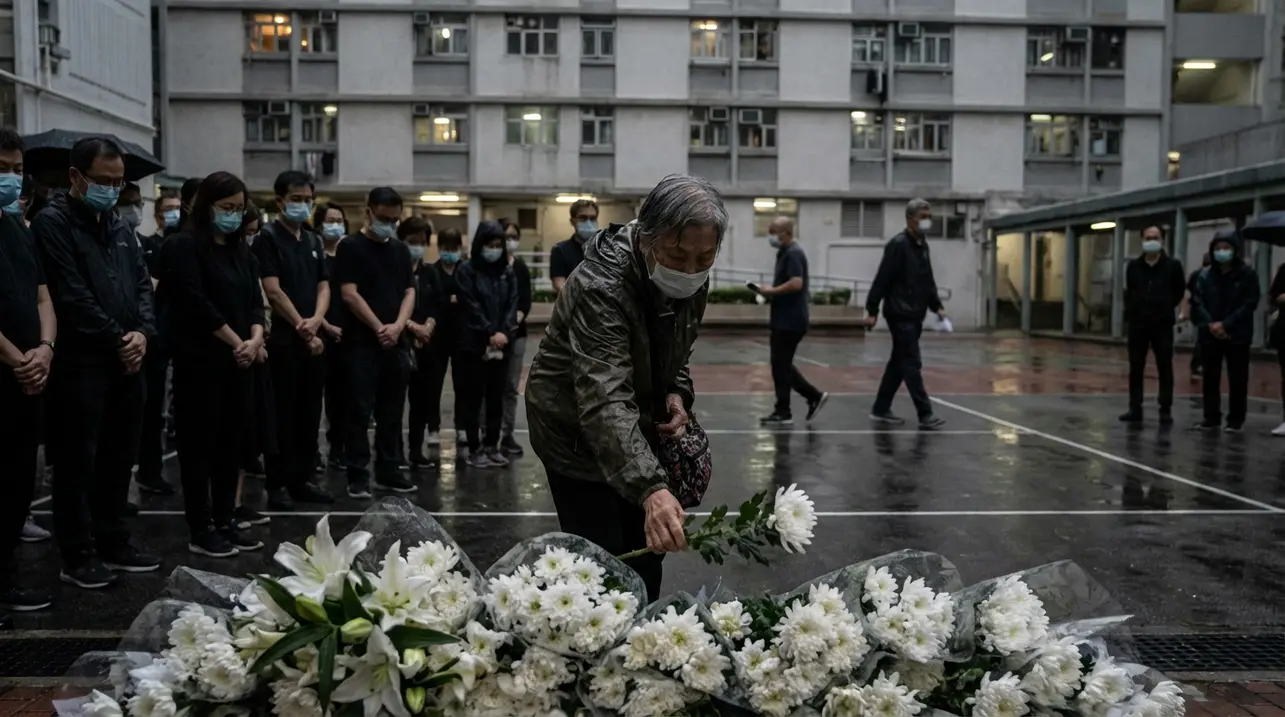
The air in Hong Kong this morning was thick with a grief that felt both personal and collective, a heavy silence punctuated only by the rustle of plastic wrapping and the soft footsteps of mourners. At Wang Fuk Court, a public housing estate in the New Territories, hundreds of residents came not to protest or to celebrate, but simply to remember.They laid bouquets of white chrysanthemums and lilies, creating a fragile, fragrant sea of remembrance for the 159 lives lost in a devastating fire. This act of communal mourning, raw and visceral, unfolded against a backdrop of profound political tension, casting a stark, unforgiving light on the city’s current trajectory.The tragedy, one of the deadliest in Hong Kong’s modern history, struck with cruel timing, just days before a set of district council elections that have been meticulously engineered by Beijing to ensure ‘patriotic’ governance, stripping the polls of any meaningful opposition and reducing them to a tightly controlled administrative exercise. The juxtaposition is impossible to ignore: a populace united in sorrow for neighbors lost in a horrific accident, while the mechanisms of its political life are systematically narrowed, its democratic voice muffled under the guise of ‘stability’ and ‘patriotism.’ To understand the full weight of this moment, one must look beyond the immediate headlines of the fire investigation—which will undoubtedly cite building code violations or emergency access failures—and see it as a symptom of a deeper societal fracture. Hong Kong has endured a relentless series of shocks since the 2019 pro-democracy protests and the subsequent imposition of the National Security Law.Its once-vibrant civil society is subdued, its legislative bodies filled with loyalists, and its young people face an existential choice between conformity and exile. In this context, a disaster like the Wang Fuk Court fire transcends mere tragedy; it becomes a litmus test for a government’s legitimacy and its capacity for genuine empathy.When Chief Executive John Lee and other officials laid wreaths at the scene, their gestures, though necessary, were viewed by many through a lens of deep cynicism. Can a leadership that so aggressively dismantles political dissent truly connect with the everyday suffering of its citizens in a public housing block? The residents placing flowers likely weren’t pondering geopolitical strategy, but their act of remembrance itself becomes a quiet, powerful form of civic expression in a city where louder forms have been criminalized.Historically, moments of mass public mourning in Hong Kong have often carried political undertones, serving as gatherings where shared identity is reaffirmed outside of state-sanctioned channels. The upcoming ‘patriots-only’ elections, which will see turnout scrutinized as a measure of acquiescence, now unfold in the shadow of this shared loss.
#Hong Kong
#fire tragedy
#mourning
#Wang Fuk Court
#elections
#featured