

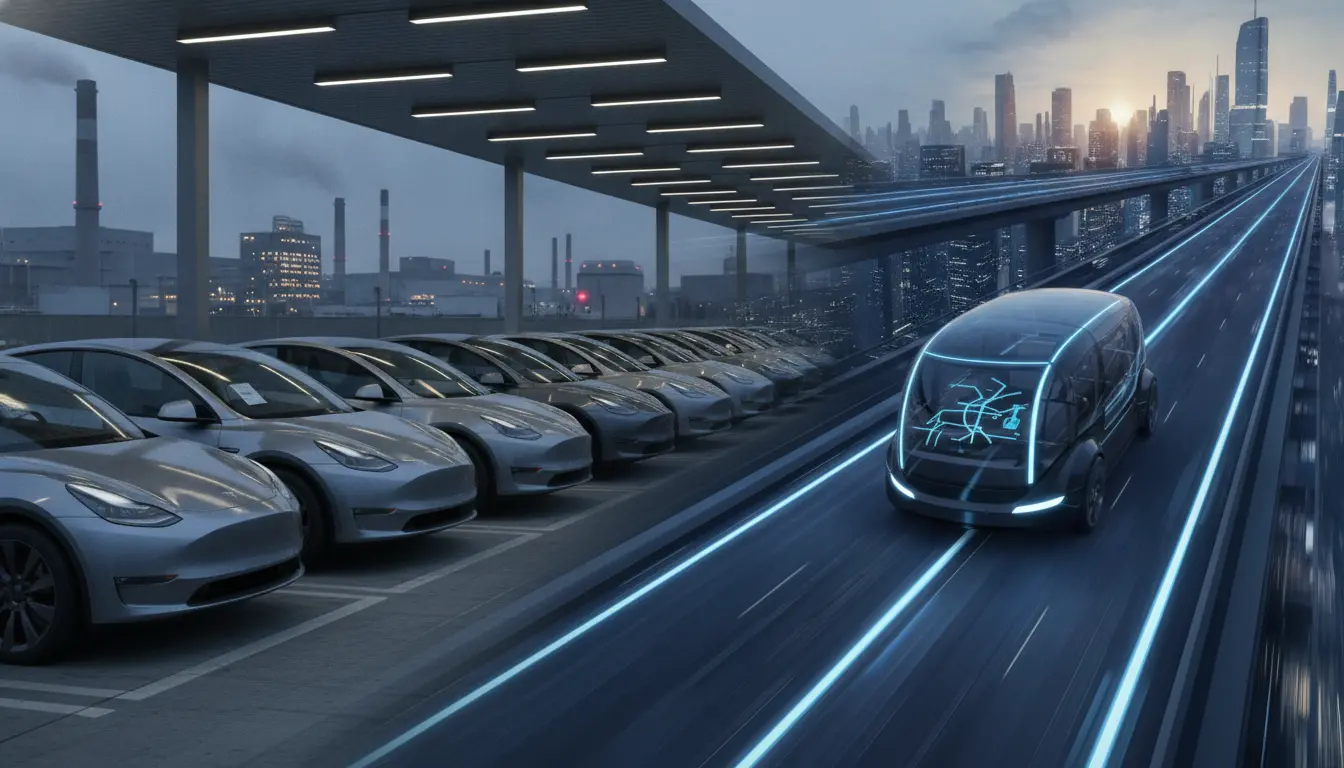
Tesla Navigates Margin Pressures as EV Demand Softens and Robotaxi Ambitions Accelerate
Tesla’s Q2 2026 earnings report is poised to be a pivotal moment for assessing the automaker’s financial health, with particular scrutiny on its automotive gross margin. The company is operating in a complex and rapidly evolving landscape, marked by shifting electric vehicle (EV) demand and its ambitious, capital-intensive pursuit of autonomous driving technologies. Analysts and investors alike will be closely watching whether Tesla can sustain a gross margin above the critical 20% threshold, a benchmark that reflects both operational efficiency and pricing power in a market undergoing significant transformation.
The backdrop to these forthcoming results is a global EV market that, while still growing, has shown palpable signs of maturation and increased competition. After years of explosive, often unchecked expansion, some key regions are witnessing a deceleration in EV adoption rates. This slowdown is influenced by a confluence of factors, including persistent macroeconomic headwinds, inflation, and higher interest rates that directly impact consumer purchasing power and the cost of vehicle financing. Simultaneously, the segment has seen a formidable influx of new players, ranging from established legacy automakers aggressively transitioning to electric platforms to agile Chinese manufacturers offering compelling and often more affordable alternatives. This heightened competitive intensity has inevitably led to pricing pressures and sporadic price wars, with Tesla itself initiating several rounds of price adjustments across its model lineup to stimulate demand and maintain market share—a strategy that inherently places downward pressure on profitability metrics like gross margin.
Amidst this challenging environment for its core EV business, Tesla has also significantly amplified its strategic focus on autonomous driving, with CEO Elon Musk frequently highlighting the transformative potential of a vast “robotaxi” network. This strategic pivot involves substantial and ongoing investment in research and development for its Full Self-Driving (FSD) software and cutting-edge artificial intelligence capabilities, diverting considerable resources and attention towards a future vision of urban mobility. While the long-term prospects of a highly profitable autonomous ride-hailing service are tantalizing for investors, the immediate financial implications include significant R&D expenditures that weigh on current earnings. The core tension lies in balancing continued, heavy investment in this futuristic technology with the imperative to optimize profitability from its existing vehicle sales, particularly if the company scales back its plans for a mass-market, lower-cost EV in favor of accelerating the robotaxi program.
Achieving an automotive gross margin above 20% would signal Tesla’s robust ability to navigate these dual pressures effectively. It would indicate successful cost reduction initiatives in manufacturing, potentially through greater efficiency at its sprawling Gigafactories in Texas, Berlin, and Shanghai, or through innovations in battery production and sophisticated supply chain management. However, the costs associated with ramping up new production lines, integrating advanced manufacturing processes, and managing a global supply chain amidst volatile geopolitical and economic conditions remain formidable. Furthermore, the perceived value and pricing power of Tesla’s existing vehicle lineup must remain robust enough to absorb competitive pressures without resorting to further margin-eroding price cuts. The company’s ability to drive software revenue, particularly through FSD subscriptions and upgrades, will also play an increasingly vital role in bolstering overall profitability, though its specific contribution to the automotive gross margin remains an area of keen analytical interest.
The Q2 2026 results will, therefore, serve as a crucial barometer for broader investor confidence in the company’s trajectory. A strong gross margin figure above 20% would likely reassure stakeholders that Tesla can effectively manage its cost structure and maintain healthy profitability even as it expands into capital-intensive future ventures. Conversely, a miss could amplify concerns about the sustainability of its current business model, particularly if EV demand continues to soften globally or if the robotaxi vision remains distant without clear monetization pathways. The report will not just be about mere numbers; it will be a defining narrative on Tesla’s strategic direction, its execution capabilities, and its resilience in an automotive industry undergoing an unprecedented and rapid transformation. What is ultimately at stake is not merely a quarterly earnings beat or miss, but the validation of Tesla’s distinctive long-term growth story and its unique position at the intricate intersection of advanced automotive manufacturing and cutting-edge artificial intelligence.
Stay Informed. Act Smarter.
Get weekly highlights, major headlines, and expert insights — then put your knowledge to work in our live prediction markets.
Related News
Tesla's Automotive Gross Margin Under Intense Scrutiny Ahead of Q2 2026 Earnings Report
Tesla's Q2 2026 Deliveries Under Intense Investor Scrutiny as Reporting Date Nears
Nvidia Set to Unveil Q2 FY27 Results Amid Soaring AI Chip Demand

Analyst Expectations Converge on Apple's iPhone Sales Performance Ahead of Q3 2026 Earnings Report
Google Cloud's Q2 2026 Revenue Target of $12 Billion Becomes Key Investor Benchmark

Microsoft's FY26 Q4 Earnings Anticipated to Spotlight Azure Cloud Growth and AI Expansion
Palantir Technologies Under Scrutiny as Q2 2026 Revenue Target Nears $1.81 Billion
July 2026 ISM Services PMI Release Set to Offer Crucial Insights into US Economic Health
Federal Reserve Focuses on July 2026 CPI Amid Persistent Inflationary Pressures
US Wage Growth Trajectory for 2026 Under Scrutiny Amid Inflation Concerns