


Analysts Project Persistent Tightness in US Labor Market Through Mid-2020s
The United States labor market continues to defy expectations, prompting economists and policymakers to scrutinize projections for sustained strength well into the middle of the decade. Central to this discussion is the Job Openings and Labor Turnover Survey (JOLTS) report, a key barometer of labor demand. Recent analyses suggest that job openings could remain remarkably elevated, potentially exceeding 8 million, signaling a prolonged period of a tight labor market that carries significant implications for wage growth, inflation, and the Federal Reserve's monetary policy trajectory.
Published monthly by the Bureau of Labor Statistics (BLS), the JOLTS report offers a comprehensive snapshot of the dynamics within the American workforce. It tracks not only job openings but also hiring rates, quits, and layoffs, providing critical insights into labor supply and demand imbalances. A consistently high number of job openings, particularly when accompanied by low unemployment, indicates that businesses are struggling to find qualified workers, creating an environment where employees may have greater leverage for wage negotiations. Conversely, a significant decline in openings often presages an economic slowdown, suggesting a reduction in business confidence and hiring activity.
Following the unprecedented disruptions of the pandemic, the US labor market experienced a historic surge in job openings, peaking at over 12 million in early 2022. While these numbers have receded from their apex, they have largely remained above pre-pandemic levels, demonstrating remarkable resilience despite tighter monetary conditions. The prospect of job openings staying above a threshold like 8 million for an extended period into 2026 underscores a potential structural shift in labor demand or persistent macroeconomic forces. Such a scenario suggests that labor shortages, particularly in key sectors, could become a more entrenched feature of the economic landscape, challenging businesses and potentially fueling sustained inflationary pressures as firms compete more aggressively for talent.
Several factors contribute to the ongoing tightness in the labor market. Demographic shifts, including an aging workforce and lower birth rates, are reducing the overall pool of available workers. Skills gaps persist in high-demand industries like technology, healthcare, and manufacturing, where educational pipelines may not be keeping pace with evolving employer needs. Furthermore, shifts in global supply chains, including a push towards domestic production and nearshoring, could create additional demand for labor within the US. These structural elements, coupled with robust consumer demand and fiscal stimulus measures, contribute to a complex environment where the balance between labor supply and demand remains delicate, fueling divergent views among economic forecasters regarding the sustainability of current trends.
For the Federal Reserve, the JOLTS data is a pivotal input in its assessment of the economy's health and its pursuit of a dual mandate: maximum employment and price stability. Persistently high job openings, especially if they correlate with accelerating wage growth that outpaces productivity gains, could be interpreted as a signal that inflationary pressures remain embedded within the economy. This would exert pressure on the central bank to maintain a more restrictive monetary policy stance for longer, potentially involving higher interest rates to cool aggregate demand and bring inflation back to its target. The implications of such an outlook are profound, impacting borrowing costs for businesses and consumers, the trajectory of economic growth, and the overall stability of financial markets.
As the US economy navigates through evolving global conditions and domestic policy considerations, the trajectory of job openings will remain a critical focus. A labor market that sustains high demand, while indicative of underlying economic strength, also presents challenges related to inflation control and equitable growth. Businesses must adapt to a competitive hiring environment, investing more in training and retention, while policymakers weigh strategies to address structural labor imbalances. The coming years will reveal whether the current robust demand for workers becomes a new norm or eventually yields to more traditional economic cycles, shaping the economic experiences of millions of Americans and influencing global financial landscapes.
Stay Informed. Act Smarter.
Get weekly highlights, major headlines, and expert insights — then put your knowledge to work in our live prediction markets.
Related News

US Labor Market at a Crossroads as Economists Debate Pace of Post-Pandemic Normalization

Federal Reserve's Long Game: Navigating the Thorny Path to Sub-3% Inflation

Federal Reserve Holds Key Interest Rate Steady Amidst Economic Uncertainty

Widening US Trade Deficit Projected to Surpass $90 Billion by July 2026

California Confronts Persistent Threat of Destructive Major Earthquakes

Vuelta a Burgos 2026 Poised to Shape Vuelta a España Contender Landscape

Barack Obama Opens Presidential Center By Calling Out “Perpetual Anger And Division”; Ceremony Focuses On Legacy And Doesn’t Mention Trump
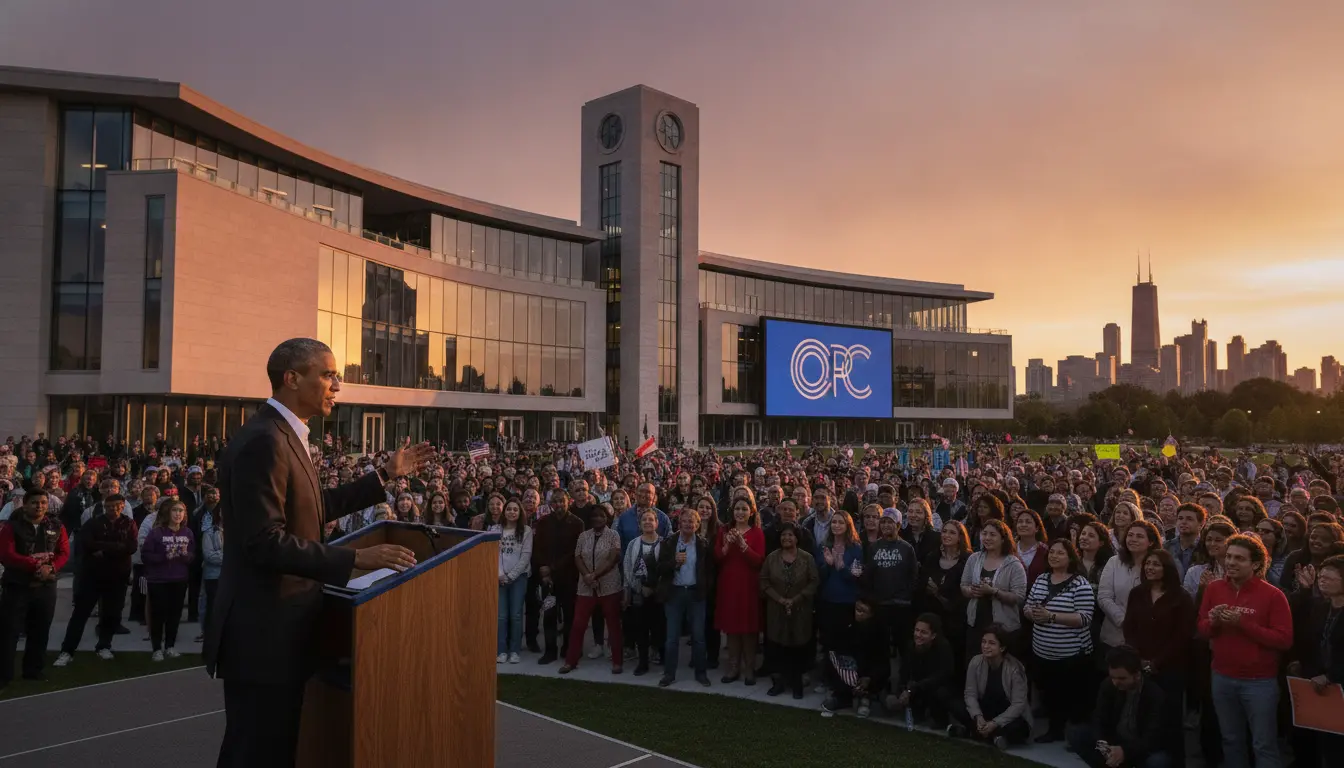
Barack Obama Opens Presidential Center By Calling Out Perpetual Anger And Division; Ceremony Focuses On Legacy And Doesn’t Mention Trump

Jürgen Klopp Set to Take Germany Helm in Bold Move for National Team Revival

Celebrity Presence At Obama Presidential Center Opening Gives A Reminder Of Hollywood’s Embrace Of 44: “A-Listers All Over The Place”