PoliticsdiplomacyPeace Talks and Treaties
Seoul's Role in US-North Korea Nuclear Negotiations
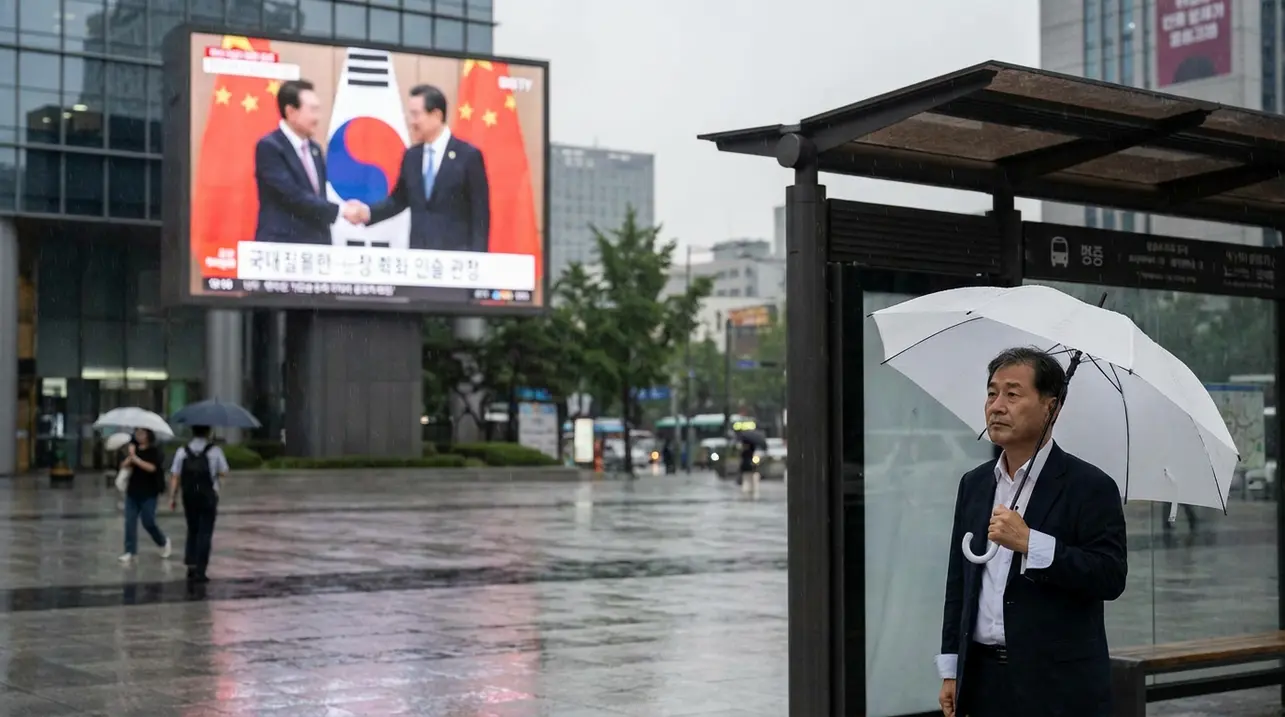
Seoul’s diplomatic maneuvering to lower the temperature on the long-stalled US-North Korea denuclearisation talks represents a critical, yet perilous, intervention in one of the world’s most intractable geopolitical standoffs. The South Korean government, acutely aware of the existential threat posed by its northern neighbor’s expanding nuclear arsenal, has consistently positioned itself as a vital intermediary, attempting to bridge the chasm of mistrust between Washington and Pyongyang.However, the fundamental impasse remains stark and, in many ways, has deepened. Washington’s strategic patience has worn thin, with a growing, hard-nosed scepticism permeating its policy circles regarding the very feasibility of achieving Pyongyang’s complete, verifiable, and irreversible denuclearisation—a goal that has been the cornerstone of American diplomacy for decades but now appears increasingly like a diplomatic mirage.This scepticism is not born in a vacuum; it is the product of a long history of failed agreements, from the 1994 Agreed Framework’s collapse to the disintegration of the Six-Party Talks, each episode eroding the foundation for mutual trust and reinforcing a cycle of provocation and condemnation. For the regime of Kim Jong-un, any substantive discussion of its nuclear programme is not merely a negotiating point but an absolute red line, a non-negotiable pillar of regime survival and sovereign identity.Kim has brooked no compromise, domestically framing the nuclear deterrent as the ultimate guarantor against foreign invasion and a symbol of national prestige, a narrative so deeply embedded in the North’s Juche ideology that relinquishing it would be tantamount to political suicide. This creates a diplomatic calculus of near-impossible complexity for Seoul.Its strategy often involves a delicate dance of offering economic incentives and security assurances to Pyongyang while simultaneously reassuring Washington of its unwavering alliance commitment—a balancing act reminiscent of the tightrope walked by European powers during the Cold War, attempting to manage superpower tensions from a vulnerable frontline position. Analysts point to the shadow of the 2018-2019 summitry, where the high-profile meetings between Kim Jong-un and then-President Donald Trump, facilitated aggressively by South Korean President Moon Jae-in, ultimately failed to translate pageantry into a sustainable agreement, leaving behind a legacy of heightened expectations and deeper disillusionment.The current landscape is further complicated by Pyongyang’s accelerated weapons testing, including solid-fuel intercontinental ballistic missiles and tactical nuclear systems, which not only enhance its military capabilities but also deliberately shrink the decision-making window for the US and its allies in a crisis, thereby raising the stakes of miscalculation to terrifying levels. Seoul’s role, therefore, transcends mere mediation; it is one of crisis management and risk mitigation, seeking to prevent a return to the ‘fire and fury’ rhetoric of 2017 and maintain at least a thread of dialogue to avoid a catastrophic escalation.The broader context involves a shifting regional order, where China’s strategic rivalry with the United States and Russia’s pariah status and alignment with North Korea add layers of great-power competition that constrain and complicate South Korea’s options. Expert commentary suggests that Seoul may be pushing for a more pragmatic, step-by-step approach—perhaps an initial freeze on nuclear and long-range missile tests in exchange for sanctions relief and security talks—as a way to build incremental trust, a notion Washington has historically been reluctant to embrace for fear of legitimizing North Korea as a nuclear state.The consequences of continued stagnation are dire: an emboldened North Korea moving closer to a operational, deployable nuclear triad, a potential arms race in Northeast Asia, and the gradual erosion of the non-proliferation regime’s credibility. In this high-stakes drama, Seoul’s quiet diplomacy, while fraught with difficulty, remains an indispensable, if not the only, channel for preventing a diplomatic vacuum from being filled by the drums of conflict.
#denuclearization
#North Korea
#US diplomacy
#South Korea
#Kim Jong-un
#nuclear program
#international relations
#peace talks
#featured