
Rubio Signals Pragmatic Shift in US Diplomacy Toward China
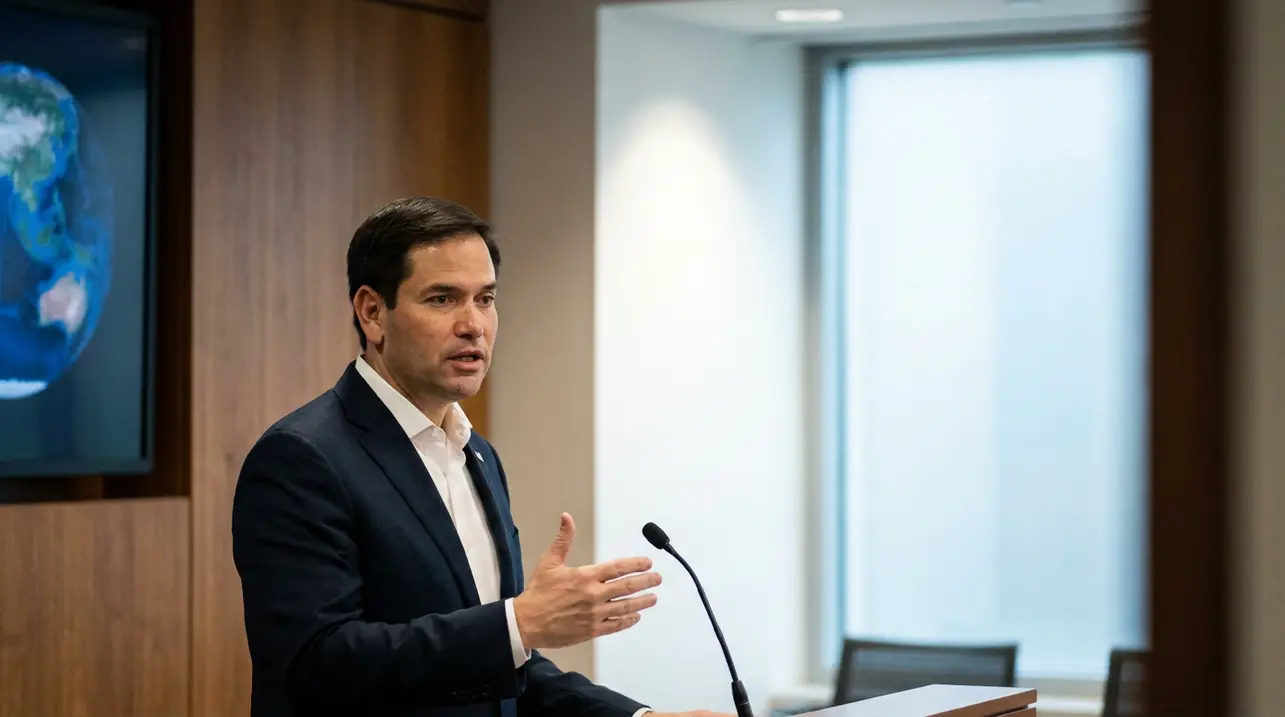
In a significant and wide-ranging year-end briefing that stretched over two hours on Friday, Secretary of State Marco Rubio articulated a notably pragmatic stance on Sino-American relations, signaling a potential recalibration in Washington’s diplomatic posture. This tonal shift, emerging from an administration otherwise firmly anchored in its 'America first' priorities for the coming electoral cycle of 2026, represents a fascinating evolution not only from the more confrontational rhetoric of the previous administration but also from Rubio’s own legislative history as a China hawk on Capitol Hill.The Secretary of State, a figure who also serves as a key architect of the nation’s foreign policy, detailed a framework that appears to prioritize managed competition and strategic stability over outright ideological confrontation, suggesting a maturation in approach reminiscent of historical Cold War statecraft where existential rivalry was tempered by channels of communication to prevent catastrophic miscalculation. This pivot, while subtle, cannot be divorced from the broader geopolitical chessboard: a protracted war in Eastern Europe siphoning Western resources, persistent economic headwinds domestically, and the palpable military build-up by Beijing in the Indo-Pacific theater, which collectively impose a sobering reality check on any administration’s capacity for unlimited strategic focus.Analysts drawing parallels to the Nixon-Kissinger era of diplomatic opening, albeit under vastly different circumstances, note that Rubio’s language—eschewing fiery condemnations for talk of 'guardrails' and 'predictability'—aims to create operational space for the United States to bolster its alliances, reinvigorate domestic industrial capacity, and address pressing global crises without being perpetually locked in an escalatory spiral with the world’s second-largest economy. However, this pragmatic veneer is layered atop a foundation of enduring strategic competition; the administration’s recent sweeping sanctions on critical technology exports and its deepening security pactswith partners from Manila to Tokyo underscore that the fundamental contest for technological supremacy and regional influence remains unabated.The critical question for observers on both sides of the Pacific is whether this modulated rhetoric translates into tangible policy shifts, such as resumed high-level military dialogues or cooperation on transnational issues like climate and financial stability, or if it merely constitutes a tactical pause—a diplomatic 'breathing space'—to consolidate strengths before the next phase of rivalry. The domestic political landscape further complicates this calculus, as Rubio’s remarks will inevitably face scrutiny from factions within his own party for whom any perceived softening on China is anathema, and from opposition figures who may view the shift as an admission of prior policy failures.
#US-China relations
#Marco Rubio
#foreign policy
#diplomatic shift
#2026 priorities
#editorial picks news
Stay Informed. Act Smarter.
Get weekly highlights, major headlines, and expert insights — then put your knowledge to work in our live prediction markets.

Ultimately, Secretary Rubio’s briefing may be remembered less for its specific policy announcements and more for its symbolic weight: an acknowledgment by a principal architect of U. S.
foreign policy that managing the relationship with Beijing requires a blend of unwavering resolve and cold-eyed pragmatism, a doctrine where the relentless pursuit of national interest is conducted with a calculated awareness of the risks of uncontrolled conflict. As 2026 approaches, the world will be watching to see if this nascent pragmatism can be institutionalized, or if it will be swept away by the next political or geopolitical storm.