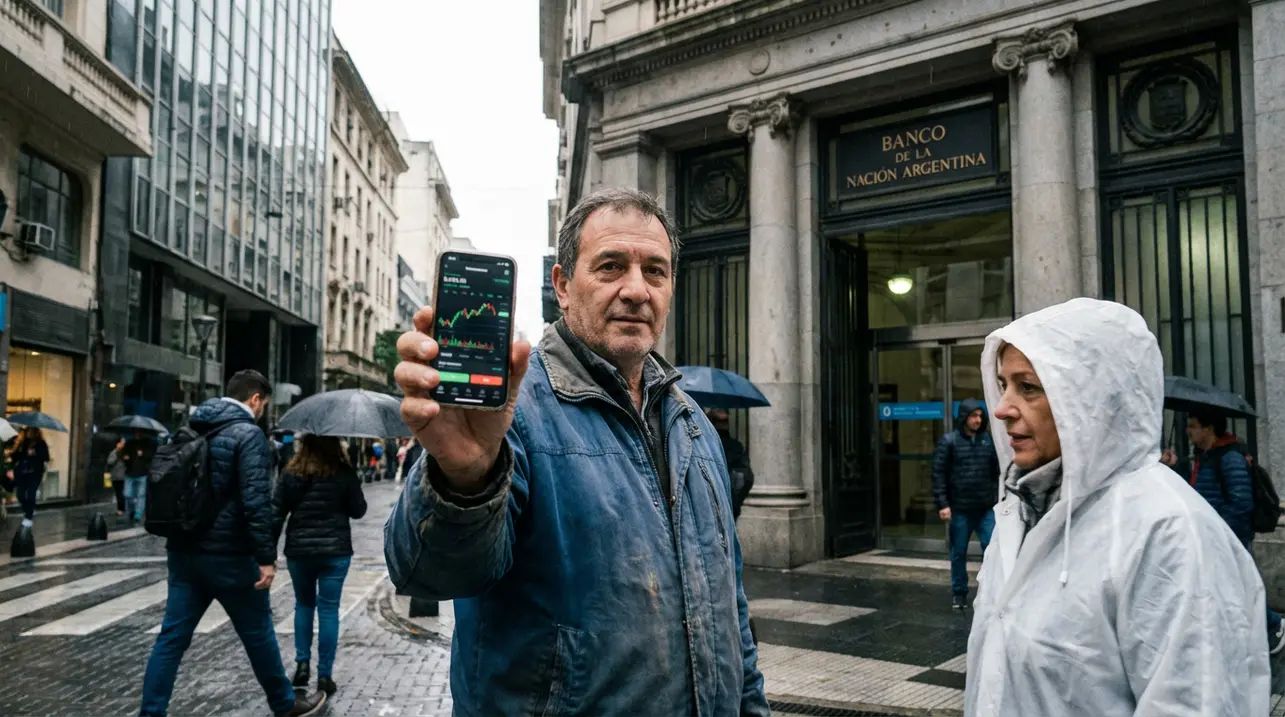
Argentina weighs allowing domestic banks to offer crypto services

Argentina’s central bank is currently weighing a significant policy pivot, examining changes to its existing ban that prohibits domestic financial institutions from trading cryptocurrencies or offering related services. This move, while seemingly a technical regulatory adjustment, represents a profound moment at the crossroads of traditional finance and the digital asset frontier, a space where I’ve spent years analyzing the delicate dance between TradFi’s legacy systems and DeFi’s disruptive potential.The current prohibition, which has effectively walled off the nation’s banking sector from the crypto ecosystem, was born from a familiar cocktail of concerns: fears of capital flight, volatility risks, and the perennial anxiety of regulators worldwide about losing monetary control. Yet, the very fact that this ban is under review signals a powerful, pragmatic shift.It’s an acknowledgment that the tidal wave of digital asset adoption cannot be held back by regulatory sandbags forever, especially in an economy like Argentina’s, which has been ravaged by hyperinflation and where citizens have increasingly turned to stablecoins like USDT as a lifeboat for preserving savings. The potential unshackling of banks could catalyze a new phase of financial integration, allowing everyday Argentinians to access Bitcoin and Ethereum through the trusted interfaces of their local bank, thereby bridging a massive trust gap.Imagine a scenario where a small business owner in Buenos Aires can collateralize a loan with tokenized assets or where remittances flow near-instantly and cheaply through blockchain rails directly integrated into banking apps. This isn't just about convenience; it’s a fundamental re-wiring of financial accessibility.However, the path forward is strewn with complex questions. Will the central bank permit only custody services, or will it allow trading and staking? How will anti-money laundering (AML) frameworks be adapted to the transparent-yet-pseudonymous nature of blockchain transactions? The shadow of Argentina's recent embrace of Bitcoin for contractual agreements looms large here, suggesting a top-down political willingness to innovate.From a global perspective, Argentina is not operating in a vacuum. Neighboring Brazil has already advanced with its own digital asset framework, while Europe’s MiCA regulations are setting a precedent for comprehensive crypto governance.Argentina’s decision could position it as a leader in LatAm’s financial technology landscape or serve as a cautionary tale if implemented without robust risk controls. The implications for the peso are particularly acute; integrating crypto could further dollarize the economy digitally or, conversely, create new avenues for peso-backed digital assets.
#featured
#Argentina
#central bank
#crypto banking
#regulation
#licensing
#domestic banks
#crypto services
Stay Informed. Act Smarter.
Get weekly highlights, major headlines, and expert insights — then put your knowledge to work in our live prediction markets.
man watching this feels like watching someone try to fix a leaky boat while it's sinking. but hey, if it gives people a real way to save their money, maybe it's worth a shot
I’ve spoken with fintech founders in Buenos Aires who see this as the dam finally breaking, unleashing a wave of innovation in tokenized real-world assets and decentralized finance protocols that have, until now, operated parallel to the formal banking sector. Yet, skeptics, often from the old-guard financial establishment, warn of embedding speculative assets into the heart of the payment system.
The central bank’s examination must therefore strike a delicate balance: fostering innovation and financial inclusion while safeguarding systemic stability. This isn't merely a policy change—it's a real-time experiment in whether traditional financial institutions can evolve to become gateways rather than gatekeepers for the next generation of the internet economy.
The outcome will resonate far beyond Argentina’s borders, offering a blueprint for other emerging economies grappling with inflation and digital currency adoption. The world is watching to see if Argentina’s banks will soon become the newest on-ramp to the cryptoeconomy.