
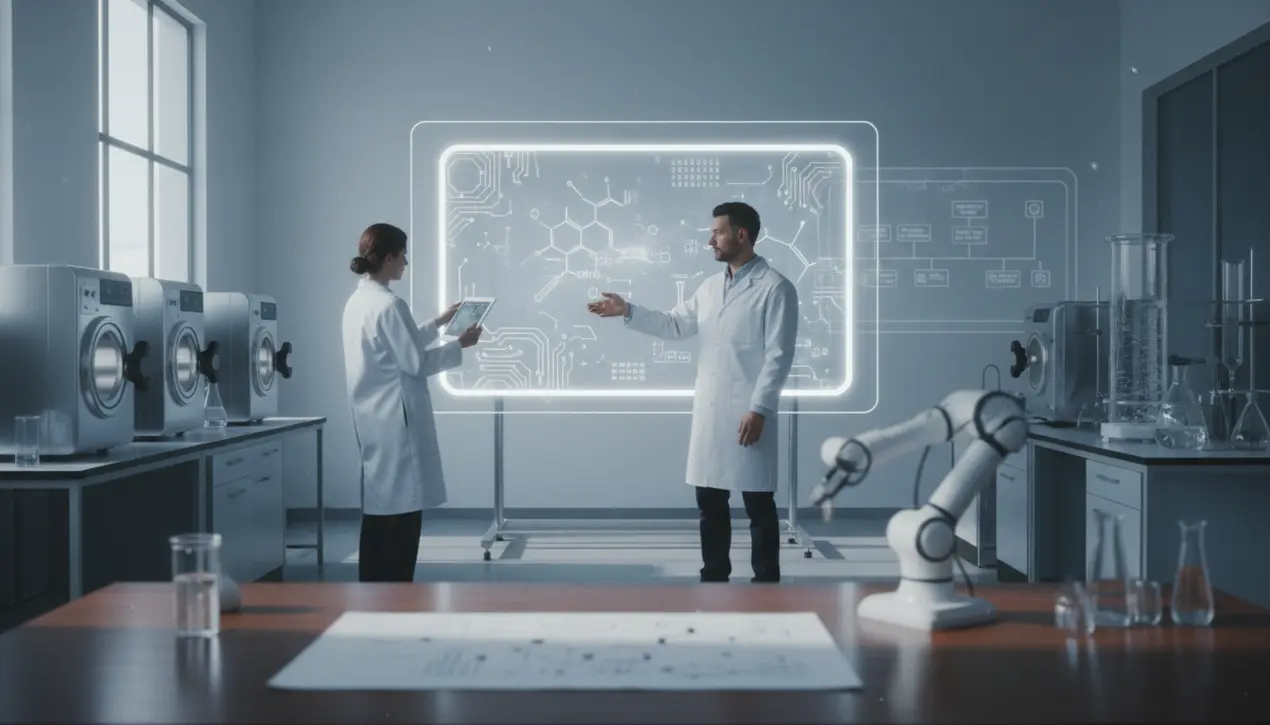
US patent office says generative AI is equivalent to other tools
UN
Unknown Author
6 months ago7 min read
In a significant move that clarifies the legal standing of artificial intelligence within American innovation, the U. S.Patent and Trademark Office (USPTO) has issued updated guidelines firmly placing generative AI in the same category as traditional inventor tools like lab equipment and research databases. This development, spearheaded by agency director John Squires and reported by Reuters, establishes that while AI systems cannot be listed as inventors—a stance upheld by the Court of Appeals for the Federal Circuit—their use in the inventive process does not inherently disqualify the resulting creations from patent protection.The new guidance, set for publication in the Federal Register, asserts that generative AI is 'analogous' to other instruments utilized by human minds, meaning there is no separate evaluation process for AI-assisted inventions; the same rigorous standards for conception and joint inventorship among natural persons still apply. This decision arrives at a critical juncture, as the rapid proliferation of AI models capable of generating novel chemical compounds, engineering designs, and drug formulations has created a legal gray area, leaving corporations and independent researchers uncertain about their intellectual property rights.The USPTO's stance echoes the foundational principles of Isaac Asimov's stories, where robots are tools serving humanity, not independent agents. By drawing this clear line, the office attempts to balance the encouragement of technological progress with the preservation of a human-centric patent system, a necessary safeguard against a future where machines could autonomously file claims and potentially stifle innovation.However, this is merely the opening chapter in a much longer saga. The guidance leaves unresolved complex questions about the 'conception' of an invention when a human provides a broad prompt and an AI generates a specific, non-obvious solution.Could a patent be challenged if the AI's algorithm was trained on copyrighted or patented data, introducing prior art complications? Legal experts are already debating how courts will handle disputes where the line between human direction and machine generation becomes blurred, particularly in fields like pharmaceuticals, where AI-driven discovery platforms are accelerating the development of new medications. The European Patent Office and other international bodies are watching closely, as global harmonization on this issue is crucial for multinational companies. While the USPTO's current framework provides much-needed clarity and stability, it also sets the stage for future legal battles that will ultimately define the boundaries of AI and invention, forcing us to continually re-evaluate the relationship between human creativity and the powerful tools we create.
#USPTO
#generative AI
#patent law
#AI-assisted inventions
#inventors
#featured
Stay Informed. Act Smarter.
Get weekly highlights, major headlines, and expert insights — then put your knowledge to work in our live prediction markets.
Related News


4 weeks ago
Trump wants to stop states from regulating AI

4 weeks ago
Canva Repositions as an AI Platform with Design Tools
4 weeks ago
Billy Corgan and Diplo debate AI use in music industry.
4 weeks ago
Black Forest Labs' Self-Flow makes AI training 2.8x more efficient

4 weeks ago
Meta and Broadcom Extend AI Chip Partnership to 2029
4 weeks ago
Outpoll Weekly Recap: Entertainment (April 20 – 26, 2026)
4 weeks ago
Outpoll Weekly Recap: AI (April 20 – 26, 2026)
4 weeks ago
Google Introduces AI-Generated Avatars for YouTube Shorts

4 weeks ago
OpenAI CEO Sam Altman attacked at home over AI fears
Hottest4 weeks ago
Mozilla: Anthropic's AI found 271 Firefox zero-days.
Comments
It's quiet here...Start the conversation by leaving the first comment.