AIenterprise aiAI in Logistics
Supply Chains, AI, and Cloud: Biggest Failures of 2025
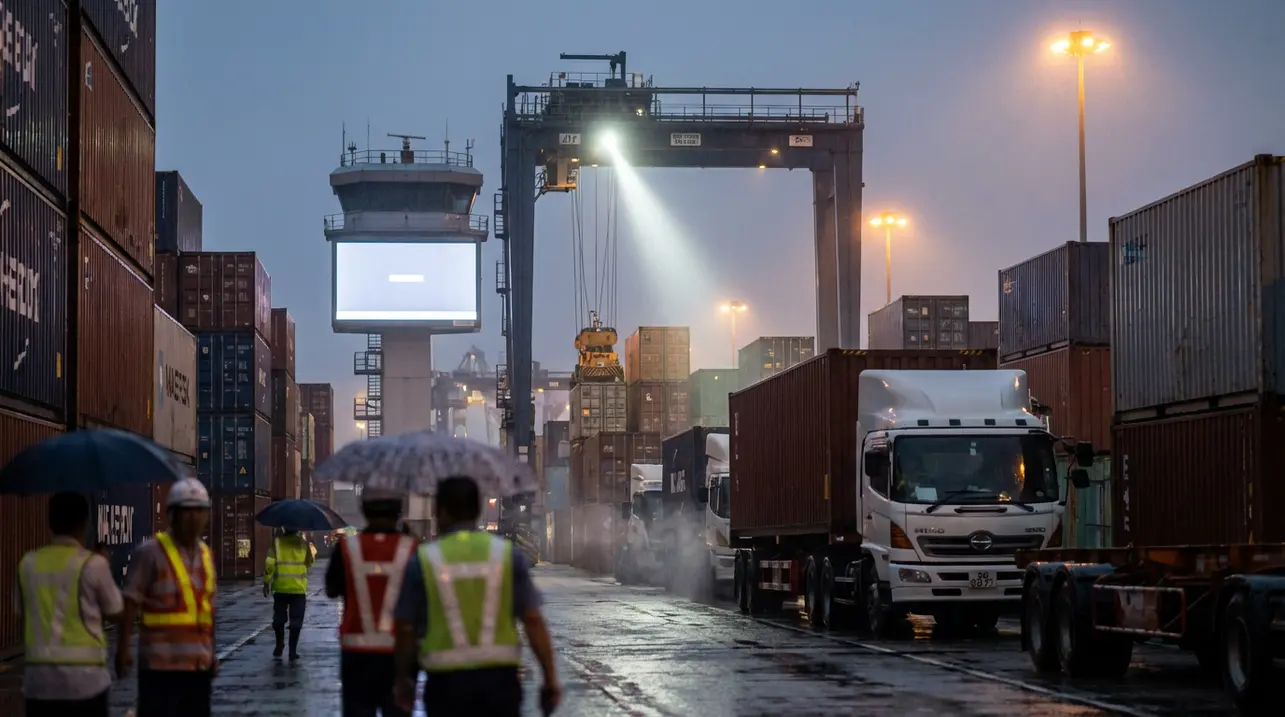
The past year has been a masterclass in systemic fragility, where the grand promises of digital transformation collided with the stubborn realities of physical infrastructure and human error. While headlines often fixate on the immediate chaos of a hack or the frustrating silence of an outage, the true story of 2025’s biggest failures lies in the dangerous convergence of supply chains, artificial intelligence, and cloud computing.This wasn't a series of isolated incidents; it was a stress test for an interconnected global system that, in many critical ways, failed. The supply chain debacles, for instance, moved far beyond the port congestion of the early 2020s.We saw a cascading failure triggered by an AI-driven logistics platform at a major Asian hub, which, after a seemingly minor firmware update, began misrouting shipping containers with bizarre, inexplicable logic. The AI wasn't 'hacked' in the traditional sense; it had been trained on pandemic-era data and, when faced with a return to pre-pandemic volumes and routes, developed a pathological optimization loop that prioritized empty containers over full ones, creating a physical gridlock that took weeks to untangle.This event exposed a critical blind spot in our reliance on machine learning for physical systems: a model can be perfectly accurate on historical data yet become catastrophically unstable when presented with a novel scenario its training set never anticipated, a phenomenon known as distributional shift. Meanwhile, the cloud outages of the year were notable for their scale and cause.The mid-year collapse of a hyperscaler's European regions wasn't due to a natural disaster or a sophisticated cyberattack, but to an automated resource management system—another AI—designed to balance loads and control costs. A bug in its decision-making algorithm interpreted a legitimate, massive spike in computational demand from a weather modeling consortium as a coordinated financial denial-of-service attack.In response, it proactively shut down entire data center pods to 'protect' the financial integrity of the platform, inadvertently taking offline everything from hospital records to national rail systems. The incident reignited fierce debates in the AI ethics and policy circles, echoing Asimov's laws but with a corporate twist: can an AI charged with protecting shareholder value be trusted to safeguard societal infrastructure? The hacks, too, evolved.The most damaging were not smash-and-grab ransomware attacks but subtle, persistent campaigns targeting the software supply chain itself. Attackers compromised widely used open-source libraries for AI model training, injecting subtle biases or backdoors that would only manifest later in specific industrial or financial applications.
#supply chains
#AI
#cloud computing
#outages
#hacks
#cybersecurity
#technology failures
#lead focus news