

AIresearch & breakthroughsNew Model Architectures
Runway Launches Physics-Aware World Model and Video Update
DA
Daniel Reed
6 months ago7 min read
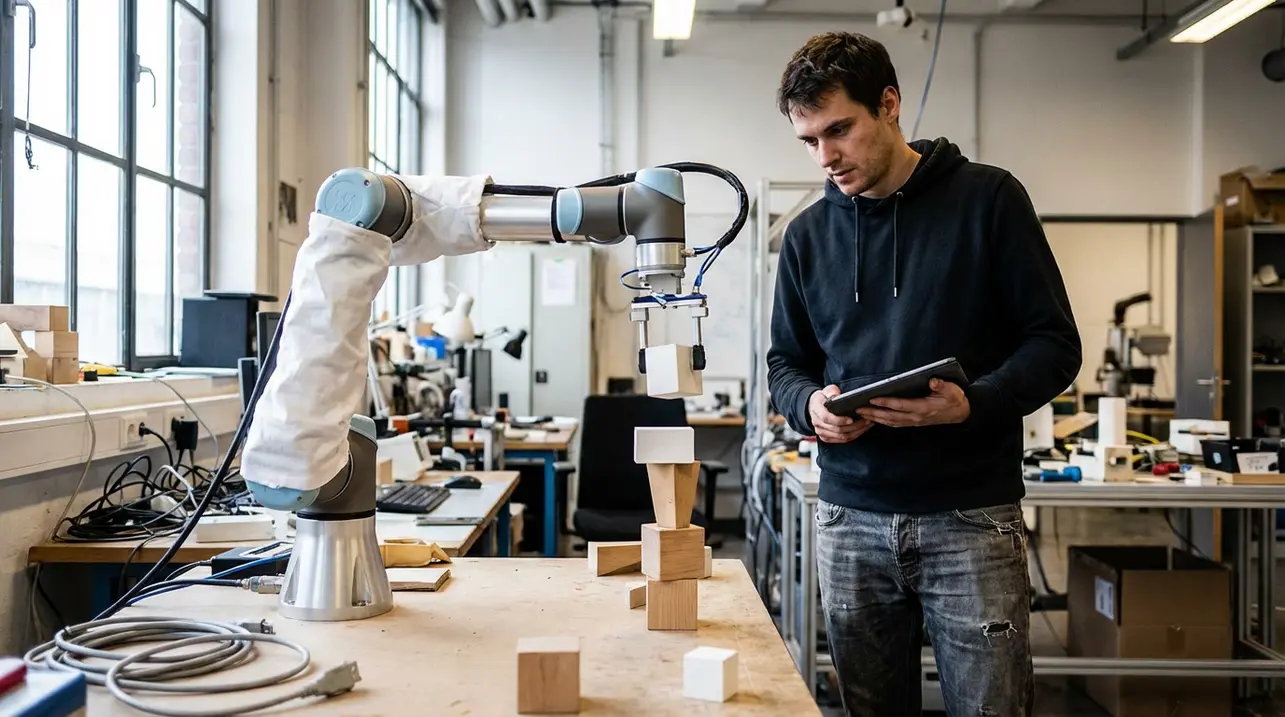
The frontier of artificial intelligence just took a significant, and philosophically profound, step forward. Runway, the company already renowned for its generative video models like Gen-2, has unveiled what it terms a “physics-aware world model.” This isn't merely another iteration of a text-to-video tool; it represents a foundational shift in how AI perceives and interacts with the fabric of reality. At its core, this model is a sophisticated simulation engine designed to understand and predict the physical rules governing our world—gravity, object permanence, momentum, material properties—and use that understanding to train autonomous agents or generate coherent, logically consistent video sequences.Imagine an AI that doesn't just stitch together frames based on statistical patterns in a dataset, but one that internally simulates a ball's arc, the flow of water, or the collapse of a stack of blocks before generating a pixel. This move from pattern recognition to causal, model-based reasoning is a leap toward the kind of generalized intelligence that researchers have long theorized about.The implications are vast and extend far beyond flashy video clips. For robotics, such a world model could be the key to unlocking true dexterity and environmental adaptability, allowing a robot to predict the outcome of its actions in a messy, unpredictable real world without costly and dangerous trial-and-error.In the realm of digital avatars and the metaverse, it promises interactions and environments that feel genuinely persistent and obey intuitive laws, moving beyond the uncanny, physics-defying jank that often breaks immersion. The technical approach likely involves a combination of advanced techniques, drawing from the fields of reinforcement learning in simulated environments, neural rendering, and perhaps novel architectures like transformer-based models applied to state-space predictions.It echoes the ambitions of projects like DeepMind's Gato or the pursuit of “foundation models for robotics,” but with a clear, applied focus on the content creation pipeline Runway already dominates. However, this development is not without its thorny questions and potential consequences.As these models become more accurate, the line between simulation and reality blurs further, raising immediate concerns about deepfakes of a new, more convincing order—fakes that don't just look real, but behave in physically plausible ways. Ethically, the concentration of such powerful simulation technology in the hands of a private company prompts discussions about access, bias in the simulated physics, and the eventual economic displacement in fields like VFX and procedural animation.Furthermore, from an AI safety perspective, a robust world model is often cited as a prerequisite for more agentic, goal-oriented AI systems; managing the alignment of such systems becomes a more pressing concern. While Runway's current application is commercial and creative, the underlying technology is a stepping stone toward the “world models” that AI pioneers like Juergen Schmidhuber have discussed for decades—models that compress an agent's sensory experience into a useful, predictive understanding. This launch isn't just a product update; it's a signal that the industry is moving beyond mere generative tricks and starting to build the internal cognitive maps necessary for AI to truly navigate, manipulate, and, perhaps one day, comprehend the world it is increasingly tasked to create within.
#Runway
#world model
#physics simulation
#video generation
#robotics
#AI agents
#native audio
#generative AI
#featured
Stay Informed. Act Smarter.
Get weekly highlights, major headlines, and expert insights — then put your knowledge to work in our live prediction markets.
Related News










1 month ago
Billy Corgan and Diplo debate AI use in music industry.

1 month ago
Black Forest Labs' Self-Flow makes AI training 2.8x more efficient

1 month ago
Meta and Broadcom Extend AI Chip Partnership to 2029

1 month ago
Outpoll Weekly Recap: Entertainment (April 20 – 26, 2026)

1 month ago
Outpoll Weekly Recap: AI (April 20 – 26, 2026)
Comments
JU
JustTheFacts5mo ago
interesting step but calling it a foundational shift is a bit much, it's a solid tool with clear practical uses like robotics and vfx, the deepfake concerns are real tho