

AIcomputer vision
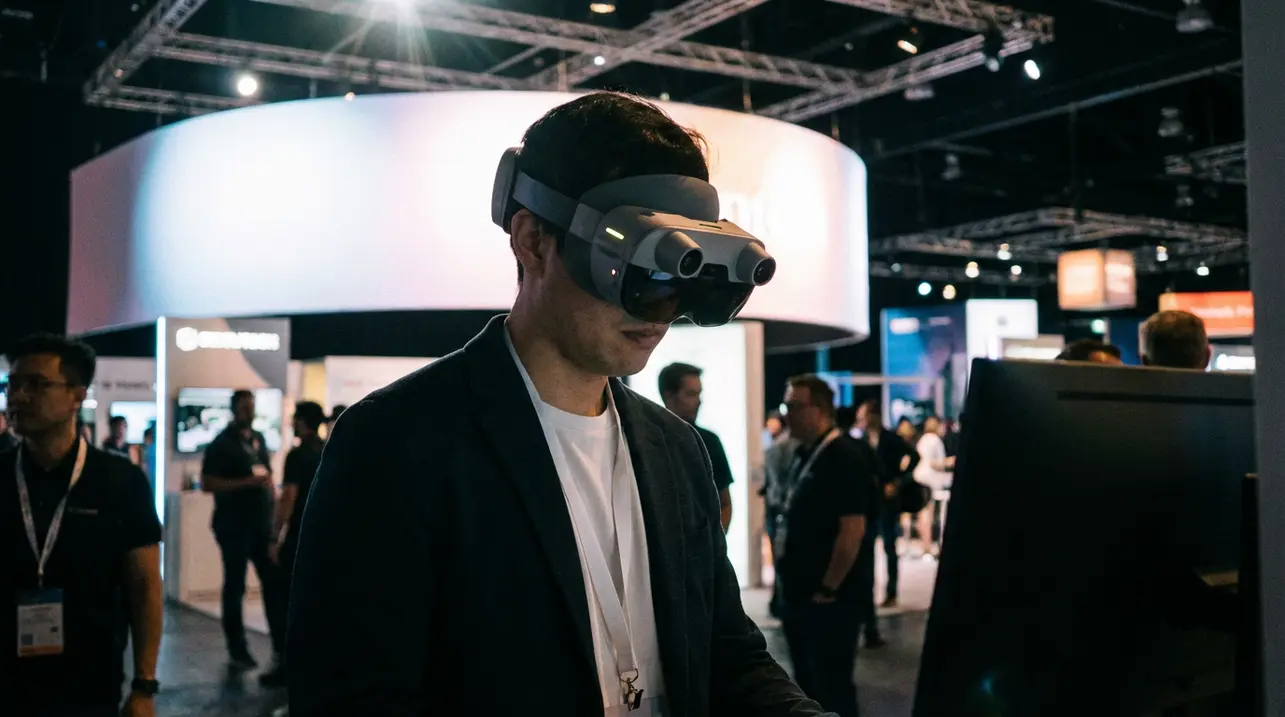
Razer's Project Motoko is a concept AI gaming headset.
SO
Sophia King
5 months ago7 min read
Razer’s Project Motoko isn’t just another concept headset; it’s a bold, almost painterly stroke on the canvas of wearable AI, a piece that feels less like a gadget and more like a wearable art installation for the digital age. Unveiled at CES, this device immediately grabs you with its name—a direct, unapologetic lift from the iconic cyberpunk anime Ghost in the Shell, which feels either brilliantly audacious or a touch tone-deaf depending on your fandom.But look past the branding, and you see Razer, a company synonymous with angular keyboards and RGB-lit gaming rigs, attempting a fascinating pivot. They’re sketching a future where the high-performance gear of the esports arena bleeds seamlessly into the fabric of daily life, a vision powered by Qualcomm’s Snapdragon silicon.Imagine a headset with twin first-person view cameras perched at eye level, not just for streaming your gameplay, but for offering real-time object and text recognition as you walk down the street. It promises a visual field wider than human peripheral vision, and microphones tuned to capture both a whispered secret and the distant rumble of a subway—this is sensory augmentation, straight out of sci-fi, rendered in plastic and circuit boards.Nick Bourne, Razer’s global head of mobile, called it a “vision for the future of AI and wearable computing,” and that partnership with Qualcomm is key; it’s the engine that could transform this from a cool CES prop into a platform. The concept’s true intrigue lies in its proposed duality.For gamers, it’s an immersive tool, potentially overlaying tactical data or translating in-game chatter. For everyone else, it morphs into an ambient AI companion, compatible with chatbots like Grok, OpenAI, and Gemini, ready to narrate your surroundings or manage your schedule.This is where the creative potential explodes. As a UX designer obsessed with tools for creatives, I see a device that could one day help a visual artist identify color palettes in real-world scenes, or a musician isolate ambient sounds to sample.It’s a bridge between the physical and digital realms, much like how Midjourney interprets text into images. Yet, the road from concept to commerce is littered with the skeletons of brilliant but impractical wearables.Google Glass taught us harsh lessons about social acceptance and the creep factor of always-on cameras. Razer has no commercial plans for Motoko, a wise disclaimer that lets them explore without the pressure of market-ready polish.For a brand built on the fervent loyalty of gamers, this foray into broader, lifestyle-focused AI is an intriguing experiment in brand elasticity. It asks: Can a company known for catering to a specific, performance-hungry tribe design a wearable that appeals to the curious, tech-embracing mainstream? The design language will need to evolve from ‘gamer aesthetic’ to something more subtle, more fashion-adjacent.The software experience must be intuitive, not overwhelming—a seamless Figma plugin, not a bloated SDK. And crucially, it must solve a real problem beyond novelty.Is the future a headset, or will it be smart glasses, neural interfaces, or something we haven’t yet imagined? Project Motoko doesn’t answer that, but it contributes a compelling, visually provocative idea to the conversation. At its heart, it’s a statement piece, a prototype that prioritizes vision over viability, reminding us that the most interesting future tools often start as wild, unshackled concepts on a show floor, waiting for the world to catch up to their promise.
#Razer
#Project Motoko
#AI wearable
#gaming headset
#computer vision
#CES
#featured
Stay Informed. Act Smarter.
Get weekly highlights, major headlines, and expert insights — then put your knowledge to work in our live prediction markets.
Related News





1 month ago
Billy Corgan and Diplo debate AI use in music industry.

1 month ago
Black Forest Labs' Self-Flow makes AI training 2.8x more efficient

1 month ago
Meta and Broadcom Extend AI Chip Partnership to 2029
2 months ago
Outpoll Weekly Recap: Entertainment (April 20 – 26, 2026)

2 months ago
Outpoll Weekly Recap: AI (April 20 – 26, 2026)
Comments
It's quiet here...Start the conversation by leaving the first comment.