

AIenterprise aiAI in Finance and Banking
Prompt Security's Itamar Golan on Building a Generative AI Security Category
DA
Daniel Reed
6 months ago7 min read
The generative AI security landscape has rapidly evolved from theoretical concern to critical enterprise priority, a transformation vividly illustrated by Prompt Security's trajectory under co-founder and CEO Itamar Golan. VentureBeat's recent discussion with Golan revealed how his academic background in transformer architectures, long before they became the bedrock of modern large language models, provided unique foresight into the emerging vulnerabilities created by LLM-driven applications.His practical experience building one of the earliest GenAI-powered security features using GPT-2 and GPT-3 convinced him that these systems were creating an entirely new and democratized attack surface, where creativity alone could become an exploit vector. This foundational insight led to the August 2023 founding of Prompt Security, a $23 million funding raise across two rounds, the assembly of a 50-person team, and culminated in a strategic acquisition by SentinelOne for an estimated $250 million in August 2025—all within a remarkably compressed two-year timeframe.The urgency of this mission is underscored by stark data: VentureBeat analysis indicates shadow AI now costs enterprises $4. 63 million per breach, 16% above average, while IBM's 2025 data shows 97% of breached organizations lack basic AI access controls.The sprawl is accelerating, with VentureBeat estimating shadow AI apps could double by mid-2026 based on current growth rates, and Cyberhaven revealing that 73. 8% of ChatGPT workplace accounts are unauthorized.Golan's strategic decisions were pivotal in navigating this explosive growth. He deliberately chose to build an entire category—an AI security control layer—rather than compete on individual features like prompt injection defense.This involved embracing enterprise-grade complexity from the outset, developing for self-hosted and hybrid deployment models, and covering diverse surfaces from browsers to agentic workflows. Furthermore, he prioritized depth over customer volume, embedding with a select group of serious enterprises to shape a product that reflected real-world AI rollout challenges.A defining moment came from an incident with a large, regulated company that had deployed a customer-facing GenAI support agent. Despite a textbook security posture, a non-technical user, through carefully crafted natural language, managed to prompt-inject the agent into revealing sensitive customer data from other support tickets.This crystallized the paradigm shift: AI doesn't just introduce new risks; it democratizes them, compressing exploit discovery time and expanding the potential damage radius. This incident validated Prompt Security's core thesis and accelerated development of runtime protection for customer-facing apps and cross-tenant data leakage prevention.Post-acquisition, the focus shifts to integrating these capabilities across SentinelOne's Singularity Platform, extending model-agnostic coverage and securing the gateway between AI applications and thousands of MCP servers. This consolidation mirrors a broader market trend, with Palo Alto Networks acquiring Protect AI for $700 million, Tenable acquiring Apex for $100 million, and Cisco buying Robust Intelligence for a reported $500 million. As Golan astutely noted, the organizations that will thrive in this new era are those who embed security into their AI adoption strategy from the very beginning, treating it not as a bolt-on but as a fundamental component of the AI lifecycle itself.
#featured
#generative AI security
#prompt injection
#data leakage
#shadow AI
#SentinelOne acquisition
#enterprise adoption
#AI governance
Stay Informed. Act Smarter.
Get weekly highlights, major headlines, and expert insights — then put your knowledge to work in our live prediction markets.
Related News




4 weeks ago
Trump wants to stop states from regulating AI

4 weeks ago
Canva Repositions as an AI Platform with Design Tools

4 weeks ago
Billy Corgan and Diplo debate AI use in music industry.

4 weeks ago
Black Forest Labs' Self-Flow makes AI training 2.8x more efficient

4 weeks ago
Meta and Broadcom Extend AI Chip Partnership to 2029

4 weeks ago
Outpoll Weekly Recap: Entertainment (April 20 – 26, 2026)

4 weeks ago
Outpoll Weekly Recap: AI (April 20 – 26, 2026)
4 weeks ago
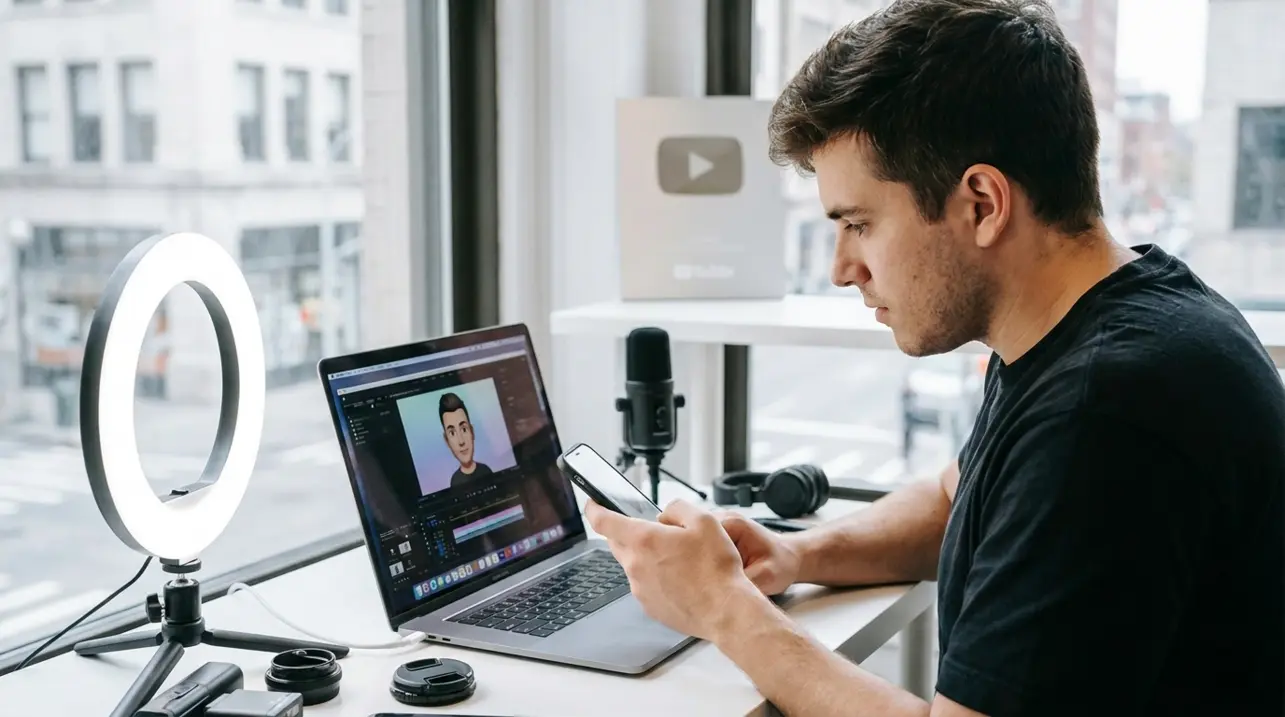
Google Introduces AI-Generated Avatars for YouTube Shorts

4 weeks ago
OpenAI CEO Sam Altman attacked at home over AI fears

Hottest4 weeks ago
Mozilla: Anthropic's AI found 271 Firefox zero-days.
Comments
CO
CodeMonkey4229.11.2025
lol of course 97% of companies have no controls, we're all just out here rawdogging the AI apocalypse
CU
CuriousGeorge28.11.2025
wow that's a wild timeline for a company, two years is nothing seems like they really saw this coming before anyone else did