

AIroboticsAI in Automation
Nvidia Aims to Become the Default Robotics Platform at CES
DA
Daniel Reed
5 months ago7 min read
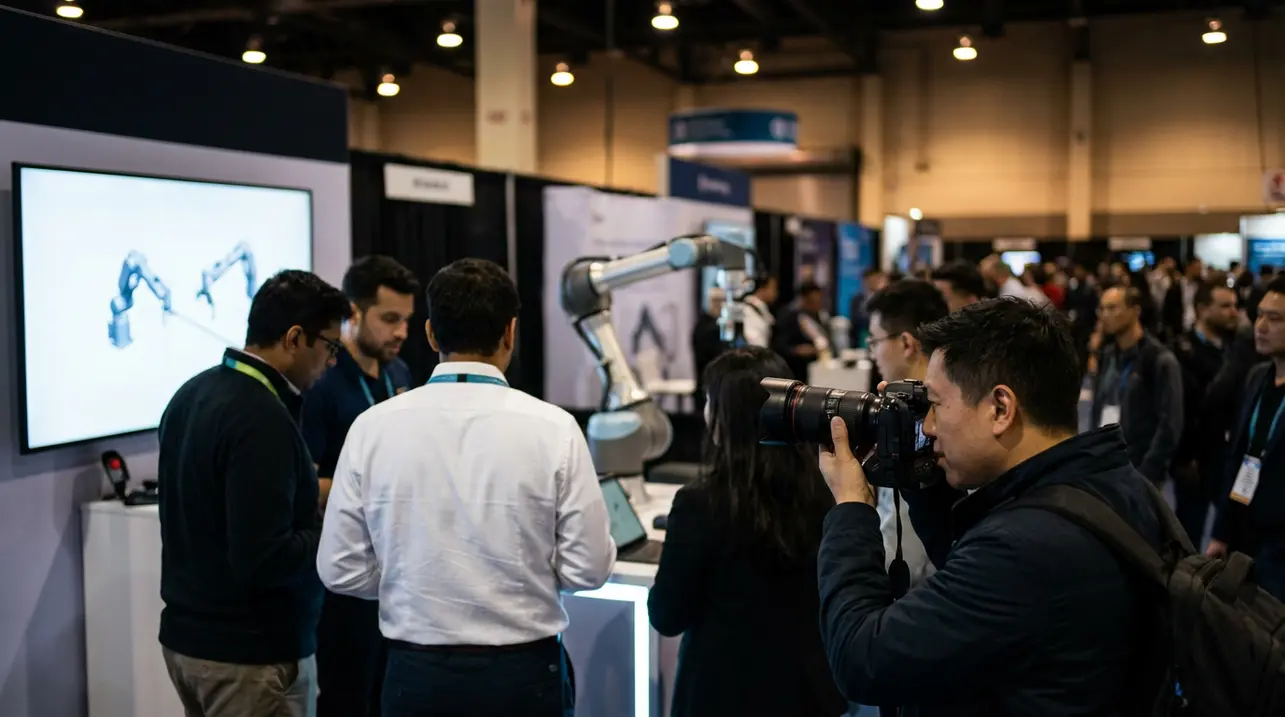
At CES 2026, Nvidia made a move that was less a product launch and more a declaration of strategic intent, unveiling a comprehensive, full-stack robotics ecosystem designed to position the company as the industry's indispensable foundation. This isn't merely about selling more powerful chips; it's a calculated play to become the default operating system for the physical world of automation, encompassing everything from sophisticated foundation models and hyper-realistic simulation tools to the underlying hardware compute platforms.The ambition is staggering in its scope: to do for robotics what Windows did for personal computing or what Android aimed to do for mobile—establish a ubiquitous, vertically integrated platform upon which every other developer, manufacturer, and innovator builds. For years, the robotics field has been fragmented, a landscape of bespoke solutions where every company, from automotive giants to warehouse automation startups, had to painstakingly assemble its own technology stack, from perception and planning algorithms to the control systems governing movement.Nvidia's announcement seeks to collapse that complexity into a unified layer of abstraction, offering a suite of tools like the Isaac robotics platform, which now boasts more advanced generative AI models for training robots, and Omniverse for simulation, creating vast digital twins where millions of robots can learn and be tested in parallel before a single physical unit is deployed. The historical precedent here is clear: in the evolution of computing, the true power accrued not necessarily to those who made the best hardware, but to those who controlled the critical software platforms and development environments that became industry standards.Nvidia, having already achieved a near-monopoly in AI training chips through its data center GPUs, is now leveraging that dominance to architect the next layer of the stack. By providing the essential tools for simulation and AI-driven autonomy, they are effectively setting the rules of the road for the next industrial revolution.Expert commentary suggests this is a masterstroke in ecosystem lock-in; once a major automaker or logistics company designs its robotic fleet within Nvidia's simulation environment and trains its AI models on Nvidia's hardware, the switching costs become prohibitively high, creating a durable competitive moat. The possible consequences ripple across multiple industries.For competitors like Intel, traditional industrial automation firms, and even cloud giants like AWS and Google, which have their own robotics ambitions, Nvidia's move represents a formidable challenge, forcing them to either compete on the entirety of the stack or find niche areas of specialization. For the broader market, the acceleration could be profound.A standardized, powerful platform could dramatically lower barriers to entry, enabling smaller startups to innovate on top of a robust foundation rather than reinventing the wheel, potentially unleashing a wave of robotic applications in healthcare, agriculture, and domestic services that were previously economically unfeasible. However, this centralization of power also raises critical questions about dependency, security, and the ethical governance of autonomous systems.If one company's platform underpins the global robotic infrastructure, its design choices, pricing models, and even its geopolitical compliance become de facto industry standards. The analytical insight is that Nvidia is no longer just a semiconductor company; it is executing a pivot to become a *metaphysical infrastructure* provider, selling the digital realm where physical machines are born, educated, and deployed.Their success in this endeavor won't be measured just in chip sales, but in the percentage of the world's roboticists who boot up an Nvidia-powered workstation and open an Nvidia-developed SDK as the default first step of their workday. The battle at CES wasn't for the best new gadget, but for the soul of the next computing paradigm.
#Nvidia
#robotics platform
#foundation models
#simulation
#hardware
#CES 2026
#featured
Stay Informed. Act Smarter.
Get weekly highlights, major headlines, and expert insights — then put your knowledge to work in our live prediction markets.
Related News









2 months ago
Trump wants to stop states from regulating AI
2 months ago
Canva Repositions as an AI Platform with Design Tools

2 months ago
Billy Corgan and Diplo debate AI use in music industry.

2 months ago
Black Forest Labs' Self-Flow makes AI training 2.8x more efficient
2 months ago
Meta and Broadcom Extend AI Chip Partnership to 2029
Comments
It's quiet here...Start the conversation by leaving the first comment.