AIchips & hardwareAI Accelerators
Intel is going all-in on advanced chip packaging
DA
Daniel Reed
1 month ago7 min read
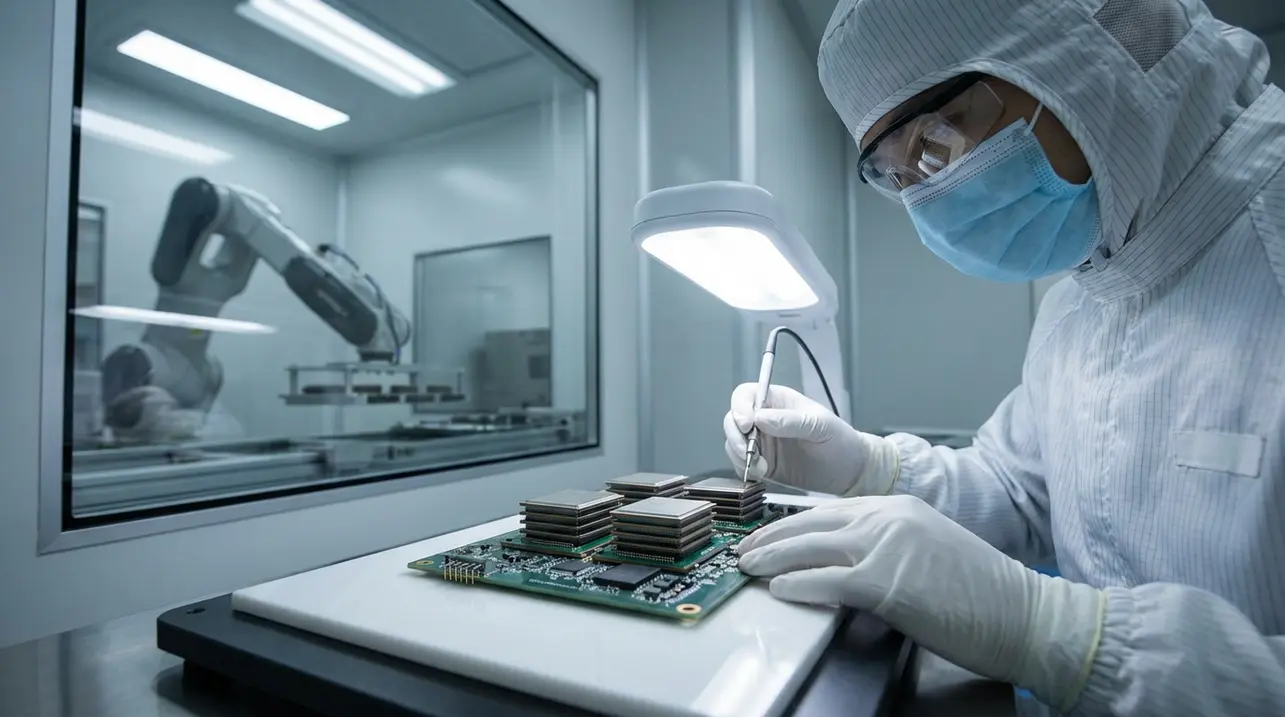
In the high-stakes arena of AI hardware, Intel is making a monumental strategic wager, pivoting from the traditional race for transistor miniaturization to a new frontier: advanced chip packaging. Technologies like its Foveros 3D stacking and EMIB (Embedded Multi-die Interconnect Bridge) are no longer just supporting acts; they are central to the company's plan to reclaim leadership.The logic is compelling. As AI models grow exponentially, the bottleneck isn't just raw compute power but the crippling energy cost and latency of moving data between discrete components.By enabling the tight integration of diverse chiplets—specialized CPUs, GPUs, and high-bandwidth memory—into a single, cohesive package, Intel aims to deliver the performance-per-watt that the next generation of data center servers and edge devices will demand. This architectural shift mirrors the industry's broader move toward heterogeneous integration, a path also being explored by rivals like AMD with its own chiplet designs and TSMC with its SoIC technology.However, Intel's aggressive push is as much about necessity as innovation. The company faces a perfect storm of competition: NVIDIA's dominant GPU ecosystem, AMD's resurgent Epyc and Instinct lines, and the rising tide of efficient Arm-based designs from Apple and Qualcomm.Successfully executing this packaging-centric roadmap requires not only flawless technical execution but also a colossal capital outlay for new manufacturing tools and facility upgrades, a heavy burden even for a semiconductor titan. The implications of this bet extend far beyond Intel's balance sheet.If successful, it could redefine global semiconductor supply chains, shifting value towards packaging and assembly—a domain where companies like Taiwan's ASE Group currently lead—and influence the geopolitical landscape of chip manufacturing. Yet, the market's frenetic hype, underscored by ventures like Allbirds' unexpected AI chip foray, also signals a landscape rife with execution risk for newcomers and incumbents alike. Intel's packaging gamble is, fundamentally, a bid to write the next chapter of Moore's Law not through shrinking transistors, but by reimagining how we assemble the silicon brain itself.
#Chips & Hardware
#AI Accelerators
#NVIDIA GPUs; AMD and Intel AI Chips; Google TPU; Apple Silicon; AI Accelerators; Energy Efficiency; Edge AI Hardware; Cloud Infrastructure; AI Data Centers; Hardware Partnerships
#editorial picks
Stay Informed. Act Smarter.
Get weekly highlights, major headlines, and expert insights — then put your knowledge to work in our live prediction markets.
Related News






1 month ago
Trump wants to stop states from regulating AI

1 month ago
Canva Repositions as an AI Platform with Design Tools

1 month ago
Billy Corgan and Diplo debate AI use in music industry.

1 month ago
Black Forest Labs' Self-Flow makes AI training 2.8x more efficient

1 month ago
Meta and Broadcom Extend AI Chip Partnership to 2029

1 month ago
Outpoll Weekly Recap: Entertainment (April 20 – 26, 2026)

1 month ago
Outpoll Weekly Recap: AI (April 20 – 26, 2026)

1 month ago
Google Introduces AI-Generated Avatars for YouTube Shorts

1 month ago
OpenAI CEO Sam Altman attacked at home over AI fears

Hottest1 month ago
Mozilla: Anthropic's AI found 271 Firefox zero-days.
Comments
It's quiet here...Start the conversation by leaving the first comment.