How to watch AMD's CES 2026 keynote live with CEO Lisa Su
DA
2 days ago7 min read
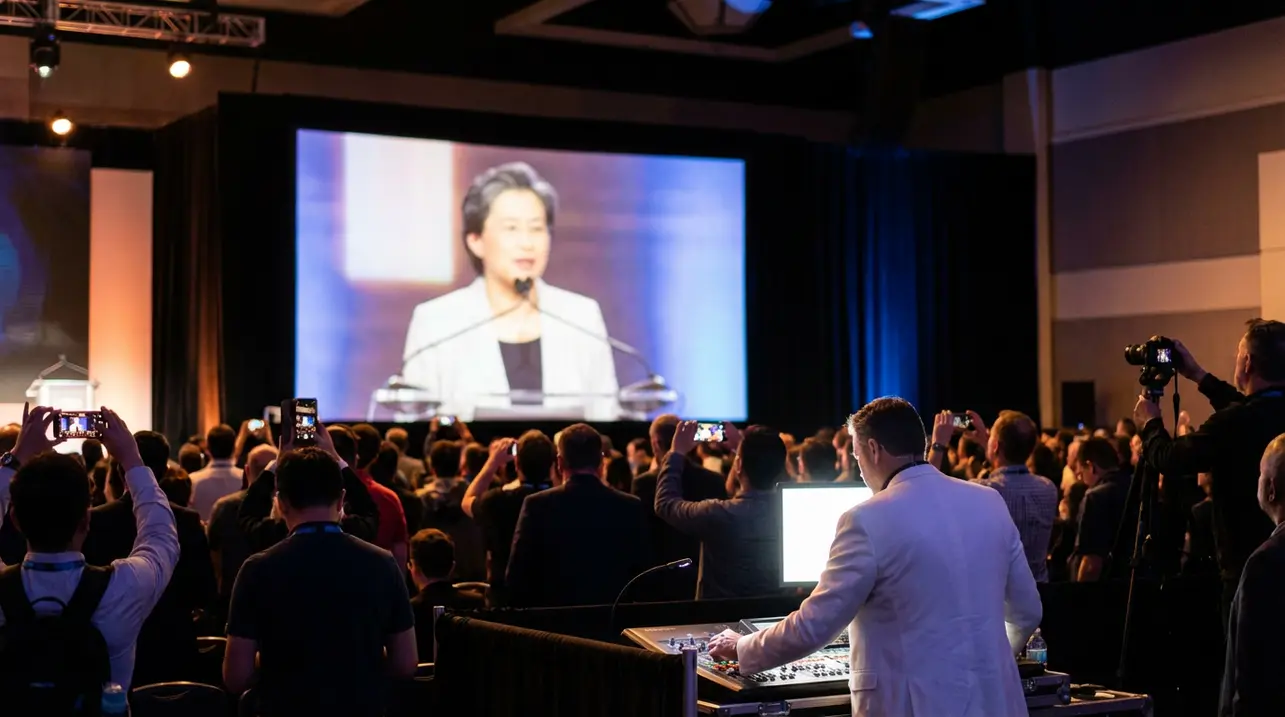
The tech world’s annual pilgrimage to Las Vegas for CES 2026 kicks off with a heavyweight contender in the AI arena taking center stage. On Monday, January 5, at 9:30 PM ET, AMD Chair and CEO Dr.Lisa Su will deliver the lead keynote from the Venetian’s Palazzo Ballroom, a slot that underscores the company’s ascendant role in defining the next phase of computational intelligence. This isn't just another product launch; it's a strategic declaration of intent.AMD has signaled it will outline its vision for AI implementations across the full spectrum, from sprawling cloud data centers to the enterprise edge and down to the personal devices in our hands. For those tuning in, the livestream will be hosted on the official CES YouTube channel, embedding the event directly into the global conversation.The timing is itself a piece of strategic theater, capping a press day that will see presentations from rivals NVIDIA and Intel, setting the stage for a direct comparison of architectural philosophies and market ambitions in the white-hot AI chip race. The core narrative AMD is poised to advance revolves around the democratization and diversification of AI processing.While the company is traditionally tight-lipped about specifics, the stated focus on “updates on AI solutions” suggests a holistic push beyond mere silicon. We can expect a deep dive into how AMD’s portfolio—spanning Instinct accelerators for data centers, Ryzen AI processors for PCs, and adaptive SoCs for embedded systems—creates a cohesive, software-enabled stack.This integrated approach is critical for challenging NVIDIA’s deeply entrenched CUDA ecosystem, which has long been the default platform for AI development. AMD’s counter-strategy, embodied in its open ROCm software platform, aims to provide a viable, high-performance alternative, and CES provides the perfect megaphone to showcase its progress to developers and enterprise buyers alike.On the consumer front, the anticipation is palpable for new Ryzen silicon. Dr.Su’s mention of “advancements driven by Ryzen CPUs” is a clear nod to the expected unveiling of next-generation processors, likely based on the Zen 5 architecture. Industry whispers point to the potential reveal of the Ryzen 7 9850X3D, a chip speculated to deliver groundbreaking single-threaded performance thanks to its 3D V-Cache technology, potentially claiming the crown for the fastest gaming CPU.Furthermore, the anticipated Ryzen 9000G series, possibly featuring integrated RDNA graphics, would solidify AMD’s position in the lucrative mainstream and compact PC markets. These launches are not isolated events; they are integral to the company’s “AI PC” thesis, where on-device neural processing units (NPUs) within Ryzen chips handle tasks like real-time language translation, advanced background blur, and local inference, reducing latency and dependency on the cloud.
#featured
#AMD
#CES 2026
#Lisa Su
#Ryzen chips
#AI developments
#FSR Redstone
#keynote
Stay Informed. Act Smarter.
Get weekly highlights, major headlines, and expert insights — then put your knowledge to work in our live prediction markets.
Another critical piece of the puzzle will be gaming and content creation, domains where AMD’s FidelityFX Super Resolution (FSR) upscaling technology battles NVIDIA’s dominant DLSS. The preview of “FSR Redstone” in December hinted at a significant generational leap, and CES offers the ideal venue for its formal debut.
The goal is clear: close the visual fidelity and performance gap with DLSS 4, announced at CES 2025, thereby making high-frame-rate, high-resolution ray-traced gaming more accessible on a broader range of hardware, including consoles and PCs powered by AMD graphics. This technological arms race has profound implications for market dynamics.
The interlinked fortunes of the major players were highlighted recently when OpenAI committed to purchasing tens of billions of dollars worth of AMD chips for its data centers, a massive vote of confidence that directly challenges NVIDIA’s supply hegemony. Simultaneously, NVIDIA’s own multi-billion-dollar investments in OpenAI and a strategic stake in Intel reveal a complex, co-opetitive landscape where capital and technology flow in multiple directions to secure influence over the AI infrastructure of the future.
Dr. Su’s keynote, therefore, is more than a product showcase; it’s a statement on market positioning.
AMD is no longer just the value alternative; it is aggressively courting the high-performance compute market that fuels large language models and generative AI. The success of its Instinct MI300X accelerators has provided a credible foothold.
At CES, the company must articulate how it will scale this success, convincing a skeptical but curious market that its hardware and software roadmap offers a truly competitive, open, and performant path forward. The broader context is one of an industry at an inflection point.
As AI models grow in size and complexity, the demand for efficient, specialized compute explodes. AMD’s bet on a heterogeneous architecture—leveraging CPUs, GPUs, and dedicated AI accelerators—aims to provide optimized solutions for every layer of the AI workload stack.
Dr. Su’s presentation will be scrutinized for technical depth, partnership announcements (perhaps with major cloud providers like Microsoft Azure or AWS), and a clear, compelling narrative that connects silicon breakthroughs to tangible developer and end-user benefits. In essence, watch for how AMD frames the future: not as a walled garden, but as an open ecosystem where choice and performance converge, challenging the industry’s established order from the data center to the desktop.