AIroboticsDrone Technology
DJI Launches Transparent Robotic Vacuum Cleaner
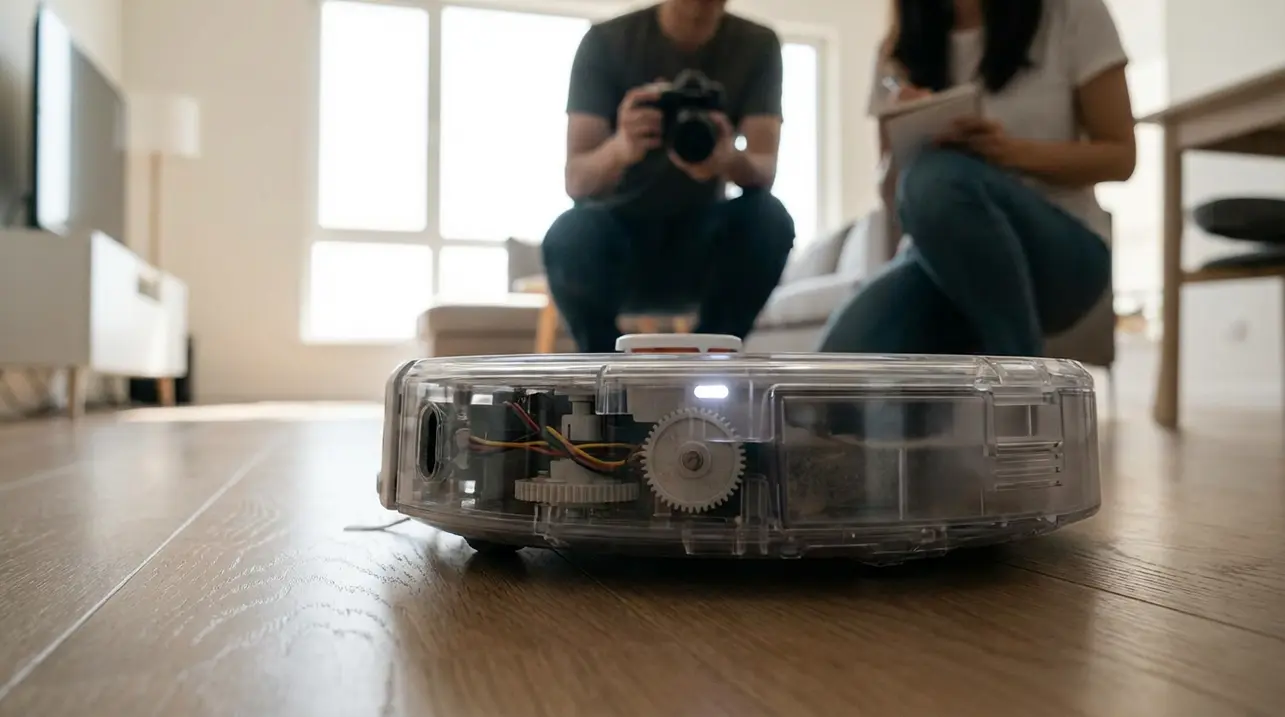
DJI, the Chinese tech giant that has long dominated the skies with its consumer drones, has just made a fascinating and somewhat unexpected move into the domestic sphere, unveiling its first robotic vacuum cleaner, the DJI Romo. The standout feature, and the one that has immediately captured the imagination of tech watchers and design enthusiasts alike, is its transparent body—a deliberate aesthetic and functional choice that sets it apart from the sea of opaque, disc-shaped competitors like the Roomba.This isn't just a gadget launch; it's a statement of intent from a company known for precision engineering and sleek design, suggesting a future where our home appliances are not just functional tools but objects of curiosity and conversation. To understand the significance, you have to look at DJI's trajectory.Founded in 2006, the company didn't just create a market for consumer drones; it utterly defined it, achieving a level of market dominance that is rare in any tech sector. Their expertise in stabilization, navigation, and compact, powerful sensors is legendary.The leap from navigating complex three-dimensional airspace to mapping the two-dimensional floorplan of a living room might seem vast, but the core technological challenges—simultaneous localization and mapping (SLAM), obstacle avoidance, and efficient pathfinding—are strikingly similar. The Romo, therefore, represents a logical, if bold, diversification, applying a battle-tested aerial robotics stack to a crowded but still-evolving terrestrial market.The transparent shell is more than a gimmick. In an industry where most devices are sealed black boxes, both literally and figuratively, DJI is offering a window into the machine's soul.You can watch the brush rolls spin, see the dustbin fill, and observe the intricate dance of its internal components—a LiDAR sensor likely spinning for mapping, gears turning, and the logic board processing its surroundings. This design philosophy speaks to a desire for transparency (pun intended) and perhaps a confidence in its internal engineering that it wants to showcase.It invites the user to engage with the device as a piece of technology, not just an appliance, fostering a connection similar to how enthusiasts admire the internal layout of a high-end gaming PC or the movement of a mechanical watch. What does this mean for the competitive landscape? Companies like iRobot (US), Roborock (China), and Ecovacs (China) have built sophisticated ecosystems with auto-emptying docks, mopping functions, and advanced AI for pet waste detection.DJI's entry, with its brand cachet and proven R&D prowess, immediately positions it as a premium contender. The Romo isn't likely to compete on price but on performance and design intelligence.
#DJI Romo
#robotic vacuum
#transparent design
#home automation
#consumer robotics
#lead focus news