Entertainmenttheatre & artsArt Exhibitions
Joan Semmel's Beautifully Disturbing Paintings Challenge Eroticism
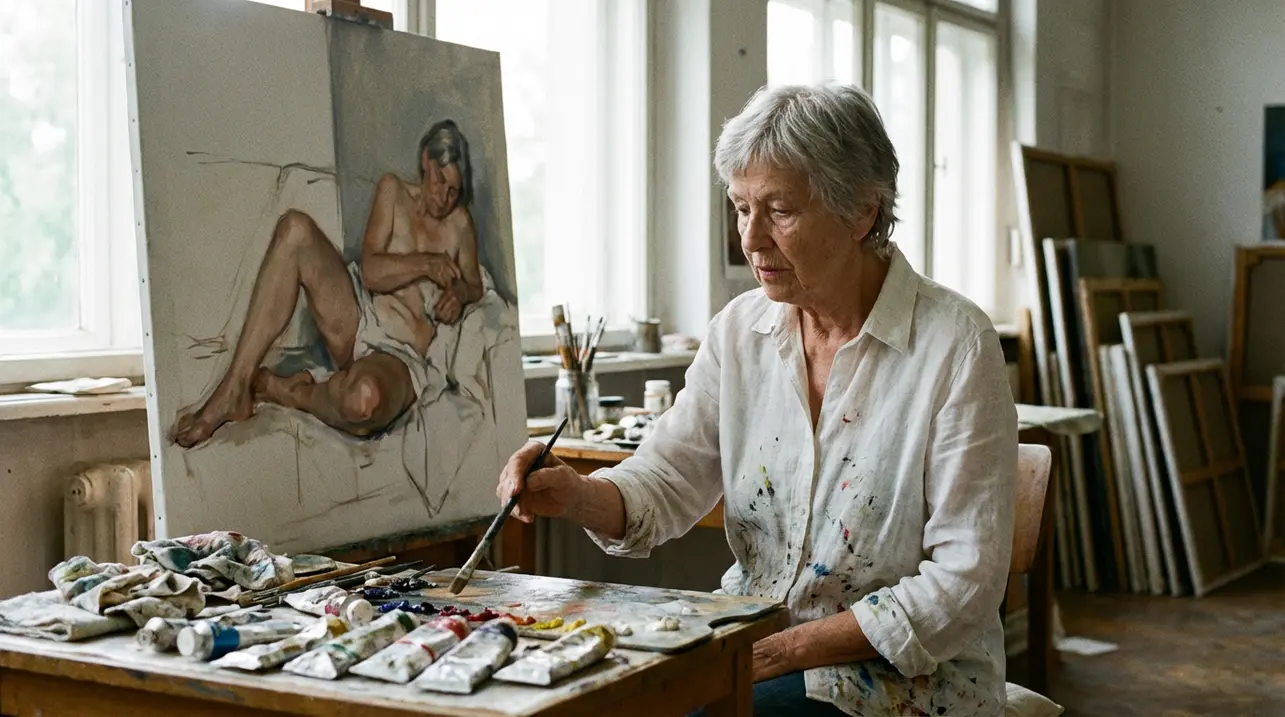
In a cultural landscape still saturated with the male gaze, the work of nonagenarian painter Joan Semmel stands not as a gentle suggestion but as a profound and necessary correction. Her latest exhibition, a powerful retrospective of a career spanning over five decades, forces a confrontation with the female form that is, as the title suggests, both beautifully disturbing and a direct challenge to reductive eroticism.Semmel, now in her nineties and painting with undiminished vigor, has spent a lifetime insisting through her art that a woman’s body is a site of complex narrative, lived experience, and autonomous identity, not merely an object for consumption. Her large-scale, intimate canvases, often depicting her own body from a first-person perspective—a vantage point radical in its simplicity—invite the viewer into a dialogue about aging, desire, and self-possession that feels urgently contemporary.This isn't about the sanitized, airbrushed version of femininity marketed to us; it's about flesh that has weight, skin that tells time, and a presence that commands space on its own terms. The disturbing quality critics note isn't born of grotesquery, but of this raw honesty, a refusal to flatter or obscure that disrupts our conditioned responses.Where mainstream media and much of art history have framed the female nude through a lens of passivity or idealization, Semmel’s work asserts agency. She paints the body as the subject, not the object, of its own experience, a political act that connects her to feminist movements from the 1970s to today.Her technique—lush, confident brushwork and a masterful, sensual use of color—deliberately employs the traditional language of painting to subvert its historical purposes. She is, in effect, using the tools of the old masters to dismantle their patriarchal vision, a strategy that gives her critique added depth and resonance.Art historians point to her pivotal role during the feminist art movement of the 1970s, where she and peers like Sylvia Sleigh actively reclaimed the nude, yet Semmel’s relevance has only amplified in an era of digitally manipulated selfies and ongoing battles over bodily autonomy. Her paintings ask uncomfortable questions: Why are we so unsettled by an accurate portrayal of an older woman’s body? What does it mean to see desire from the perspective of the one who feels it, rather than the one who observes it? The impact of her challenge extends beyond gallery walls, offering a vital counter-narrative in discussions about representation, consent, and the very nature of seeing.In a society still grappling with the consequences of objectification, Semmel’s enduring project provides a template for looking—and for being—that is rooted in authenticity and power. Her work is a testament to the idea that the personal, rendered with unflinching clarity, remains profoundly political, and that a woman’s body, in all its stages, is interesting for infinitely more than its erotic potential.
#editorial picks news
#Joan Semmel
#painting
#feminist art
#body image
#aging
#nonagenarian artist
#contemporary art