

AIroboticsHumanoid Robots
CES 2026 Showcases AI and Robotics Innovations
DA
Daniel Reed
5 months ago7 min read
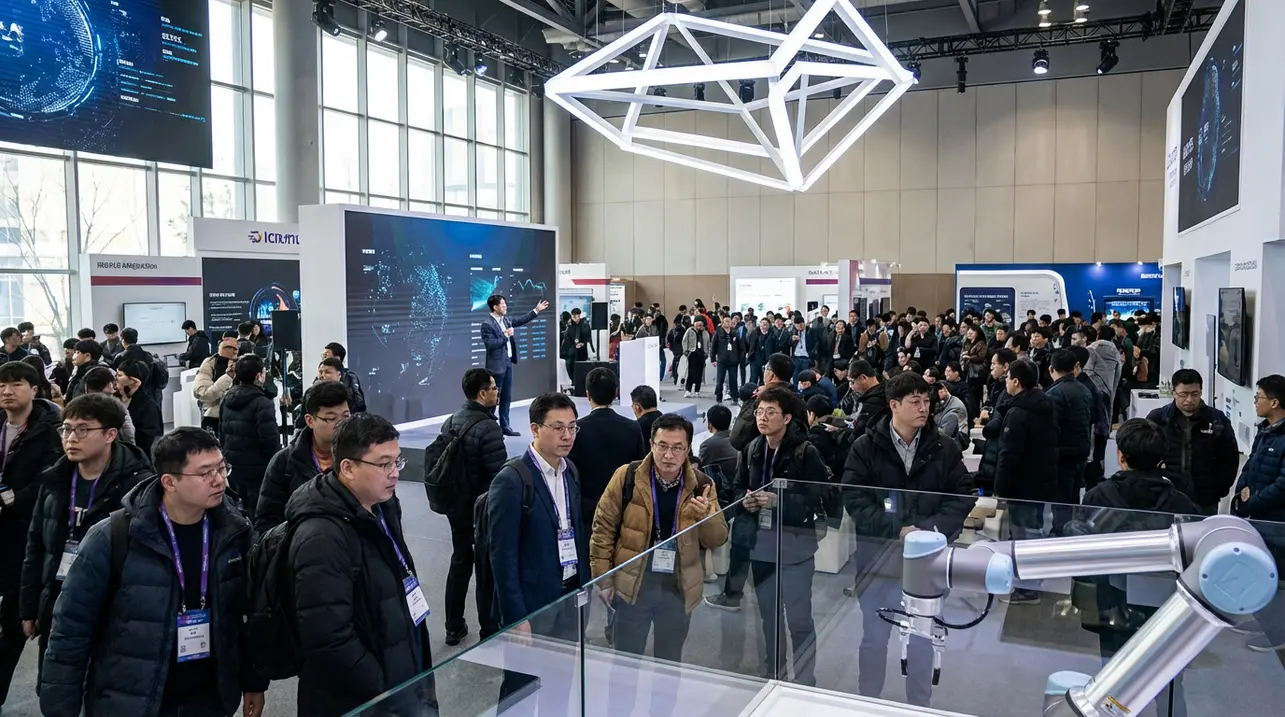
As the sprawling spectacle of CES 2026 unfolds across the Las Vegas Convention Center, the narrative is no longer about whether artificial intelligence will permeate our world, but rather how deeply and in what forms it will become the substrate of our daily existence. This year’s Consumer Electronics Show, organized by the Consumer Technology Association, serves as a potent crystallization of a trend long in the making: AI is transitioning from a novel feature to an ambient, infrastructural force.The presence of industry titans like Nvidia’s Jensen Huang and AMD’s Lisa Su delivering keynotes underscores this shift; they are no longer merely showcasing silicon but articulating holistic visions for AI-driven productivity and solution stacks that will define enterprise and consumer paradigms for the coming decade. The raw computational horsepower that fueled the initial large language model boom is now being channeled into specialized, tangible applications, a maturation that mirrors the evolution of the internet from a curiosity to a utility.In healthcare, for instance, we’re moving beyond diagnostic algorithms to see AI tackle systemic data scarcity and behavioral modification, as evidenced by ventures like Beyond Medicine’s targeted prescription app. This represents a significant pivot from pattern recognition to intervention, a step closer to the long-envisioned goal of personalized, predictive medicine.The robotics pavilion, meanwhile, is experiencing its own Cambrian explosion. LG’s ‘CLOiD’ helper bot and Hyundai’s manufacturing advancements are just the public face of a broader industrial push.More telling is the proliferation of humanoid forms and specialized domestic units, suggesting the industry is converging on physical embodiments for AI that can navigate human environments. The extended reality platforms being demoed—essentially virtual proving grounds for these physical AIs—highlight the complex simulation-to-reality pipeline now required to train such systems safely and efficiently.This isn't just about convenience; it’s a fundamental re-architecting of labor and domestic life, with profound socioeconomic implications that the tech world is only beginning to grapple with. CTA Executive Chair Gary Shapiro’s commentary to the AP reinforces this, noting the unprecedented number of robotic exhibits while pragmatically acknowledging the current state of ‘sometimes works, sometimes doesn’t.’ His focus, however, quickly turns to energy—the critical, often overlooked bottleneck for the AI revolution. The debut of a small-scale nuclear-powered energy creation device by a Korean firm at the show is perhaps the most quietly significant announcement of all.It signals a dawning recognition that the exponential demand for clean, dense power to fuel data centers and robotics is the next grand challenge, one that could spur a parallel wave of energy innovation as impactful as the AI models themselves. Shapiro’s dismissal of an ‘AI bubble,’ contrasting today’s revenue-generating giants with the profitless dot-com era, is analytically sound but may underestimate the froth in the application layer.While the foundational model providers have clear monetization, the ecosystem of startups promising AI-powered everything faces a brutal consolidation, a necessary winnowing that will separate genuinely useful tools from mere buzzword compliance. The show’s new focus on assistive technology for the disability community, spearheaded by Verizon, points to a more humane and impactful vector for growth—using AI to augment human capability rather than simply automate tasks.Ultimately, CES 2026 reveals an industry in a state of purposeful diffusion. The core technology of deep learning is now being refracted through the prisms of specific domains—health, home, mobility, creativity—each with its own set of constraints, ethics, and market dynamics. The question is no longer if AI will change the world, but how we will manage the world it is creating, from the silicon up through the social contract.
#CES 2026
#artificial intelligence
#robotics
#humanoid robots
#AI in healthcare
#consumer technology
#featured
Stay Informed. Act Smarter.
Get weekly highlights, major headlines, and expert insights — then put your knowledge to work in our live prediction markets.
Related News









2 months ago
Trump wants to stop states from regulating AI
2 months ago
Canva Repositions as an AI Platform with Design Tools

2 months ago
Billy Corgan and Diplo debate AI use in music industry.
2 months ago
Black Forest Labs' Self-Flow makes AI training 2.8x more efficient

2 months ago
Meta and Broadcom Extend AI Chip Partnership to 2029
Comments
It's quiet here...Start the conversation by leaving the first comment.