
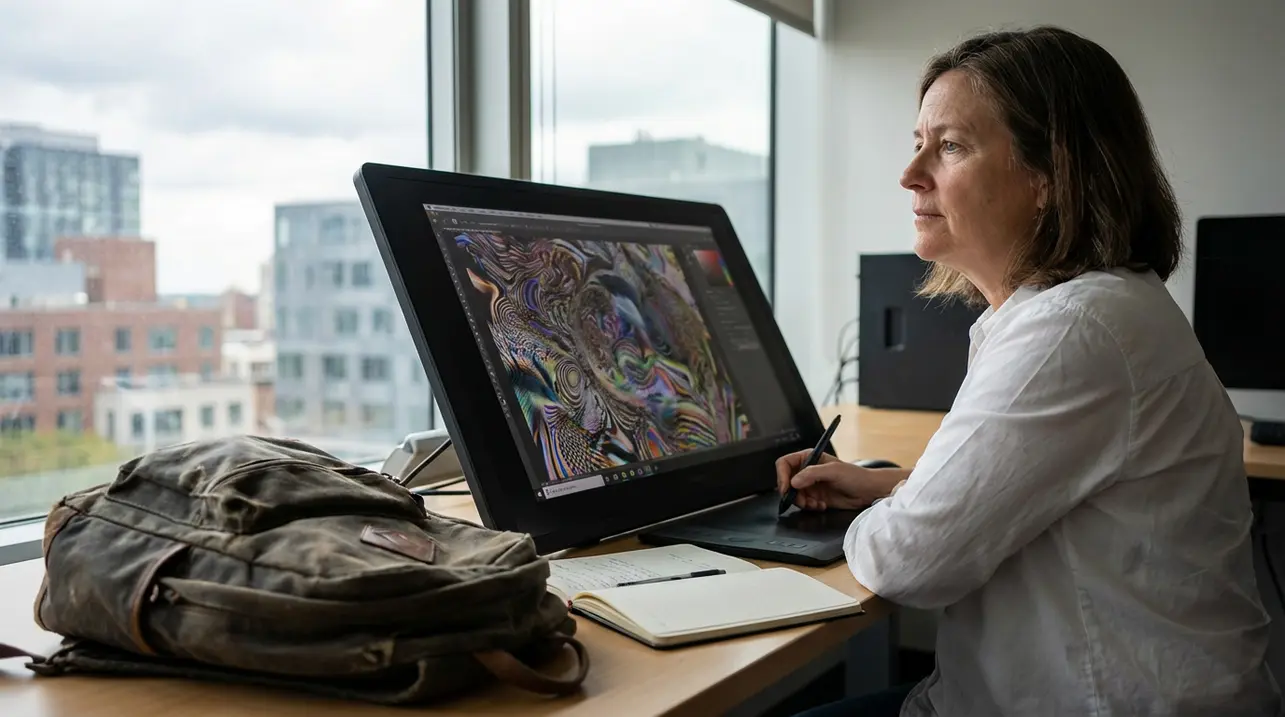
AIgenerative aiText Generation
AI is old news. Generative AI is the future.
DA
Daniel Reed
4 months ago7 min read
The term Artificial Intelligence has become so ubiquitous in our cultural lexicon that it often feels like a relic of science fiction, conjuring images of Skynet or the sentient machines from *The Matrix*. Yet, the reality is far more mundane and deeply embedded in our daily routines.For decades, AI has been the silent engine powering the modern digital experience. It’s the recommendation algorithm on your streaming service that suggests a new series the moment you finish a movie; it’s the curated list of products that appears as you browse an online store, a feat of machine learning designed to predict and shape your desires.This is the AI of rules, automation, and optimization—a sophisticated but fundamentally reactive tool that businesses have leveraged for years to streamline processes, target advertisements, and enhance user engagement. It’s old news, a mature technology operating in the background.The true paradigm shift, the frontier that redefines the conversation, is Generative AI. This isn't about systems that follow pre-programmed rules or analyze existing data to make a prediction.Generative AI creates. It synthesizes entirely new content—be it text, code, images, music, or complex simulations—from the vast datasets on which it's trained.Models like large language models (LLMs) move beyond simple pattern recognition to something approximating understanding and original output, capable of drafting legal documents, generating functional software, or producing photorealistic art from a textual prompt. The implications are profound, touching every sector from creative industries to scientific research.Where traditional machine learning offered efficiency, generative AI offers a form of digital imagination, raising existential questions about authorship, intellectual property, and the very nature of human creativity. The debate around Artificial General Intelligence (AGI) has been reignited, not by theoretical musings, but by the tangible, sometimes uncanny, outputs of these systems.However, this new frontier is not without its significant challenges. The computational cost is staggering, ethical quandaries around bias and misinformation are amplified, and the regulatory framework is struggling to keep pace.As an AI researcher, I see this moment as analogous to the leap from the curated, static web of the early 2000s to the participatory, dynamic platform of Web 2. 0.We are transitioning from using AI to analyze our world to employing AI to actively co-create it. The future belongs to those who can harness this generative capability responsibly, moving beyond automation to true augmentation, where human intuition guides machine-generated possibility. The old AI helped us find what we wanted; the new AI helps us imagine what could be.
#generative ai
#artificial intelligence
#machine learning
#future technology
#editorial picks news
Stay Informed. Act Smarter.
Get weekly highlights, major headlines, and expert insights — then put your knowledge to work in our live prediction markets.
Related News


4 weeks ago
Trump wants to stop states from regulating AI

4 weeks ago
Canva Repositions as an AI Platform with Design Tools

4 weeks ago
Billy Corgan and Diplo debate AI use in music industry.

4 weeks ago
Black Forest Labs' Self-Flow makes AI training 2.8x more efficient

4 weeks ago
Meta and Broadcom Extend AI Chip Partnership to 2029
4 weeks ago
Outpoll Weekly Recap: Entertainment (April 20 – 26, 2026)

4 weeks ago
Outpoll Weekly Recap: AI (April 20 – 26, 2026)

4 weeks ago
Google Introduces AI-Generated Avatars for YouTube Shorts

4 weeks ago
OpenAI CEO Sam Altman attacked at home over AI fears
Hottest4 weeks ago
Mozilla: Anthropic's AI found 271 Firefox zero-days.
Comments
It's quiet here...Start the conversation by leaving the first comment.