

AIenterprise aiAI in Manufacturing
AI and Robotics in East Asia: Redefining Jobs, Not Replacing Them
DA
Daniel Reed
6 months ago7 min read
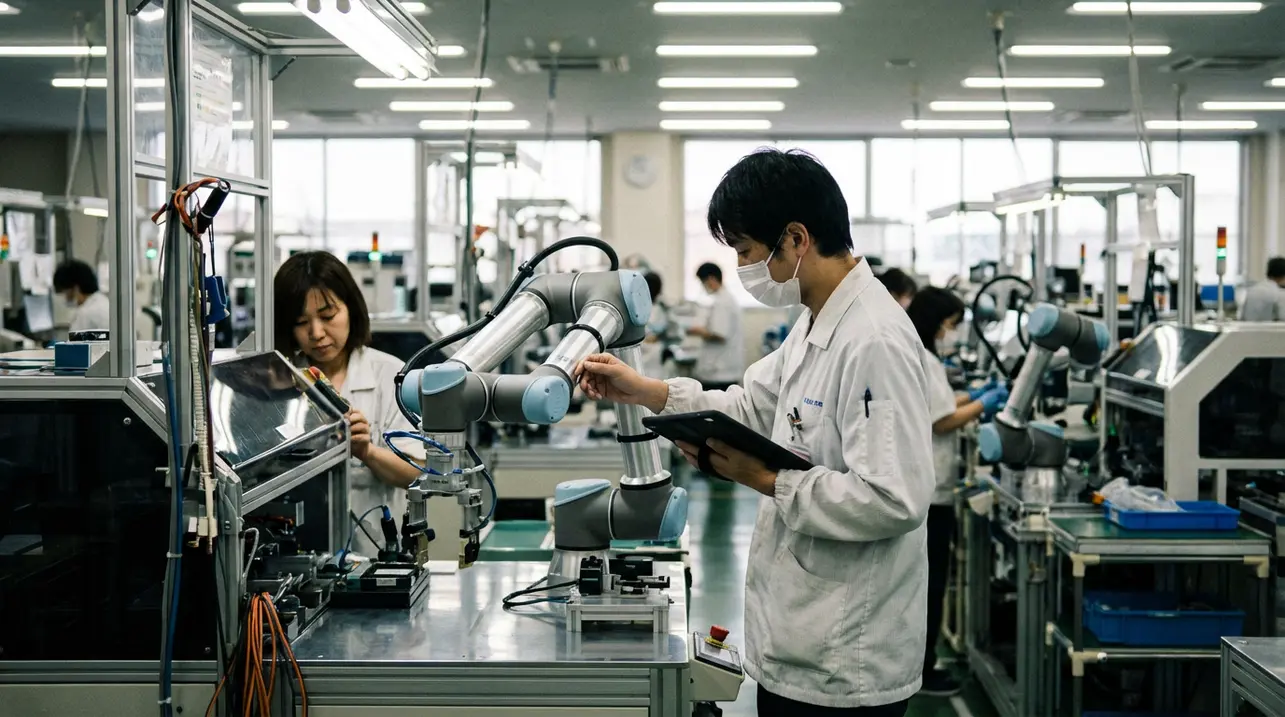
The dominant Western narrative surrounding automation, artificial intelligence, and robotics has long been one of existential dread, painting a picture of inevitable job displacement and economic upheaval. This perspective, however, is being fundamentally challenged by the empirical reality unfolding in East Asia, a region that now accounts for a staggering 74% of all industrial robots deployed globally.Far from a story of simple replacement, the integration of these technologies in nations like China and Vietnam is a complex, nuanced evolution of the human role in production, redefining jobs within innovative frameworks that prioritize higher efficiency and adaptive manufacturing. To understand this divergence, we must move beyond the simplistic 'robots versus workers' dichotomy and examine the distinct socio-economic and industrial policies that shape technological adoption.In countries like South Korea and Japan, robotics integration has been a decades-long strategic pursuit, often developed in close collaboration with unions and educational institutions to facilitate workforce upskilling rather than outright elimination. The concept of 'cobots'—collaborative robots designed to work alongside humans—exemplifies this philosophy, augmenting human capabilities in precision tasks while creating new supervisory, maintenance, and programming roles that demand advanced technical literacy.This stands in stark contrast to more adversarial labor-market models elsewhere. Furthermore, the rapid growth of digital factories and smart manufacturing hubs across Southeast Asia is not occurring in a vacuum; it's a direct response to shifting global supply chains and the demand for hyper-customization.In Shenzhen or Ho Chi Minh City, AI-driven systems are managing intricate logistics and predictive maintenance, requiring a new class of technicians and data analysts. Experts like Dr.Lee Kai-Fu have argued that Asia's approach is less about labor cost arbitrage and more about creating resilient, data-rich production ecosystems where human intuition and machine precision form a symbiotic relationship. The historical precedent here is instructive: each major industrial revolution, from mechanization to computerization, initially sparked fears of mass unemployment, yet ultimately generated new industries and job categories unforeseen at the outset.The current wave is likely following a similar, albeit accelerated, path. The critical variable is the capacity for workforce transition.Nations investing heavily in STEM education and vocational retraining programs, as seen in Singapore's 'SkillsFuture' initiative, are mitigating displacement risks. The consequence of this East Asian model, if sustained, could be a significant recalibration of global economic competitiveness, positioning these regions not just as manufacturing powerhouses but as leaders in the next generation of industrial human-machine collaboration. The narrative, therefore, must shift from replacement to redefinition—a continuous process where the job market dynamically adapts, creating as many challenges in skills development as it does opportunities in unprecedented fields like robot ethics coordination and digital twin management.
#editorial picks news
#industrial robots
#automation
#East Asia
#job redefinition
#digital factories
#Vietnam
#China
#manufacturing efficiency
Stay Informed. Act Smarter.
Get weekly highlights, major headlines, and expert insights — then put your knowledge to work in our live prediction markets.
Related News











2 months ago
Trump wants to stop states from regulating AI

2 months ago
Canva Repositions as an AI Platform with Design Tools

2 months ago
Billy Corgan and Diplo debate AI use in music industry.
2 months ago
Black Forest Labs' Self-Flow makes AI training 2.8x more efficient
2 months ago
Meta and Broadcom Extend AI Chip Partnership to 2029
Comments
It's quiet here...Start the conversation by leaving the first comment.