

AIai regulation
AI Regulation Becomes Political Battleground as Tech Giants Pour Millions into Midterms
MI
Michael Ross
6 months ago7 min read
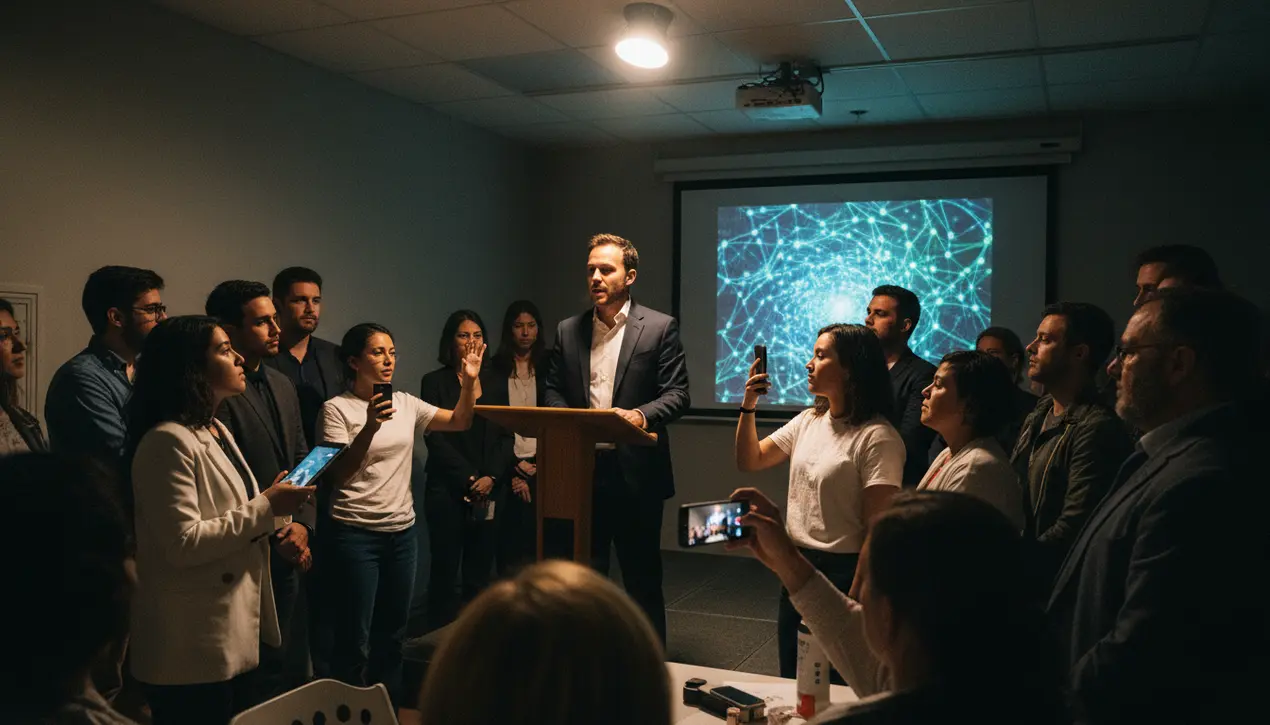
The approaching midterm elections have transformed artificial intelligence regulation into a central political conflict, with candidates framing their positions as fundamental philosophical divides. Populist Republicans warn that AI could undermine their movement, while Democrats confront the technology's growing societal influence.Across party lines, widespread concern about AI's impact on children has created rare bipartisan agreement, even as proposed solutions diverge sharply. The political landscape shifted dramatically with the entry of tech industry heavyweights: a super PAC called Leading the Future, backed by OpenAI's Greg Brockman and Andreessen Horowitz, plans to spend up to $100 million supporting candidates who align with their AI vision.Simultaneously, a new bipartisan super PAC emerged this week advocating for national AI regulation standards. These developments clash with the Trump administration's efforts to limit state-level AI regulation, setting up a federalism battle over who controls America's algorithmic future.In New York's 12th district, Assembly member Alex Bores—author of state AI legislation—has become an early target of Leading the Future's spending campaign. Bores considers this opposition a 'badge of honor,' comparing it to receiving an NRA F-rating.He frames the conflict not as technology versus society, but as a struggle against 'one small subset of the tech ecosystem that has decided to drown out other voices by spending hundreds of millions' rather than engaging in collaborative discussion. Regarding the Trump administration's draft executive order on federal AI regulation, Bores dismissed it as a classic Washington delay tactic—creating commissions to ensure nothing substantive gets accomplished.While acknowledging that federal standards represent the ideal solution, he argues states have been forced to act because federal inaction created a regulatory vacuum. The administration's priority, he suggests, seems more about preventing state action than solving actual problems.This political moment raises crucial questions about the Democratic Party's direction, particularly in liberal strongholds like New York. Bores positions his party's approach within a 'human first' framework, arguing that AI's impact on entry-level jobs and the success of policies like phone-free schools resonate strongly with younger voters disillusioned by traditional politics.He cautions against seeking one comprehensive AI solution, instead advocating for continuously updated protections that evolve with the technology—echoing Isaac Asimov's struggles with regulating rapidly advancing technologies. Bores brings unique credibility to the debate from his four and a half years at Palantir, where he worked on federal projects combating the opioid epidemic and analyzing disease patterns for the CDC.He expresses pride in this government effectiveness work but left in 2019 over Palantir's decision to renew its ICE contract without deportation protections—a use case he claims wasn't anticipated when the contract began under the Obama administration. This experience informs his perspective on government technology acquisition, which he describes as 'horribly inefficient' and biased toward contracting insiders, ultimately costing taxpayers while blocking innovative startup solutions.On AI in political advertising, Bores champions technical solutions like the C2PA metadata standard—a free, open-source protocol that cryptographically tracks media origins and edits. He argues widespread adoption could effectively solve the deepfake problem, creating an environment where content lacking these credentials would be automatically suspect. This balanced approach reflects nuanced AI policy thinking that acknowledges both significant risks and technological solutions—a perspective becoming increasingly rare in today's polarized political climate.
#AI regulation
#elections
#political spending
#deepfakes
#government modernization
#Palantir
#featured
Stay Informed. Act Smarter.
Get weekly highlights, major headlines, and expert insights — then put your knowledge to work in our live prediction markets.
Related News







1 month ago
Billy Corgan and Diplo debate AI use in music industry.
1 month ago
Black Forest Labs' Self-Flow makes AI training 2.8x more efficient

1 month ago
Meta and Broadcom Extend AI Chip Partnership to 2029
1 month ago
Outpoll Weekly Recap: Entertainment (April 20 – 26, 2026)

1 month ago
Outpoll Weekly Recap: AI (April 20 – 26, 2026)
Comments
It's quiet here...Start the conversation by leaving the first comment.