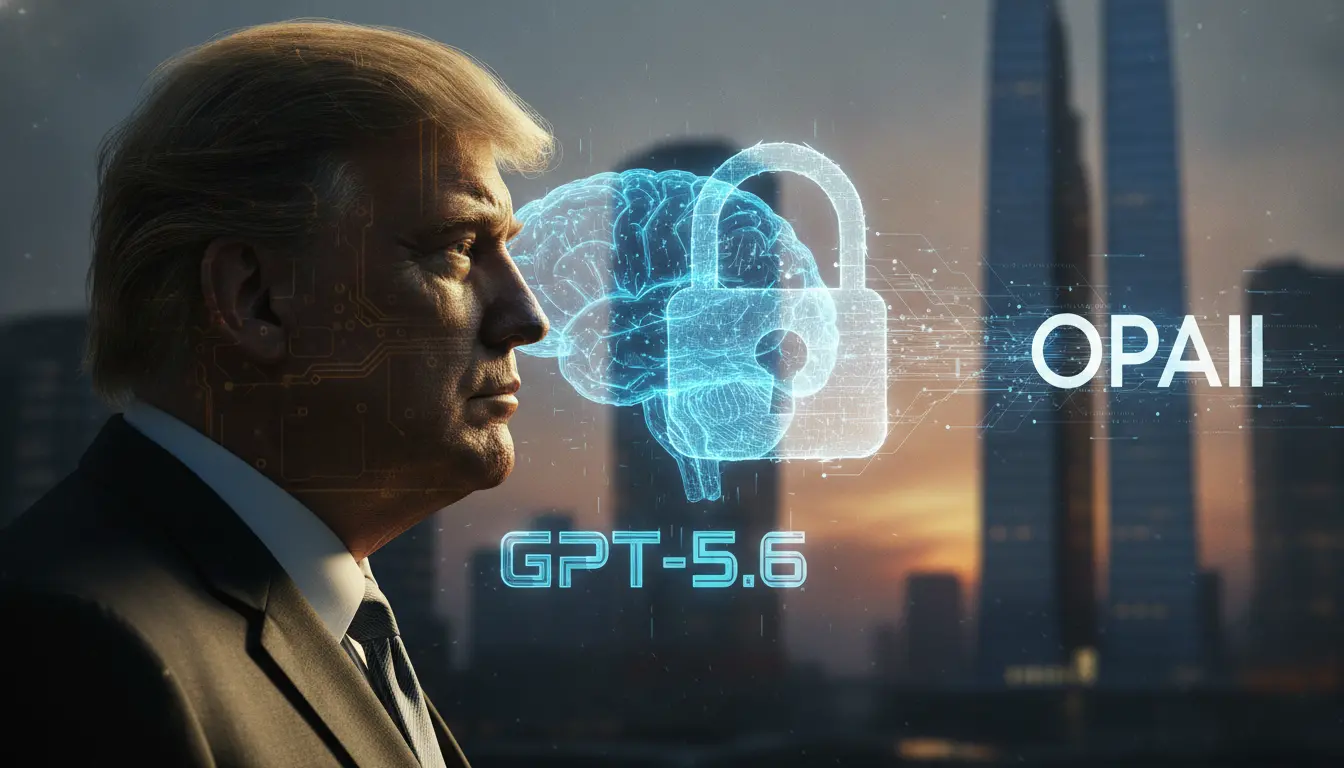
Trump Administration Reportedly Seeks Restrictions on OpenAI's GPT-5.6 Public Release
SOSophia King1 day ago7 min read
Reports indicate that the Trump administration has requested OpenAI to limit the public rollout of its upcoming GPT-5. 6 model, suggesting a preference for restricted access primarily to “trusted partners” and specific enterprises.This development spotlights the intensifying global debate surrounding the governance and deployment of advanced artificial intelligence, particularly as models grow exponentially in capability and potential societal impact. The proposed restrictions underscore a cautious approach from government entities wary of the broad implications of unfettered access to powerful AI tools.OpenAI, a leading AI research and deployment company, has been at the forefront of developing large language models (LLMs) that have redefined human-computer interaction and generative capabilities. Its previous iterations, such as GPT-3 and GPT-4, demonstrated unprecedented fluency and versatility, sparking both awe and concern across various sectors.The prospect of GPT-5. 6, anticipated to be even more sophisticated, raises critical questions about safety, misuse, and control.Governments globally are grappling with how to regulate AI that can generate highly convincing text, images, and potentially other forms of media, fearing its weaponization for misinformation, deepfakes, and other malicious purposes. The concept of a “trusted partners” release implies a controlled environment where access to the cutting-edge model would be granted only after rigorous vetting and under specific contractual agreements.This approach could allow OpenAI to test the model's capabilities in real-world scenarios while mitigating some of the immediate risks associated with a completely unrestricted public launch. Such a strategy would also provide regulatory bodies with a window to develop more comprehensive policy frameworks before widespread adoption.For companies and research institutions deemed “trusted partners,” this could mean early access to groundbreaking technology, potentially giving them a significant competitive advantage, albeit with stringent oversight. Historically, OpenAI has walked a tightrope between its founding mission of ensuring artificial general intelligence benefits all of humanity and the pragmatic need for responsible development and deployment.Its journey from a non-profit to a capped-profit entity, coupled with strategic partnerships, reflects the complex financial and ethical landscape of advanced AI research. A government request to restrict access to GPT-5.6 would represent a significant intervention, influencing not only OpenAI's immediate release strategy but also potentially setting a precedent for how future foundational AI models are brought to market globally. This signals a growing trend where national security and societal stability considerations begin to heavily shape the commercial and research trajectories of major AI developers.The global landscape for AI regulation is rapidly evolving, with initiatives like the European Union's AI Act seeking to establish comprehensive frameworks for responsible AI development and deployment. The United States, while still formulating a unified federal approach, has seen increasing calls for robust oversight from various political factions and technological experts.The reported request regarding GPT-5. 6 highlights a specific concern about the sheer power of advanced models and the potential for unintended consequences if they are released too broadly without adequate safeguards.It places OpenAI, and indeed the entire AI industry, at a crucial juncture, forcing a re-evaluation of the balance between innovation, accessibility, and risk management. Ultimately, the path chosen for GPT-5.6's release will have far-reaching implications. An unrestricted public release, while fostering rapid innovation and broader access, carries the inherent risks of misuse and unforeseen societal disruptions.Conversely, a highly restricted rollout, while bolstering safety and control, could slow down open research, concentrate power among a few entities, and potentially stifle the democratized development of AI applications. The ongoing discussions between major AI developers and government bodies represent a critical phase in shaping the future trajectory of this transformative technology, aiming to strike a delicate balance that promotes progress while safeguarding public interest.The outcome for GPT-5. 6 will be a key indicator of how this balance is being negotiated on the global stage, impacting not just technological development but also geopolitical strategy and societal norms for decades to come.
#featured
#OpenAI
#GPT-5.6
#AI regulation
#US government
#Artificial Intelligence
#Model release
#Technology policy
#Trump administration
#AI safety