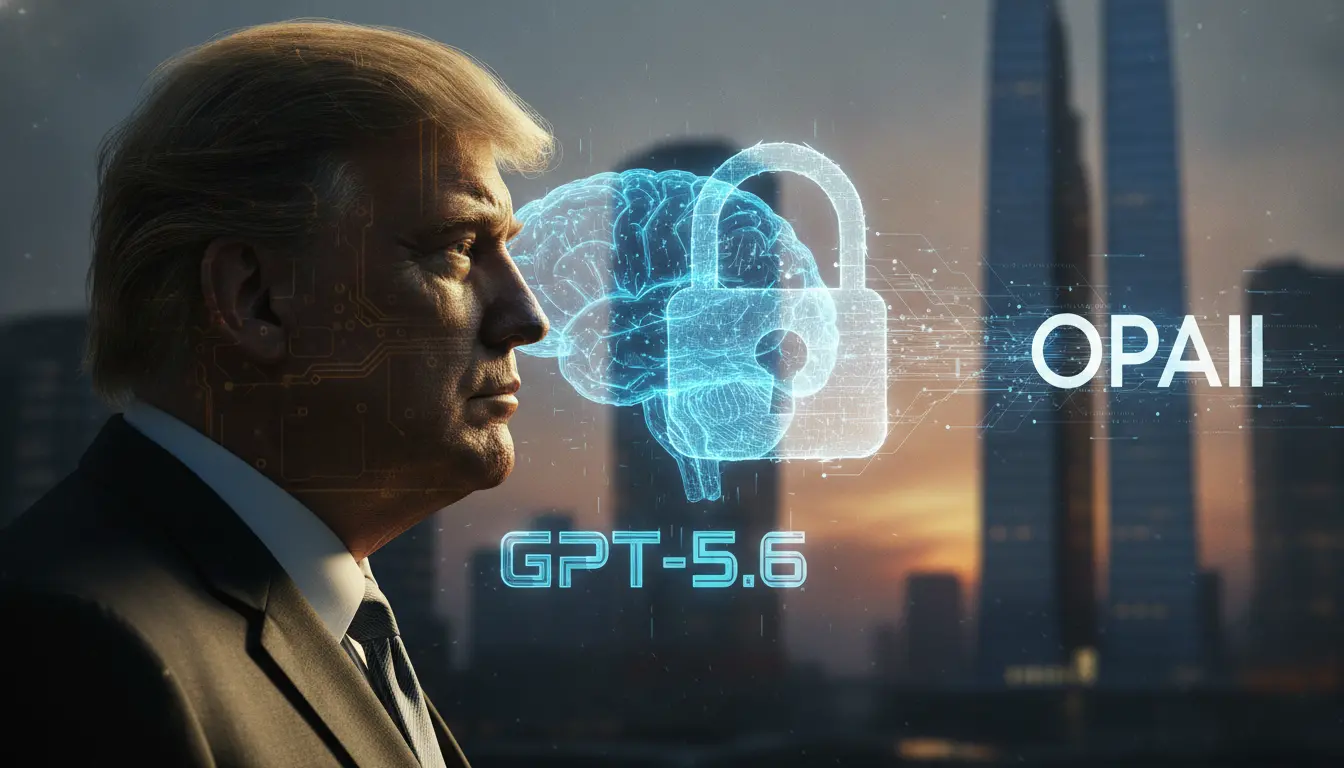
Trump Administration Reportedly Seeks Restrictions on OpenAI's Forthcoming GPT-5.6 Model
ANAnna Wright1 day ago7 min read
Reports have emerged indicating that the Trump administration has made a direct request to OpenAI, urging the company to limit the general availability of its highly anticipated GPT-5. 6 model.Citing unspecified concerns, the administration has reportedly suggested that the advanced artificial intelligence model should only be rolled out to a select group of 'trusted partners' rather than being made broadly accessible to all users. This development underscores a growing tension between rapid technological advancement and governmental efforts to manage the potential societal impacts and security risks of cutting-edge AI.GPT-5. 6 represents the next significant iteration in OpenAI’s series of large language models, expected to boast considerably enhanced capabilities in areas such as reasoning, complex problem-solving, and creative generation compared to its predecessors like GPT-4.Such models, often termed 'frontier AI,' possess immense potential to revolutionize various industries and aspects of daily life, from scientific research and personalized education to economic development. However, their increasing sophistication also raises profound questions about their safe deployment, potential for misuse, and the appropriate level of public access.Governmental concerns surrounding powerful AI models are multi-faceted. These typically include the risk of generating sophisticated misinformation and disinformation campaigns at unprecedented scale, the potential for aiding cyber warfare or developing autonomous weapons systems, and the broader societal implications on employment, privacy, and democratic processes.While the specific 'undisclosed concerns' mentioned in the reports remain vague, they likely align with a broader national security perspective that views advanced AI as a dual-use technology—capable of immense good but also significant harm if not carefully controlled. The idea of restricting access to 'trusted partners' could be an attempt to mitigate these risks by placing the technology in the hands of entities deemed responsible and accountable.For OpenAI, a company founded with the mission to ensure that artificial general intelligence benefits all of humanity, such governmental requests present a significant dilemma. Historically, OpenAI has navigated a complex path, balancing the desire for broad accessibility with a cautious approach to model deployment, exemplified by their initial phased release of models like GPT-2.The company has often emphasized a strategy of 'iterative deployment,' gradually increasing model capabilities and public access as safety mechanisms and societal understanding evolve. A mandate for limited release, particularly from a governmental authority, could force a re-evaluation of this strategy and potentially delay the widespread public benefits that OpenAI envisions.The implications of such a restriction extend beyond OpenAI and the U. S.technology landscape. It sets a significant precedent for how governments might seek to regulate and control the development and deployment of frontier AI models globally.The debate over who ultimately controls access to these powerful technologies—private corporations, governments, or the public—is intensifying, with national security interests often clashing with principles of open innovation and democratic access. The concept of 'trusted partners' itself raises questions about definition, criteria for selection, and potential for monopolization of advanced AI capabilities, shaping the global AI race.Looking ahead, the alleged request signals an era where AI policy and regulation will increasingly intersect with national security priorities. The discussions between the Trump administration and OpenAI, if confirmed, highlight the ongoing challenge of establishing effective governance frameworks for rapidly evolving AI.The future availability of GPT-5. 6, and indeed subsequent generations of AI, will likely be shaped not just by technological breakthroughs but also by intricate negotiations between developers, policymakers, and the broader public, as societies grapple with the profound power of artificial intelligence and strive to harness its benefits while mitigating its risks.