SciencemedicinePublic Health
The meat industry's antibiotic overuse threatens modern medicine.
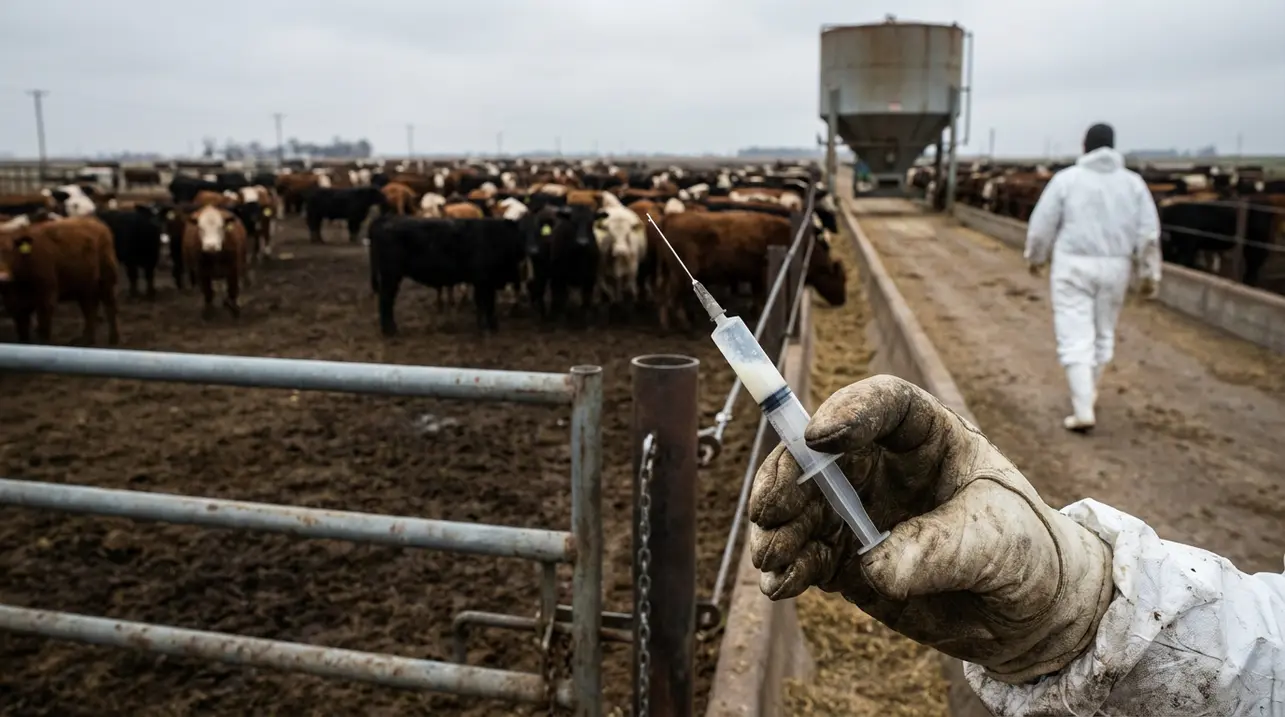
A decade ago, a glimmer of hope emerged in the fight against a silent, creeping epidemic. Responding to mounting scientific alarm, the United States introduced regulations aimed at curbing the profligate use of antibiotics in its meat and dairy industries.For a time, it worked. Sales of these crucial drugs for livestock plummeted by 43 percent between 2015 and 2017, a testament to what is possible when public health imperatives momentarily outweigh industrial convenience.That progress, however, now lies in tatters. According to newly released data from the Food and Drug Administration, sales of antibiotics for use in food-producing animals surged by a staggering 15.8 percent in 2024, a sudden and alarming reversal that threatens to unravel decades of medical advancement. This isn't merely a statistic on a spreadsheet; it is a direct assault on the foundational pillars of modern medicine, trading short-term profit in overcrowded feedlots for a future where common infections could once again become death sentences.Antibiotics, after all, are not just another agricultural input. They are a miracle of the 20th century, responsible for adding an estimated 20 years to average human life expectancy by taming bacterial scourges from strep throat to sepsis.Yet, in a profound perversion of their purpose, the majority of these drugs in the U. S.and globally are not used to heal the sick, but are instead deployed as a crutch for an unsustainable food system. They are fed en masse to chickens, pigs, and cattle not primarily to treat illness, but to prevent it in the unhygienic, densely packed conditions of factory farms where disease is an inevitable byproduct of efficiency.This routine, subtherapeutic use is the perfect engine for breeding antibiotic-resistant bacteria—so-called 'superbugs. ' These pathogens, forged in the guts of livestock, can leap to human populations through contaminated food, water, soil, and air, rendering our most vital drugs impotent.The World Health Organization has long recognized antimicrobial resistance as one of the top ten global public health threats, implicated in over 1. 27 million deaths worldwide in 2019, including 35,000 in the U.S. alone.The recent spike in farm antibiotic use is a flashing red siren that we are accelerating toward that grim future. Industry explanations for the increase ring hollow.Total U. S.meat production grew by less than one percent in 2024, and while trade groups vaguely cite viral outbreaks like avian flu in poultry, experts like Gail Hansen, a former state public health veterinarian, are quick to note that antibiotics are useless against viruses. Their use in such cases often indicates the treatment of secondary bacterial infections, a sign of systemic animal health failures, or worse, a return to the discredited practice of mass disease prevention.'It’s a crazy concept,' Hansen told reporters, echoing the frustration of public health advocates who see this as a failure of stewardship. The meat industry's defensive statements—emphasizing individual veterinarian decisions and declining use in specific niches like dairy mastitis—feel like a familiar script of obfuscation.This backsliding exposes the fragility of voluntary pledges and the lack of regulatory teeth. While Europe has slashed farm antibiotic use by half compared to the U.S. , implementing a 2022 ban on preventive use in healthy animals, American regulators remain hesitant to impose similar binding limits.The FDA's current approach, critics argue, prioritizes industry autonomy over existential public health risk. The consequences of inaction are not abstract.Every unnecessary dose administered in a hog barn or cattle feedlot is a gamble with our collective medical security. It undermines surgeries, cancer treatments, and the management of chronic diseases, all of which rely on effective antibiotics to prevent infection.Furthermore, the deception runs deep: a 2024 USDA investigation found that 20 percent of beef samples marketed as 'raised without antibiotics' actually contained drug residues, revealing a supply chain 'deeply contaminated and deeply deceptive,' as Andrew deCoriolis of Farm Forward described it. This isn't just a policy failure; it is an ecological and moral one.We are sacrificing a global commons—the efficacy of antimicrobials—at the altar of cheap meat and high-density production. The solutions are evident but require political will: follow Europe's lead in banning preventive use, set ambitious national reduction targets with real accountability, and invest in transitioning to farming systems that prioritize animal welfare and hygiene over pharmaceutical shortcuts.The data from 2024 is a stark warning. We can either heed it and defend the medical miracles of the past century, or we can continue to let them slip away, one dose at a time.
#antibiotic resistance
#livestock farming
#FDA regulations
#public health crisis
#meat industry
#featured