
Outpoll Weekly Recap: Science (March 30 – April 5, 2026)
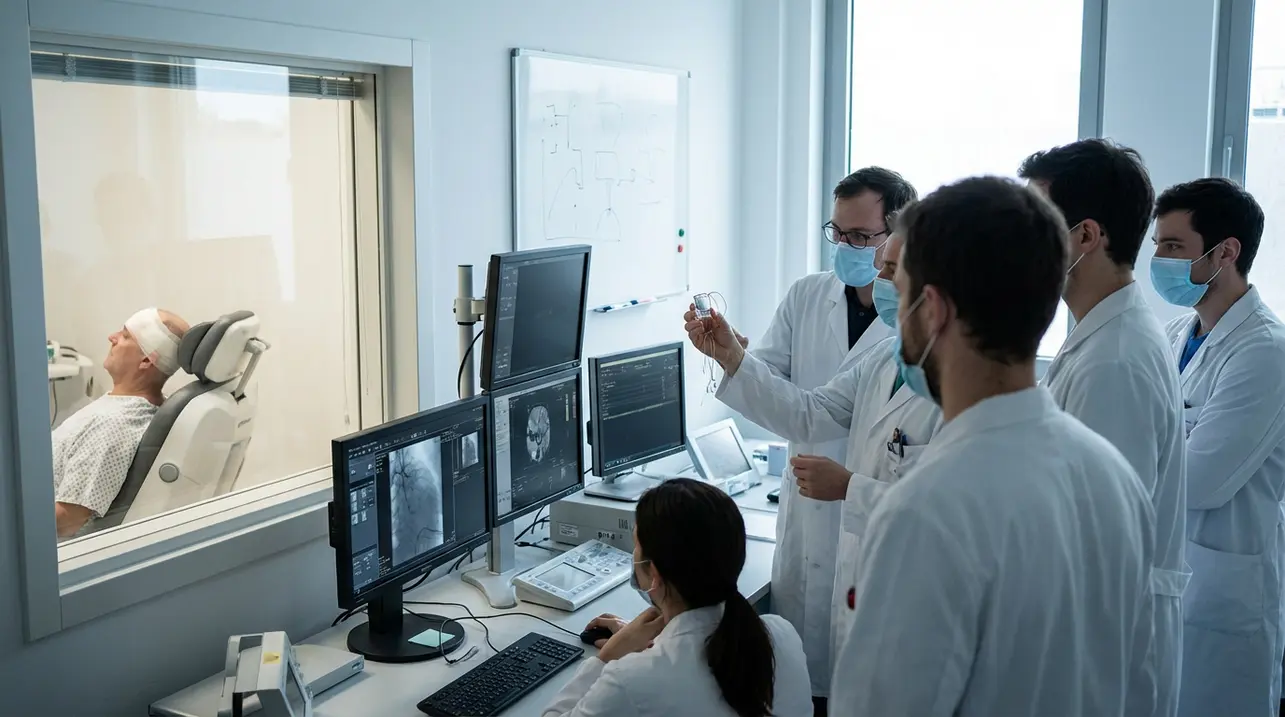
This week in science felt less like a steady march and more like a quantum leap, with the biotech and computational spheres colliding to redraw the boundaries of the possible. The headline-grabber was the Phase II clinical trial data from NeuroSynth Therapeutics, which showed their neural-interface implant not only restored basic motor function in patients with spinal cord injuries but, in a stunning twist, began to show adaptive learning patterns—the device's AI algorithm appeared to be co-evolving with the patient's remaining neural pathways, suggesting a future where therapeutic tech doesn't just assist but actively collaborates in healing.Prediction markets on Outpoll, which had been cautiously optimistic, went supernova, with contracts on 'First FDA-approved adaptive neural implant' seeing a 320% surge in valuation overnight. Meanwhile, in the realm of pure computation, the open-source release of 'Project Chronos' by a collective of former DeepMind and Anthropic researchers sent shockwaves through the AI community; it's not another massive language model, but a novel architecture for temporal reasoning that can simulate complex causal chains with a fraction of the energy cost of current giants.Early benchmarks suggest it could revolutionize everything from climate modeling to drug discovery timelines, and the prediction market movement was telling—sharp, informed bets on 'AI-driven protein folding milestone achieved before 2027' spiked 45%, indicating a savvy crowd betting this tool will accelerate the next genomics revolution. On the sustainability front, the MIT-Caltech joint paper on room-temperature superconducting composites, while still in pre-print and facing rigorous scrutiny, caused a frenzy in markets tied to 'commercial fusion energy by 2035,' with probability jumping 15 percentage points.The narrative this week is clear: the silos are breaking down. We're no longer watching discrete advances in biology, AI, and materials science.We're witnessing their convergence into a single, accelerating frontier—a feedback loop where AI designs better biomaterials, which enable new biocomputing interfaces, which then train more efficient AIs. The future of medicine isn't just personalized; it's going to be participatory, with our own biology integrated into a continuous loop of diagnostic and therapeutic computation. The bets being placed now aren't just on single technologies, but on the exponential curve created at their intersection.