SciencemedicinePublic Health
The meat industry is increasing antibiotic use, threatening modern medicine.
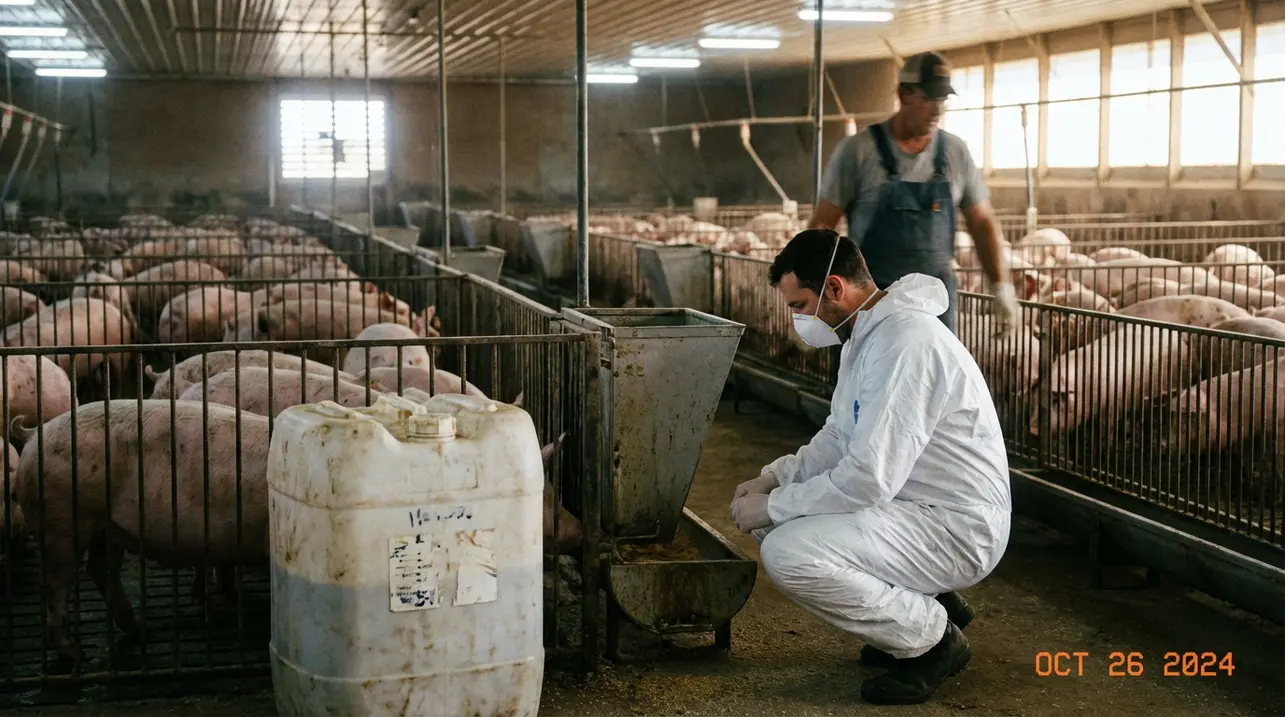
A decade ago, a glimmer of hope emerged in the fight against one of modern medicine’s most insidious threats. Responding to a mounting public health crisis, the United States introduced new rules to curb the rampant use of antibiotics in livestock production.For a time, it worked. Sales of these critical drugs for use on farms plummeted by 43 percent between 2015 and 2017, a statistic that felt like a victory for science over short-term agricultural expediency.That progress, however, has not just stalled; it is now unraveling at an alarming rate. According to recently published data from the Food and Drug Administration, sales of antibiotics for use in food-producing animals surged by a staggering 15.8 percent in 2024 alone. This isn't a minor statistical blip; it's a sharp, disheartening reversal that signals a dangerous backslide in our stewardship of these life-saving medicines.The implications are profound, threading a direct line from the crowded, slatted floors of industrial pig pens in Iowa to hospital wards where common infections are becoming untreatable. Antibiotics form the very bedrock of our medical system, a primary reason why average human life expectancy jumped by over twenty years in the last century.Yet, globally, the majority of these precious drugs are not used to heal people, but are instead deployed as a crutch within a food system predicated on density and efficiency. In the unhygienic, overcrowded conditions of factory farms, where disease spreads like wildfire, antibiotics are routinely fed to healthy animals to prevent illness—a prophylactic shortcut that avoids the harder work of creating genuinely healthier environments for the animals we raise for food.This systematic misuse is the primary engine driving the evolution of antibiotic-resistant bacteria, or 'superbugs. ' When these pathogens jump to humans, as they inevitably do through environmental contamination, food, or direct contact, our first-line defenses fail.The World Health Organization rightly classifies antimicrobial resistance as a top global public health threat, responsible for an estimated 1. 27 million deaths worldwide in 2019, including 35,000 in the U.S. The recent FDA data suggests we are actively fueling this fire.Industry explanations for the 2024 spike ring hollow. Total U.S. meat production grew by less than one percent last year, and while officials point to viral outbreaks like avian flu in poultry and dairy cattle, experts like Gail Hansen, a former state public health veterinarian, note the obvious: antibiotics are useless against viruses.Their use for secondary bacterial infections might explain a minor uptick in specific sectors, but not a near-16 percent surge across the entire livestock landscape. The more plausible, and more troubling, conclusion is that the industry has quietly returned to the old, dangerous habit of using these drugs as a cheap insurance policy against disease, a practice that saves pennies on barn ventilation and cleaning labor while gambling with the future efficacy of medicines we all depend on.This isn't a necessary evil of feeding a nation; it's a choice. Look to Europe, where antibiotic use per animal is roughly half that of the United States.Producers there have achieved significant reductions by investing in better animal welfare—more space, improved sanitation, robust vaccination programs, and superior ventilation. They prove that high-volume production does not have to be synonymous with pharmaceutical dependency.In the U. S., however, the economic calculus favors the antibiotic shortcut, and regulatory pressure has waned. Even voluntary corporate pledges from major food chains and producers, made amid public scrutiny a decade ago, have largely faded into lip service.Worse, there is evidence of active deception: last year, the USDA found that 20 percent of beef samples marketed as 'raised without antibiotics' contained antibiotic residues, revealing a supply chain 'deeply contaminated and deeply deceptive,' as Andrew deCoriolis of Farm Forward described it. The path forward requires political and regulatory courage that currently seems in short supply.Experts like Meghan Davis of Johns Hopkins and Steven Roach of the Food Animal Concerns Trust argue the FDA must move beyond monitoring and into active prevention. This means setting enforceable national reduction targets, following the European Union's 2022 lead in outlawing the purely preventive use of antibiotics in healthy animals, and imposing strict limits on treatment durations.Without such foundational steps, we are allowing the meat and dairy industries to externalize a catastrophic cost onto public health, trading marginal profit boosts for a return to a pre-antibiotic era where a simple scratch or childbirth could be a death sentence. The data from 2024 is more than a disappointing chart; it is a warning siren, echoing across the interconnected ecosystems of farm, food, and human body that we have so carelessly compromised.
#antibiotic resistance
#livestock
#FDA
#agriculture
#public health
#editorial picks news