SciencephysicsApplied Physics
The Physics of 'Pirates': Could You Really Walk Underwater in an Overturned Rowboat?
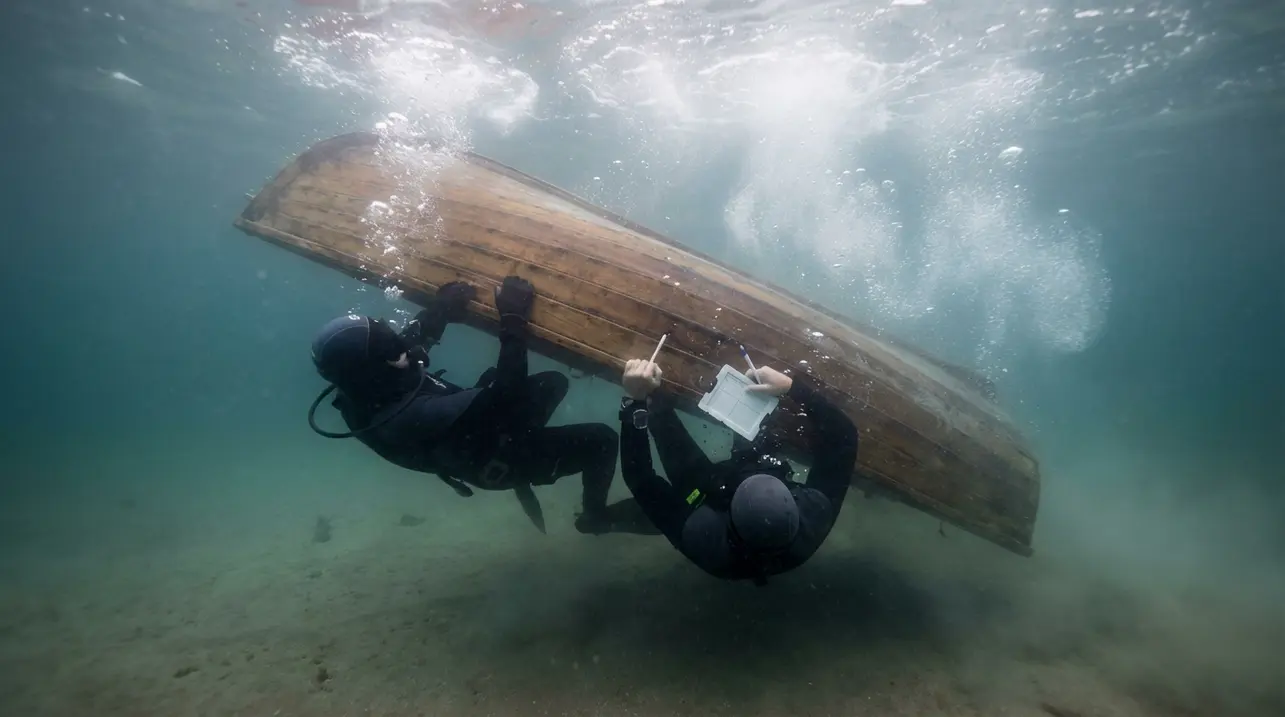
In a memorable scene from 'Pirates of the Caribbean: The Curse of the Black Pearl,' Captain Jack Sparrow and Will Turner escape a sinking ship by flipping their dinghy, trapping air underneath, and walking across the seafloor. This iconic moment of pirate ingenuity begs a scientific question: is such a feat even remotely possible? While the scene is a masterclass in cinematic problem-solving, a closer look at buoyancy, pressure, and human limits reveals a significant gap between Hollywood fantasy and physical reality.The core idea—using an overturned boat as a makeshift diving bell—is not without historical precedent. Ancient diving bells operated on the same principle: an air-filled, open-bottomed chamber submerged in water.The rigid structure of the boat prevents water from completely flooding the interior, preserving a pocket of breathable air. However, this is where scientific plausibility begins to fray.First, the air supply would be critically limited. Two people breathing in a confined space would quickly deplete oxygen and, more urgently, cause a dangerous buildup of carbon dioxide.In the warm waters shown, hypercapnia (CO2 poisoning) could induce dizziness, headaches, and unconsciousness within minutes—far sooner than the lengthy stroll depicted. Pressure presents another formidable hurdle.For every 10 meters (33 feet) descended, ambient pressure increases by one atmosphere. At a harbor depth of 5-10 meters, the air pocket would compress to half or two-thirds of its surface volume, forcing occupants into an uncomfortable crouch.More critically, the immense buoyancy of the air-filled boat would act like a powerful upward rocket. To counteract this and remain on the seafloor, each person would need hundreds of pounds of weight—far beyond what their clothing and gear could provide.They would be clinging desperately to the boat, not walking casually. Practical challenges further dismantle the fantasy.Any wooden boat has seams that would leak under pressure, steadily flooding the air space. Stirred sediment would reduce visibility to zero, making navigation blind.Furthermore, the need to constantly equalize ear pressure during descent would be a painful and distracting struggle, a detail the film conveniently omits. Verdict: Is it madness or brilliance? As a short-term survival instinct—akin to creating an air pocket in a submerged car—the concept has a kernel of validity.But as a practical method for underwater travel, it is firmly in the realm of cinematic madness. The scene endures because it taps into our deep fascination with exploring the underwater world, a drive that has inspired real inventions from the bathysphere to modern submersibles.Ultimately, Jack Sparrow’s trick is a poetic piece of pirate legend, powered more by storytelling magic than by workable physics. For real underwater exploration, trust in scuba gear—or better yet, in keeping your boat right-side up.
#featured
#physics
#buoyancy
#underwater survival
#Pirates of the Caribbean
#scientific analysis
#pop culture science
#fluid dynamics