Politicsgovernments & cabinetsCabinet Reshuffles
Venezuela's Interim Leader Dismisses Maduro's Guard Commander.
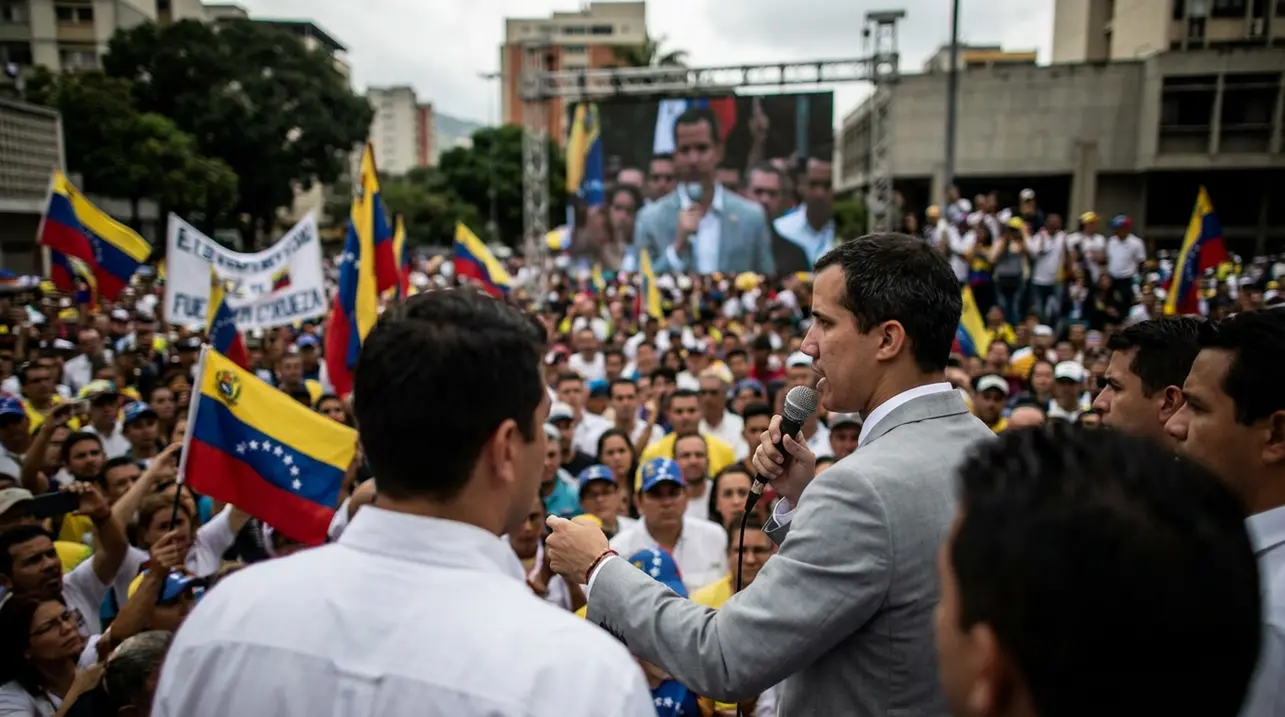
In a move that feels ripped straight from a political thriller, Venezuela’s interim leader, Juan Guaidó, has just made a power play by dismissing General Javier Marcano Tábata, the commander of the elite inner circle of guards responsible for protecting Nicolás Maduro. This isn't just a routine reshuffle; it's a direct strike at the heart of the regime's security apparatus, a calculated gambit in the high-stakes game for control of the nation.For years, Maduro's personal guard, a unit of fiercely loyal military and intelligence personnel, has been more than just protection—it's been a symbol of his unshakeable grip on power, a human fortress insulating him from internal coups and external pressures. To target its commander is to challenge the very architecture of the regime's survival.Guaidó, recognized as interim president by dozens of nations including the United States, operates from a position of profound institutional weakness, lacking control over the army or the state bureaucracy. His authority is largely symbolic and diplomatic.Therefore, this dismissal, likely issued as a decree from his parallel government, is a weapon of narrative warfare. It's a signal, both to the international community and to factions within Venezuela's fractured military, that he is actively contesting the chain of command and attempting to delegitimize Maduro's control piece by piece.The immediate question is: what can General Marcano Tábata actually do? Will he heed the order from a leader he has never served, or will he double down on his loyalty to Maduro, making the dismissal a purely symbolic act? The answer lies in the murky world of military allegiances. Venezuela's armed forces have long been the kingmaker, their support bought through control of lucrative smuggling routes, key industries, and protection from prosecution.Guaidó's move is a test, probing for cracks. If it causes even a moment of hesitation within the guard or sparks whispers in other units, it's a win.It frames Maduro not as an impregnable strongman, but as a leader whose inner sanctum is under external assault. Historically, the fall of autocrats often begins not with a broad uprising, but with the defection of their praetorian guards.We saw shades of this in the final days of Ceaușescu in Romania. Guaidó's team is likely banking on that precedent, using this dismissal as a psychological tool to erode confidence.The broader context is a nation in freefall—hyperinflation, mass migration, and crippling U. S.sanctions that have tightened like a vise. Maduro, however, has proven resilient, backed by Russia, China, Iran, and an extensive network of Cuban advisors who help monitor the military.This dismissal must be seen as part of a prolonged campaign of pressure, a strategy of a thousand cuts aimed at making the regime's position untenable. The consequences could range from nothing—a blip ignored by the barracks—to a potentially dangerous escalation.If Maduro perceives this as a genuine threat to his personal safety, retaliation against Guaidó and his allies could intensify. Alternatively, it might push the regime to further purge its ranks, creating new paranoia and instability.For analysts watching the daily trench warfare of Venezuelan politics, this is a classic Mark Johnson-style maneuver: less about immediate battlefield victory, more about shaping the perception of the conflict. It's an attempt to shift the narrative from a stalemate to a slowly unfolding checkmate, forcing the world to question who truly holds power in the halls of Miraflores Palace. The coming days will reveal whether this was a masterstroke of political jujitsu or a futile gesture, but one thing is clear: in the battle for Venezuela, every symbol of authority is a frontline.
#Venezuela
#Maduro
#Guard
#Military
#Dismissal
#Interim Leader
#Government
#Politics
#lead focus news