ICE Reshapes Fight to Avoid Another Government Shutdown
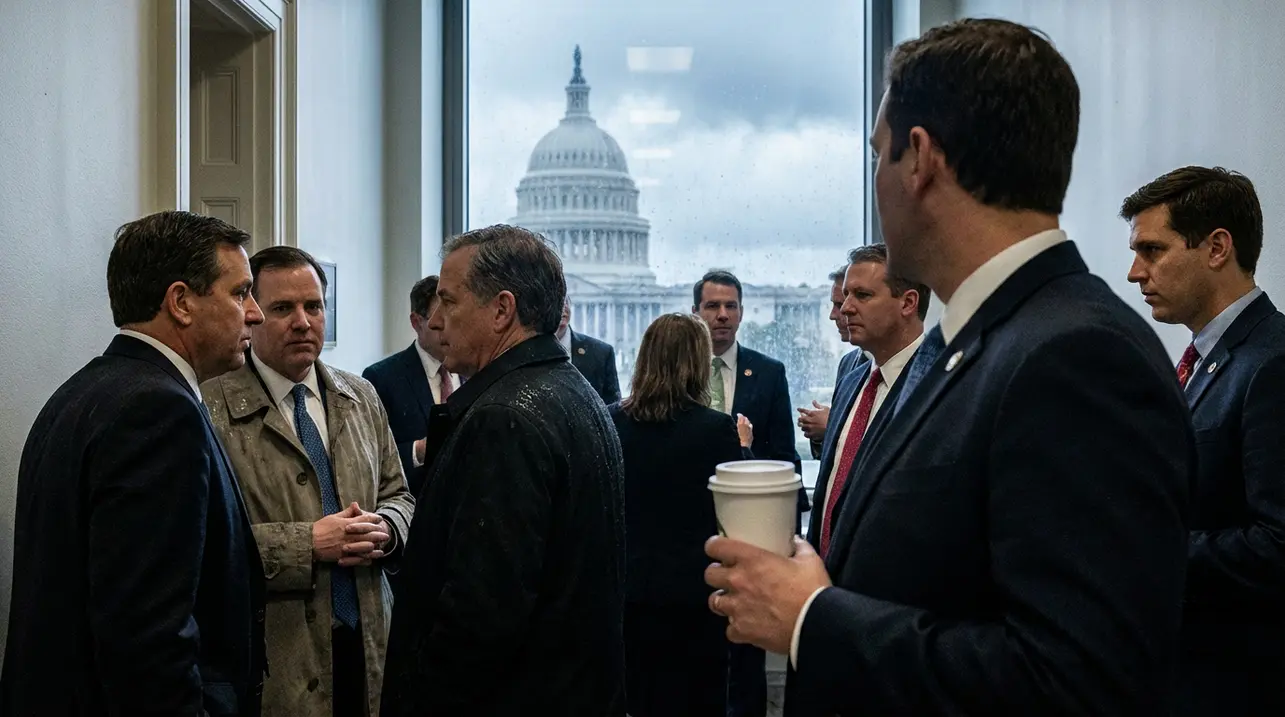
The clock is ticking down with the grim predictability of a campaign ad countdown, and the battlefield this time isn't an election but the Senate floor, where a high-stakes game of political chicken over Immigration and Customs Enforcement (ICE) is threatening to derail the government's funding machinery. As senators return from recess on January 26th, they face a brutal one-week sprint to avert a partial shutdown, a scenario both parties' leadership has publicly dismissed but which private maneuvers suggest is perilously close.The core of the impasse isn't the overall spending numbers—Congress actually made headway this week, clearing a significant batch of appropriations for agencies like Commerce and Justice—but a single, volatile line item: the funding for the Department of Homeland Security. Democrats, led by voices like Senator Chris Murphy of Connecticut, are drawing a hard line, demanding substantive ICE reforms as the price for their votes.Murphy’s warning that a DHS budget 'without any constraints' won't fly with his caucus isn't just posturing; it's a calculated strategic move. With Republicans holding a slim majority, the math is unforgiving: at least six or seven Democrats will need to cross the aisle to pass a clean funding bill, and right now, that coalition looks shaky.This isn't a new fight, but it's one that has gained fresh intensity. The shadow of last fall's record-breaking shutdown looms large, a political scar that leaders like Majority Leader John Thune and Minority Leader Chuck Schumer are desperate not to reopen.Yet, their public assurances clash with the tactical realities on the ground. Thune and Senator Jeanne Shaheen have both pointed to a continuing resolution—a simple stopgap that extends current funding levels—as the most likely escape hatch.But here's where the Democratic strategy gets interesting: Murphy has already signaled that a stopgap 'doesn't fix any of the problems,' effectively declaring it an unacceptable punt. This creates a fascinating internal tension.Schumer, the master tactician, is publicly taking a government shutdown off the table, knowing the blame-game optics would be disastrous. Yet, by allowing his members to press for ICE concessions, he's empowering a faction that could force exactly that outcome if their demands aren't met.It’s a classic high-wire act: using the threat of a shutdown as leverage without actually triggering it, a maneuver that requires precise coordination and a willingness to stare into the abyss. The broader context here is a Congress struggling to reclaim its most basic function—passing a budget—after years of governance by continuing resolution.
#government shutdown
#ICE reforms
#DHS funding
#Senate negotiations
#stopgap bill
#featured
Stay Informed. Act Smarter.
Get weekly highlights, major headlines, and expert insights — then put your knowledge to work in our live prediction markets.
GOP leaders have been adamant about returning to 'regular order,' but the DHS bill has always been the trickiest, a magnet for the most contentious immigration policy debates. This standoff isn't just about funding levels; it's a proxy war over the future of immigration enforcement itself.
Democrats, particularly from progressive districts, are under immense pressure from their base to rein in an agency they view as emblematic of a harsh, Trump-era approach. Republicans, conversely, see any attempt to constrain ICE as a dangerous weakening of border security.
The likely endgame? Analysts watching the whip counts suggest a short-term stopgap is still the safest bet, kicking the can down the road by a few weeks and buying time for backroom negotiations. But each stopgap erodes congressional credibility and does nothing to address the underlying policy chasm.
A lapse in DHS funding, while technically only a partial shutdown, would still have severe operational consequences, affecting everything from airport security to coast guard patrols. The political risk for both parties is immense.
For Democrats, a shutdown could paint them as obstructionists willing to paralyze the government over a single agency. For Republicans, it would underscore a failure to govern despite holding the gavel.
In the war room of modern politics, this is the kind of messy, brinkmanship-heavy conflict that defines legacies. The coming week will test whether the strategists in charge can find a narrow path to a deal or if the political theater escalates into a very real, and very damaging, government crisis.