Politicsconflict & defenseMilitary Operations
France to construct new nuclear-powered aircraft carrier by 2038.
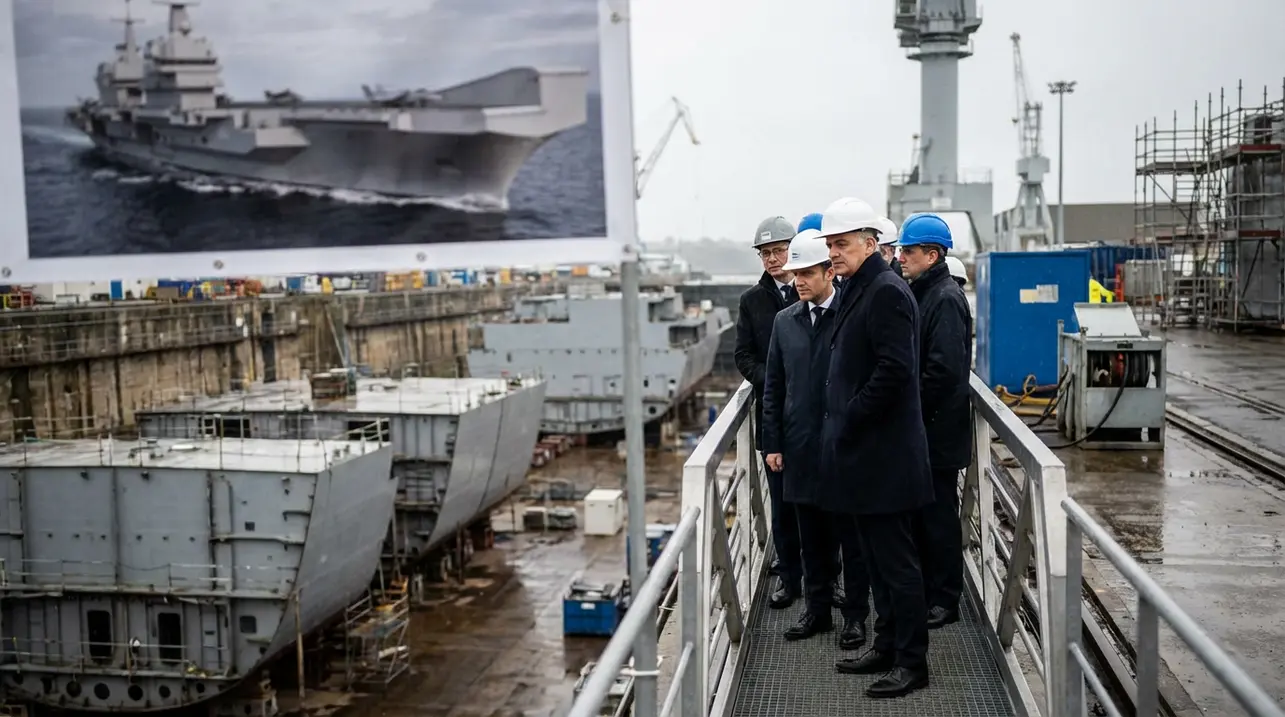
In a move that will recalibrate the naval balance of power in Europe and the broader Atlantic alliance, France has formally committed to constructing a new nuclear-powered aircraft carrier, with President Emmanuel Macron confirming the project's timeline and staggering scale. The vessel, designated the Porte-Avions de Nouvelle Génération (PA-NG), is projected to be a 78,000-tonne leviathan capable of deploying a next-generation air wing of around thirty combat aircraft, with delivery targeted for 2038 at an estimated cost of €10 billion.This announcement is not merely a procurement update; it is a profound statement of strategic intent from a nation that has long charted an independent course within NATO. The PA-NG will succeed the aging Charles de Gaulle, France's current and only nuclear carrier, which entered service in 2001.The decision to proceed with a nuclear propulsion system, rather than opting for conventional power, is the first critical signal. It ensures unparalleled endurance and strategic mobility, freeing the carrier from the logistical tether of frequent refueling—a capability that grants Paris the autonomous power projection that is the hallmark of a *puissance mondiale*.This choice echoes the historical French doctrine of *dissuasion*, or deterrence, extending its nuclear umbrella from the substrategic to the maritime domain, ensuring the nation's ability to act decisively and independently in global crises from the Indo-Pacific to the Mediterranean. The industrial and economic dimensions are equally monumental.The project is touted to involve a consortium of some 800 firms, representing a massive stimulus for France's defense industrial base and a test of European technological sovereignty in an era of great-power competition. As the largest warship ever conceived in Europe, its construction will be a decades-long national endeavor, reminiscent of the grand *grands projets* of earlier French republics.Yet, the path to 2038 is fraught with formidable challenges. The financial commitment is eye-watering, and the timeline is aggressive, inviting comparisons to the protracted and budget-busting development cycles of other major defense programs.Technologically, integrating a new electromagnetic aircraft launch system (EMALS) and managing the development of its intended air wing, which will likely include the Franco-German-Spanish Future Combat Air System (FCAS/SCAF), presents a labyrinth of coordination hurdles. Strategically, the carrier's arrival will force a reevaluation within European defense circles.It will cement France as the EU's undisputed naval heavyweight, a role that brings both influence and obligation. It raises immediate questions about burden-sharing within NATO and the EU's nascent defense initiatives: Will this vessel primarily serve French national interests, or will it become a cornerstone for a more integrated European carrier strike capability? Furthermore, its deployment will be closely watched in capitals from Moscow to Beijing, signaling a sustained Western commitment to carrier-based power projection.Domestically, the project will inevitably face scrutiny from political opponents and fiscal hawks, who may question such a colossal expenditure amid social spending pressures. The shadow of the UK's own carrier woes—cost overruns and deployment controversies surrounding the HMS *Queen Elizabeth* and *Prince of Wales*—looms as a cautionary tale.In essence, the PA-NG is more than a ship; it is a floating manifestation of France's enduring geopolitical ambitions. Its keel, once laid, will symbolize a bet on a world where hard military power and sovereign technological capability remain the ultimate arbiters of international influence. The journey to its commissioning in 2038 will be a relentless test of political will, industrial prowess, and strategic vision, determining whether France can maintain its unique position as a global military power with one foot firmly in Europe and the other striding across the world's oceans.
#France
#nuclear aircraft carrier
#PA-NG
#defense budget
#naval power
#European defense
#lead focus news