Politicsconflict & defenseMilitary Operations
Danish PM warns US annexation of Greenland would end NATO alliance.
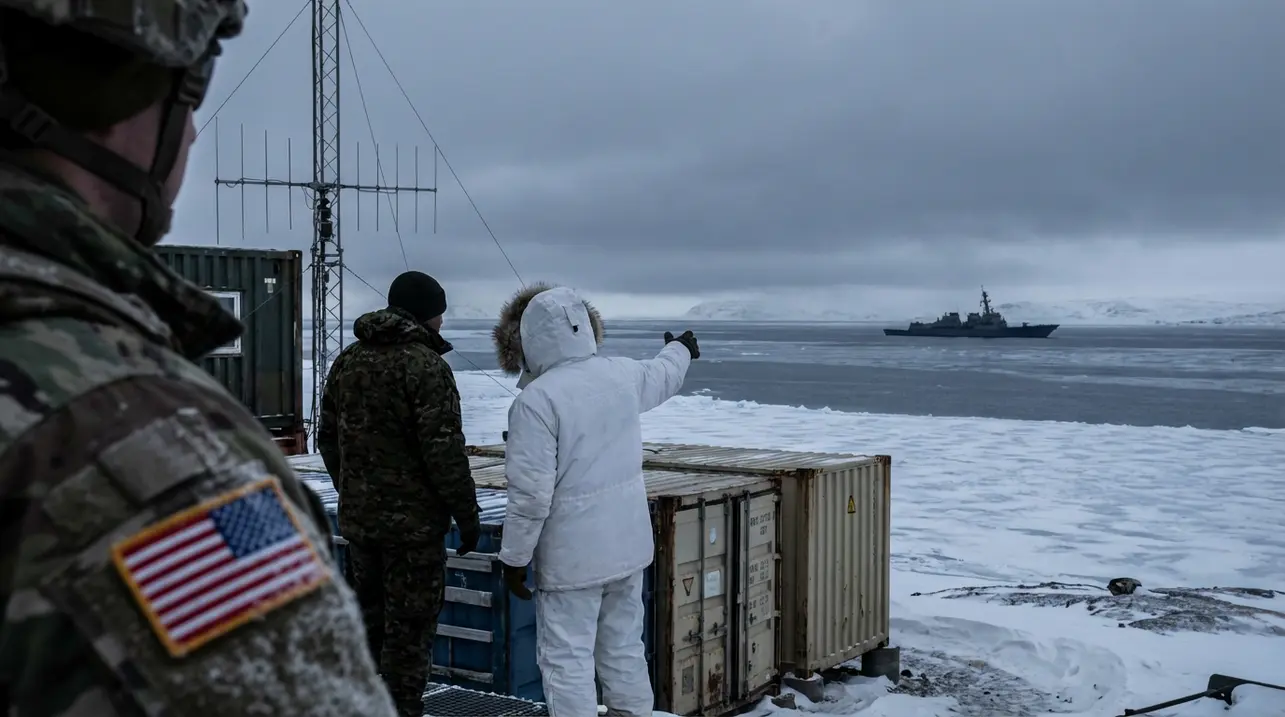
The blunt warning from Danish Prime Minister Mette Frederiksen, that a hypothetical U. S.annexation of Greenland would spell the immediate end of the NATO alliance, is not merely a diplomatic soundbite. It is a stark, historically-grounded statement that cuts to the very heart of the post-war transatlantic order, revealing how the Trump administration’s past musings on purchasing the autonomous Danish territory continue to cast a long and destabilizing shadow.This resurgence of anxiety, explicitly linked by observers to Washington’s recent military posturing in Venezuela, underscores a dangerous new calculus where great-power competition over critical resources is beginning to fray the edges of foundational security pacts. Greenland, an island of immense strategic significance straddling the Arctic routes between North America and Europe, is estimated to hold some of the planet's largest untapped deposits of rare earth elements—minerals essential for everything from smartphones and electric vehicles to advanced fighter jets and missile guidance systems.For a U. S.increasingly wary of Chinese dominance in the global rare earth supply chain, the geopolitical allure of Greenland is undeniable, a fact not lost on the previous administration when then-President Trump openly discussed the idea of a purchase, an overture met with bewilderment and offense in Copenhagen and Nuuk. The Prime Minister’s statement, therefore, must be read as a pre-emptive and severe line in the ice: the alliance forged in the crucible of the Cold War cannot survive a member state’s coercive land-grab against another.It evokes the fundamental NATO principle of sovereign equality among allies, a principle that would be rendered meaningless by such an act of realpolitik. Historically, one might draw a parallel to the 1956 Suez Crisis, where American pressure on its British and French allies to withdraw from Egypt marked a pivotal moment of intra-alliance coercion and the definitive end of European colonial pretensions under the U.S. security umbrella; an annexation would be an order of magnitude more severe, a unilateral territorial absorption rather than a political ultimatum.Analysts suggest Frederiksen’s warning is aimed as much at Washington as at her domestic audience and the government in Greenland itself, reinforcing Denmark’s role as a steadfast protector of its territory’s autonomy while signaling to any future U. S.administration that this path is irrevocably closed. The consequences of ignoring such a warning are almost too profound to contemplate.NATO’s credibility, already strained by debates over burden-sharing and strategic direction, would evaporate overnight. The alliance’s Article 5 collective defense guarantee, the cornerstone of European security for seventy-five years, would become a hollow document if the very concept of mutual respect for territorial integrity was shattered by its leading power.It would likely trigger a rapid and chaotic realignment, with European capitals forced to seek alternative security architectures, potentially accelerating EU defense integration while driving some nations closer to other global powers. For the United States, the short-term strategic gain of securing mineral resources would be catastrophically offset by the self-inflicted destruction of its most powerful alliance system, isolating it diplomatically and ceding immense geopolitical ground to rivals like China and Russia in the Arctic and beyond. The Greenland question, therefore, transcends real estate; it is a litmus test for whether the Western alliance can navigate the treacherous waters of 21st-century resource competition without succumbing to the atavistic impulses of empire that it was originally built to contain.
#lead focus news
#Greenland
#Denmark
#US foreign policy
#rare earth minerals
#NATO
#territorial annexation
#Venezuela intervention