

Otherreal estateConstruction and Development
Hong Kong's New Industrial Park Focuses on Smart Manufacturing and Chinese Medicine
KE
Kevin White
5 months ago7 min read
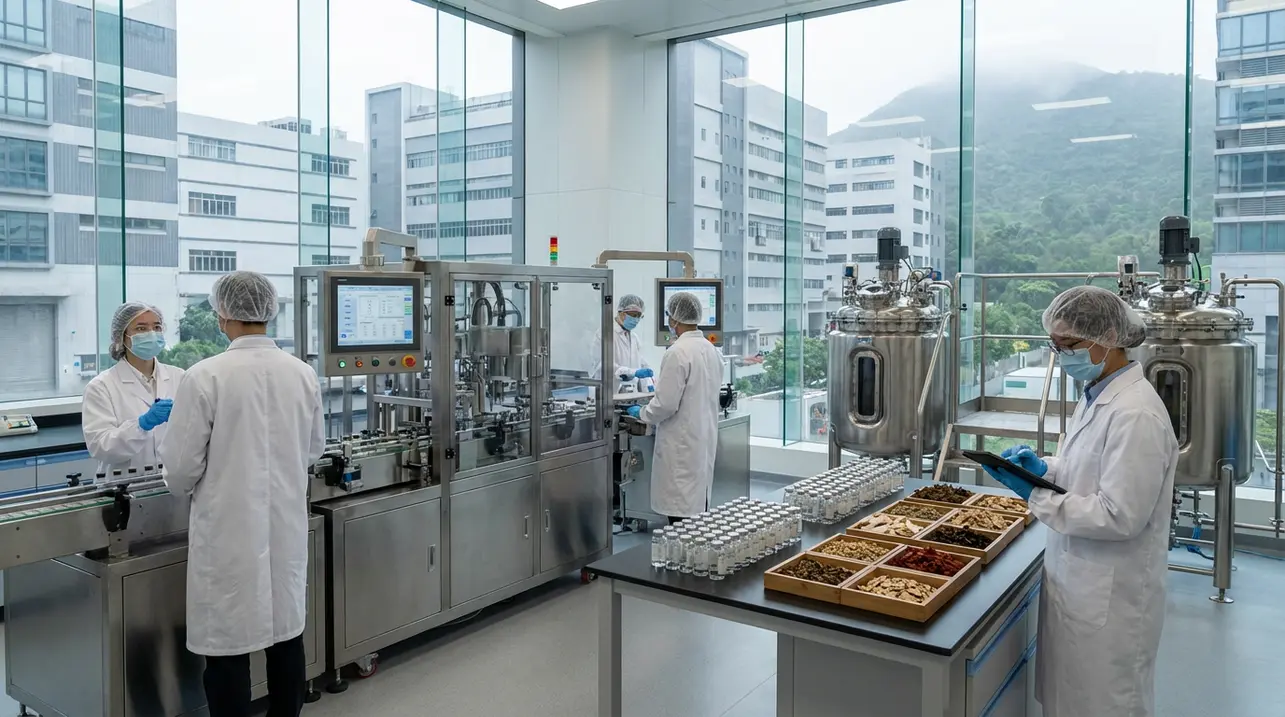
Hong Kong is placing a calculated bet on its scientific future with the strategic development of the Hung Shui Kiu industrial park, a move that signals a deliberate pivot towards high-value, innovation-driven sectors. While the nearby San Tin Technopole grabs headlines with its broader tech ambitions, Hung Shui Kiu is carving out a distinct and fascinating niche by fusing advanced smart manufacturing with the ancient, yet rapidly modernizing, field of proprietary Chinese medicine (pCm).This isn't just about building factories; it's about creating a bio-industrial ecosystem where robotic precision meets herbal alchemy, where AI-driven quality control systems monitor the extraction of centuries-old botanical compounds. The development authorities are leveraging the park's location advantage, but the real leverage lies in its conceptual fusion—a recognition that the next frontier of global biotech may well be synthesized from a deep understanding of traditional pharmacopeia and cutting-edge production tech.The government's notable reluctance to set firm KPIs for the operating company, as mentioned by a top official this Tuesday, is intriguing. It suggests an understanding that true innovation in such a hybrid field cannot be neatly quartered into financial metrics from day one.The expectation of eventual financial independence and accountability is a given, but the initial phase appears to be granted a runway for R&D and ecosystem building, a luxury rarely afforded in purely profit-driven industrial projects. This approach mirrors global biotech hubs, where foundational research and public-private symbiosis are critical before commercial scale is achieved.The focus on pCm is particularly astute. This isn't about loose herbs in a market stall; proprietary Chinese medicine refers to standardized, patented formulations derived from traditional knowledge, often in modern dosage forms like capsules or injectables.It's a sector poised for explosive growth, driven by rising global demand for integrative health and backed by mainland China's substantial national strategy to modernize and internationalize TCM. By positioning Hung Shui Kiu as a hub for its *advanced manufacturing*, Hong Kong isn't just making medicine; it's aiming to set the global gold standard for its production, leveraging its reputation for quality control and intellectual property protection.The potential here is vast. Imagine bioreactors cultivating genetically optimized versions of rare medicinal fungi, or nanotechnology being used to enhance the bioavailability of classic formulas.The park could become a testbed for how AI and IoT can ensure batch-to-batch consistency in complex natural products—a historical challenge for herbal medicine. Furthermore, this move positions Hong Kong as a crucial bridge, applying its world-class regulatory and financial frameworks to a domain deeply rooted in Chinese science and culture, thereby facilitating its export to skeptical but curious Western markets.However, the challenges are as complex as the formulations themselves. Scaling traditional medicine requires navigating a thorny thicket of international regulatory landscapes, from the FDA's botanical drug pathway to EU herbal monographs.There's also the perennial issue of sustainable sourcing for raw materials and the critical need for robust, clinical-trial-level evidence to support health claims beyond traditional use. The success of Hung Shui Kiu will depend not just on engineers and robots, but on attracting a unique blend of talent: data scientists who understand Ginseng, traditional pharmacologists who code, and regulatory experts versed in both Confucian principles and FDA submissions.In the grand narrative of Hong Kong's economic evolution, from trading port to financial nexus, this represents a bold new chapter: becoming a bio-intellectual hub. It’s a gamble that the future of medicine is integrative, and that Hong Kong’s unique confluence of East and West, tradition and innovation, can build the precision tools to manufacture it.
#Hong Kong
#Hung Shui Kiu
#industrial park
#smart manufacturing
#Chinese medicine
#infrastructure
#development
#featured
Stay Informed. Act Smarter.
Get weekly highlights, major headlines, and expert insights — then put your knowledge to work in our live prediction markets.
Related News






2 months ago
Outpoll Weekly Recap: Other (April 20 – 26, 2026)

2 months ago
Outpoll Weekly Recap: Other (April 13 – 19, 2026)

2 months ago
Why ‘others have it harder’ is a form of empathy bypassing

2 months ago
Outpoll Weekly Recap: Other (March 30 – April 5, 2026)

2 months ago
Outpoll Weekly Recap: Other (March 23 – 29, 2026)

3 months ago
Outpoll Weekly Recap: Other (March 16 – 22, 2026)

3 months ago
Washington State Passes Millionaires Tax as Model for Others

3 months ago
Outpoll Weekly Recap: Other (March 9 – 15, 2026)
3 months ago
Telura Emerges with €4M Seed to De-Risk Deep Geothermal, as Europe's Subsurface Energy Race Intensifies

3 months ago
Outpoll Weekly Recap: Other (March 2 – 8, 2026)
Comments
It's quiet here...Start the conversation by leaving the first comment.