Otherlaw & courtsCourt Decisions
Chinese Officer Earns Praise for Mediating Children's Dispute Seriously
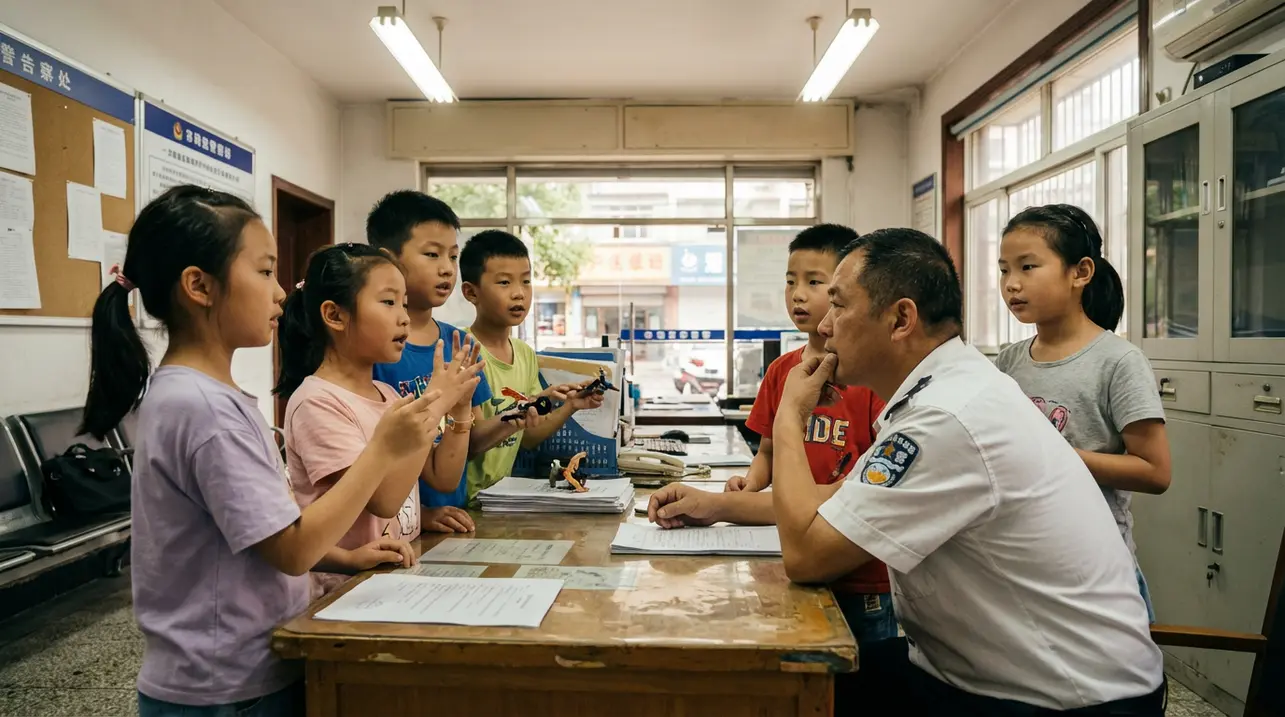
It was a scene that could melt the iciest of hearts, a moment of pure, unfiltered humanity that unfolded not on a grand stage, but on the worn linoleum of a local police station in Zhejiang province. On the evening of December 19, the usual rhythm of paperwork and patrols was interrupted by the earnest, shuffling arrival of seven primary school children, a tiny delegation seeking an audience with the law.They had been playing nearby, the report tells us, when a minor dispute—the kind of ephemeral quarrel over rules or turns that defines childhood—escalated just enough to feel monumental in their young world. The specifics of their argument weren’t disclosed, and perhaps that’s the point; the substance was less important than the profound need for a fair arbiter, for someone to listen and make things right.One of them, summoning a term of respect woven into the fabric of Chinese society, addressed the officer as “Uncle Police,” a title that bridges the gap between authority and family, and made their plea. This simple act, captured and shared across Chinese social media, resonated not as a trivial anecdote but as a powerful vignette about trust, community, and the often-overlooked emotional labor of public service.It speaks volumes about the relationship a society fosters between its citizens and its protectors when children feel not intimidation, but instinctive safety in walking into a police station to resolve a playground disagreement. We can trace this instinct back through layers of social conditioning and cultural narrative; in many communities, the figure of the police officer is introduced to children as a helper, a friendly “uncle” or “auntie” in uniform, a concept actively reinforced through school programs and community outreach designed to demystify law enforcement and build foundational trust from the earliest age.Contrast this with environments where police are primarily associated with danger or punishment, and the psychological distance those children might feel is vast. The officer’s decision to treat the mediation with solemn seriousness, rather than dismissive amusement, validated the children’s concerns and taught them a subtle lesson: your voice matters, the social contract includes you, and justice—even in matters small—has a process.Sociologists might point to this as a micro-level example of procedural justice in action, where the fairness of the process itself builds legitimacy for institutions. The viral spread of the story itself is another layer of modern folklore; in a digital landscape often saturated with conflict and negativity, this snippet of wholesome resolution became a shared emotional touchstone, a collective ‘aww’ that momentarily unified netizens.It prompts us to consider what we valorize and share, and why. Beyond the charm, there’s a quiet commentary on the multifaceted role of police in community-oriented models, where crisis response and crime fighting exist alongside this kind of social glue work that prevents minor fissures from widening.
#featured
#China
#police
#mediation
#children
#social media
#community service
#Zhejiang