FinancemarketsMarket Indices
Nasdaq, home of Coinbase, Strategy stocks, seeks 23-hour trading amid investor demand
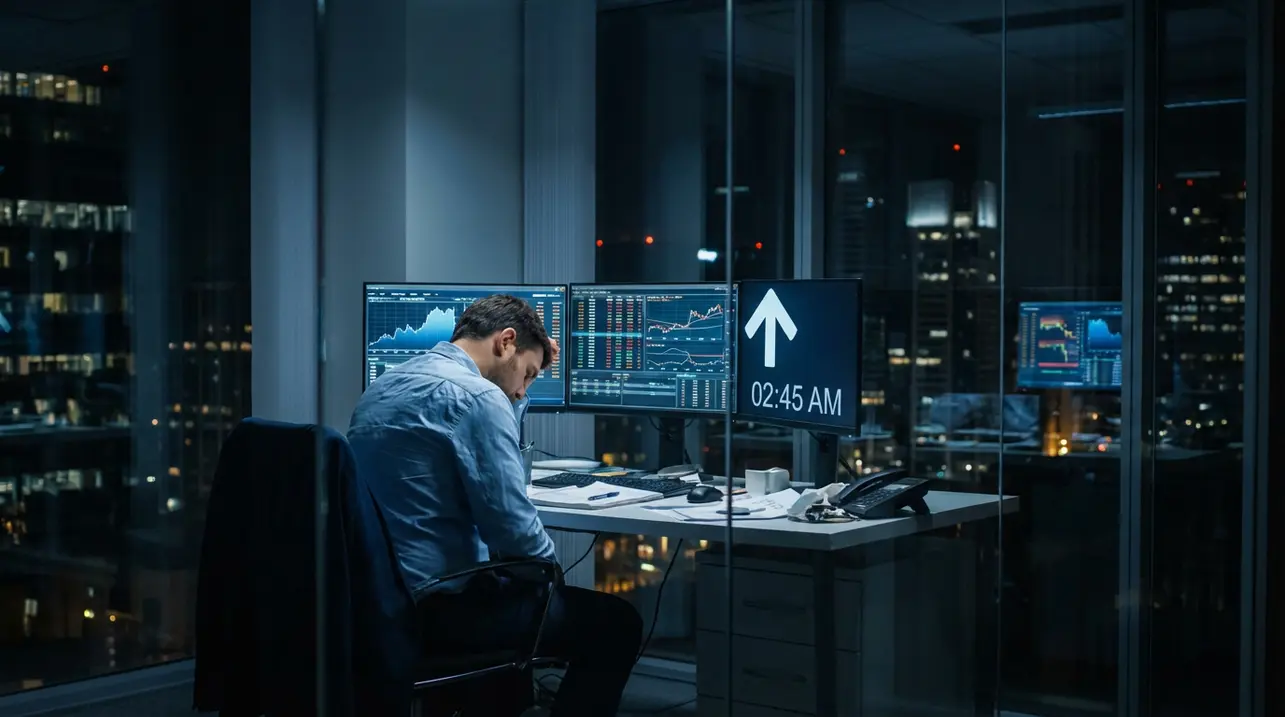
The Nasdaq, a titan of traditional finance and the home to giants like Coinbase and Strategy stocks, is making a bold play for the future by seeking regulatory approval for 24/7 trading, a move that would see its markets operate for a staggering 23 hours a day. This isn't just a minor operational tweak; it's a seismic shift that acknowledges the relentless, borderless nature of modern capital, a rhythm long-established by the crypto markets that now call the exchange home.For years, the chasm between TradFi's 9-to-5 mentality and DeFi's never-sleeping protocol has been a point of contention, with crypto natives viewing market closures as archaic inefficiencies. Nasdaq's proposal, therefore, feels less like an innovation and more like a necessary capitulation to investor demand for constant access, a demand forged in the fires of Bitcoin's midnight rallies and the global, decentralized nature of digital asset trading.The implications are profound, stretching far beyond mere convenience. From a regulatory standpoint, the move pressures the SEC and other watchdogs to evolve in real-time, challenging frameworks built for a slower era.Operationally, it will demand new levels of resilience from clearinghouses, data feeds, and the armies of analysts who will need to monitor global events—a geopolitical tremor in Asia, a late-night Fed speech—without the luxury of a closing bell to reset. For the companies listed, particularly volatile tech and crypto-correlated stocks, it introduces a new layer of complexity in managing news flow and investor relations in a perpetual news cycle.Yet, the most fascinating angle is the symbolic convergence this represents. Nasdaq, by embracing the round-the-clock model, is effectively tokenizing time itself, breaking down one of the last fundamental barriers between traditional equity and the digital asset ecosystem.It paves the way for a future where tokenized stocks could trade seamlessly alongside their native counterparts on blockchain-based venues, blurring the lines entirely. While skeptics will rightly point to risks like thinner overnight liquidity and increased volatility, the direction of travel is unmistakable.The market, like the internet that underpins it, abhors a vacuum. If Nasdaq doesn't provide continuous price discovery, other venues or dark pools certainly will.This initiative is a defensive play as much as an offensive one, an attempt to maintain centrality in a financial landscape that is increasingly fragmented and always-on. In the end, the quest for a 23-hour trading day is a definitive signal that the legacy system is undergoing a profound metamorphosis, integrating the lessons of crypto not just on its balance sheet with listings like Coinbase, but into its very operational DNA. The closing bell may soon become a nostalgic relic, as the market, in true digital fashion, learns to run on infinite loop.
#featured
#Nasdaq
#24-hour trading
#extended hours
#stock exchange
#market structure
#investor demand
#Coinbase