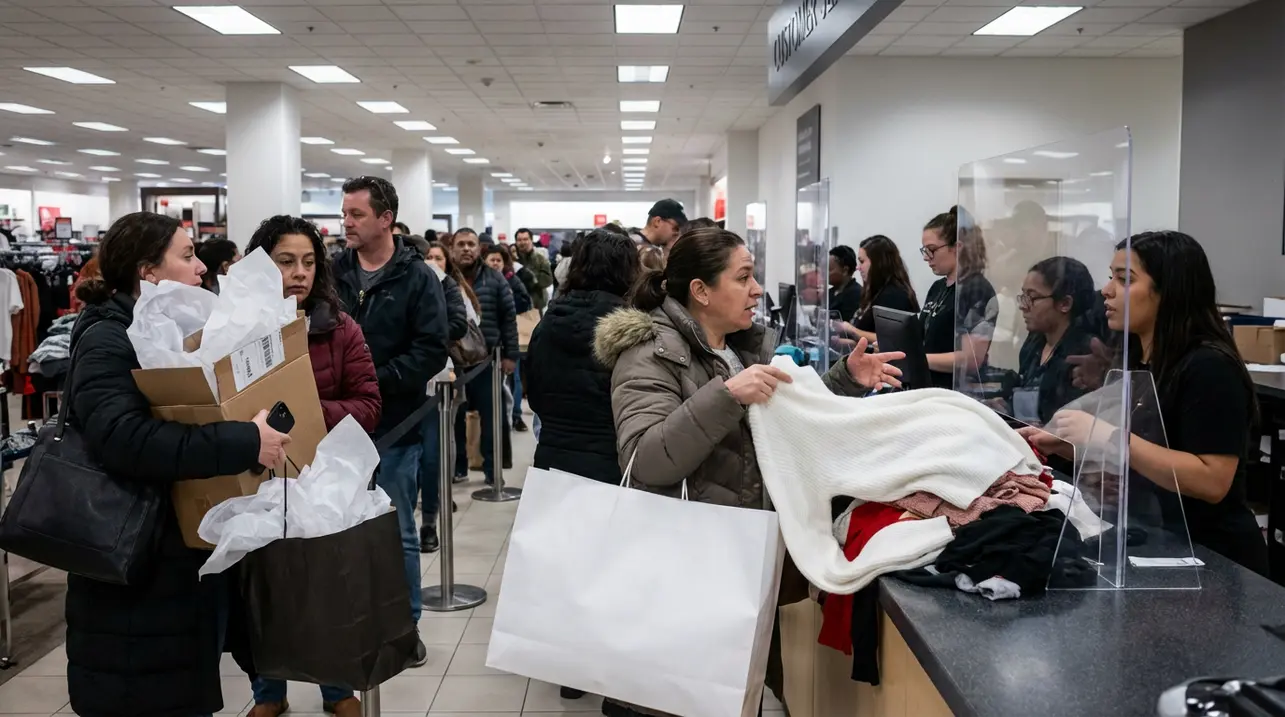
Most returned Christmas gifts and the post-holiday return surge.
The glow of Christmas morning fades, and in its place comes a different, more pragmatic tradition: the pilgrimage to the return counter. It’s a curious post-holiday ritual, where good intentions and mismatched gifts collide with the cold, hard logistics of retail.Every year, Americans send back tens of billions of dollars worth of presents, a tidal wave of unwanted sweaters, ill-fitting shoes, and well-meaning but misguided gadgets that begins its surge on December 26th. Data from firms like Adobe Analytics shows returns jump by 25% to 35% immediately after the holiday, a period that has earned the grimly efficient nickname 'Returnuary,' stretching the capacity of shipping networks and store clerks well into January.The most common culprits are predictable yet perennial. Clothing and shoes top the list—sweaters and, yes, even socks are easy to grab but notoriously difficult to get right on size, fit, or personal style.Accessories like scarves, hats, and jewelry follow close behind, often purchased in a last-minute panic only to miss the mark entirely. Electronics and gadgets round out the frequent-return categories, victims of duplication, minor defects, or simply failing to align with how people actually live their daily lives.The scale is staggering. According to returns platform Seel, roughly 20 to 25% of all retail sales are expected to be sent back in 2025, representing nearly $1 trillion in merchandise, with holiday returns specifically spiking about 16% during the November and December shopping frenzy.The average returned item, data firms estimate, sits in the $100 to $200 range, a significant chunk of change moving in reverse through the supply chain. But what happens to all this stuff? The journey of a returned gift is often a short, sad one.As Emily Hosie, founder of the open-box marketplace REBEL, explains, the reality is that most returned items are never restocked because brands lack the cost-effective infrastructure to process, sanitize, and repackage them. This logistical failure contributes to an estimated 8.4 billion pounds of returned goods—many perfectly functional—ending up in landfills annually, a hidden environmental cost of our gifting culture. The root causes, according to those in the trenches, are often simple.'The number one reason for returns is that you got the wrong size,' says Bobby Ghoshal, CEO of AI shopping platform Dupe. com.'People are really particular about how their items fit. ' He adds a poignant human note to the data, pointing out that the hassle of returns can ironically undermine the gratitude a gift is meant to inspire: 'If you're causing your daughter-in-law to run extra errands to the mall with three kids in tow to exchange a sweatshirt, she may not be as grateful as you would expect.
#retail returns
#holiday shopping
#e-commerce
#sustainability
#AI in retail
#lead focus news