FinancemacroeconomyTrade Balances
China's Clean Energy Drive Explains Its Manufacturing Dominance
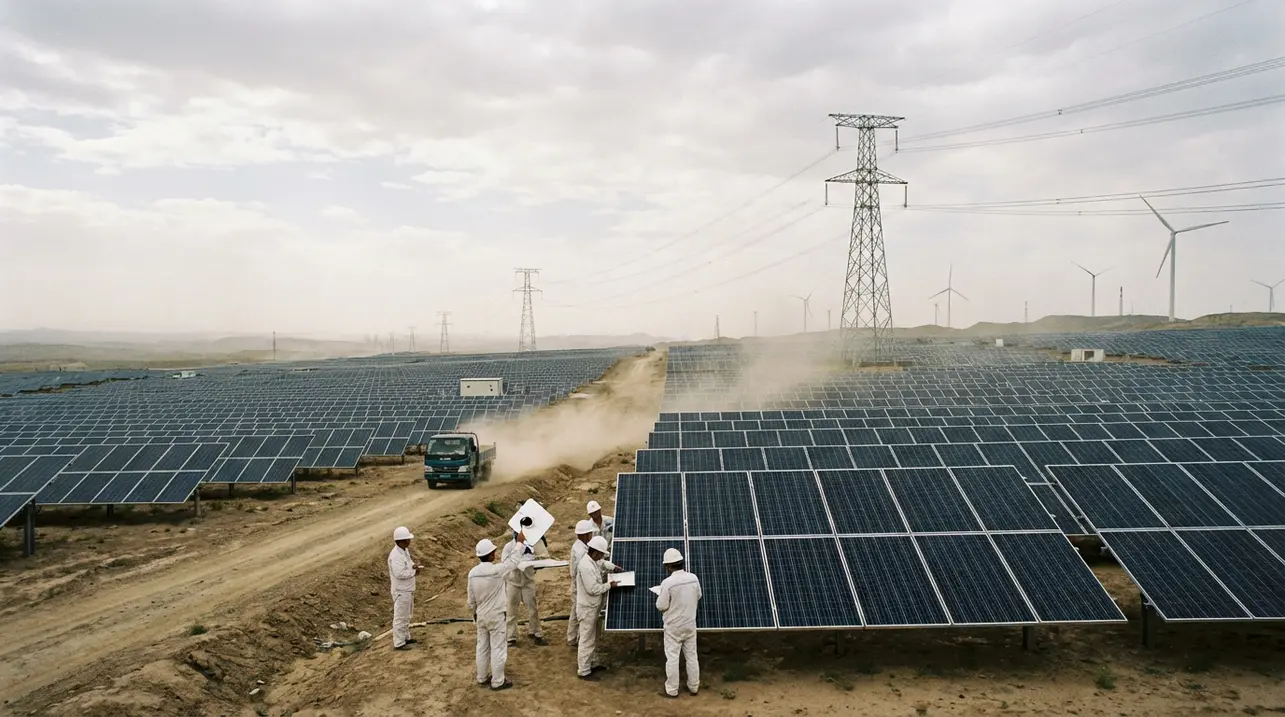
The narrative that China is plagued by manufacturing 'overcapacity' has become a dominant, and often misleading, frame in Western economic discourse, particularly when discussing its commanding lead in solar panels, batteries, and wind turbines. To understand this dominance not as a market distortion but as a logical outcome of a profound national imperative, one must look beyond factory output and into the nation's deep-seated energy and environmental strategy.For decades, China's rapid industrialization came at a devastating ecological cost, with cities shrouded in smog and rivers polluted—a reality that fueled domestic unrest and presented a clear threat to long-term economic stability and public health. This environmental crisis catalyzed a strategic pivot, transforming clean energy from a niche interest into a central pillar of national security and economic planning, backed by sustained, long-term policy support, substantial state investment in R&D, and the scaling of entire supply chains from raw material processing to final assembly.The result is a manufacturing ecosystem of unparalleled scale and integration, where innovations in battery chemistry or solar cell efficiency are rapidly tested and deployed at a volume that drives down costs globally, a phenomenon less about flooding markets and more about achieving a critical mass necessary to accelerate the global energy transition. This drive explains why China now manufactures the majority of the world's solar photovoltaic modules and dominates the production of key battery components, effectively bending the cost curve of renewables and making technologies like electric vehicles more accessible worldwide.However, this success creates significant geopolitical friction, as European and American manufacturers struggle to compete, leading to accusations of unfair subsidies and market dumping, which risk sparking a new wave of protectionist tariffs that could fragment the global green technology market and ultimately slow the fight against climate change. The irony is palpable: the nation most crucial to decarbonizing the global economy faces pushback for doing exactly that at a scale others cannot match, raising complex questions about economic fairness versus planetary necessity.From an ecological perspective, China's build-out has undeniably been a net positive for global carbon emissions, but it also concentrates technological and supply chain risk, creating vulnerabilities if trade relations sour. The path forward requires a nuanced recognition that China's clean energy 'overcapacity' is, in essence, the downstream output of its urgent clean energy *demand*, a lesson in how existential environmental pressure can forge industrial policy that reshapes the world. The real challenge for international policymakers is not to stifle this output but to foster their own competitive innovation and strategic investments, ensuring a diversified and resilient global clean energy infrastructure rather than a fractured one, because in the race against climate change, we need all the capacity we can get.
#China
#manufacturing
#overcapacity
#clean energy
#global markets
#trade
#solar panels
#batteries
#lead focus news