Entertainmenttheatre & artsArt Exhibitions
This Is the Year We Redefine Art Institutions
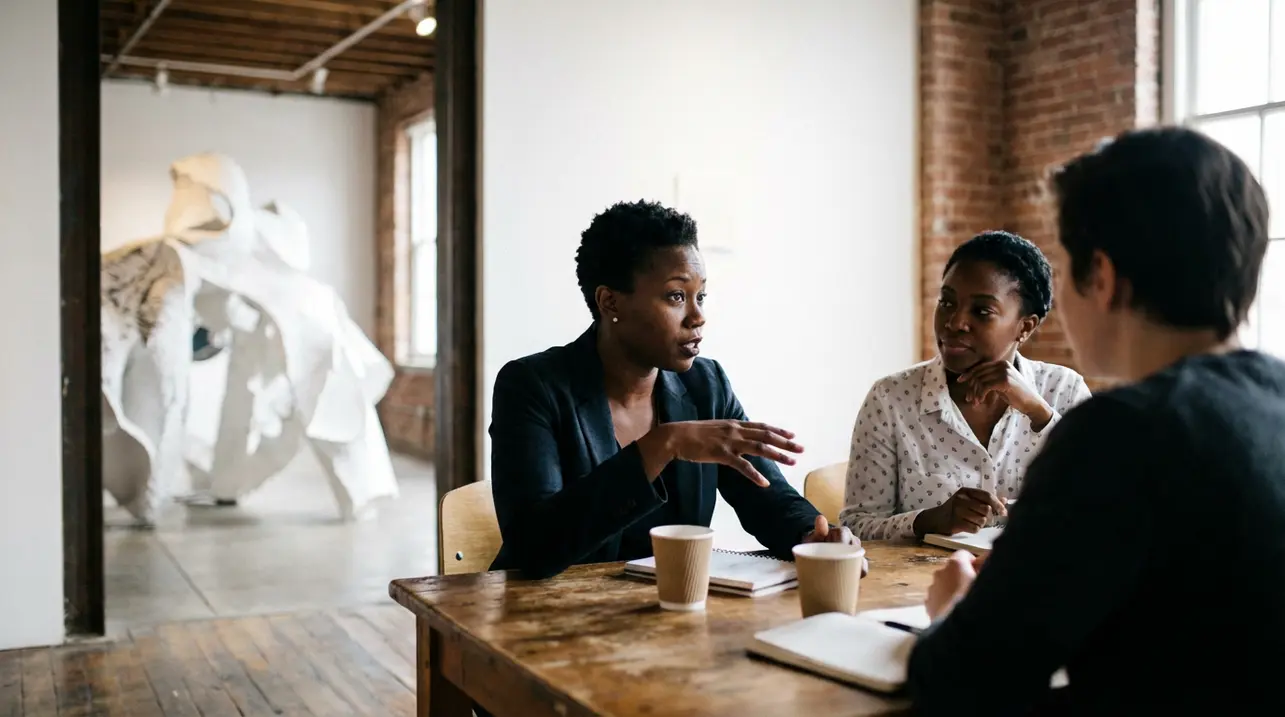
I sat down with curator Eunice Bélidor and arts administrator Dejha Carrington, not just for an interview, but for a conversation that felt more like a long-overdue therapy session for the entire art world. We were there to unpack what have become, in our shared view, reductive ideas about the role of art museums—my own preconceptions included.Bélidor, whose work often centers Black diasporic narratives within institutional spaces, leaned forward, her words measured but urgent. She described the museum not as a temple, but as a living room, a site of gathering where the art on the walls is just the starting point for a much messier, more vital conversation about community, memory, and repair.Carrington, whose expertise bridges digital innovation and cultural equity, nodded, adding that the very architecture of these institutions—both physical and bureaucratic—was designed for a different era, one of passive observation rather than active participation. 'We keep asking how to get new audiences through the door,' she said, 'without first asking if the door itself is the problem.' This resonated deeply, forcing me to confront my own complicity as a writer who has sometimes accepted the museum's traditional authority as a given. Our discussion spiraled out from there, touching on everything from the fraught history of museum acquisitions—often stories of extraction rather than collaboration—to the burgeoning models of artist-led collectives and neighborhood art spaces that operate with a fluidity major institutions can only envy.We talked about the pressure to be everything at once: an educational hub, a social justice advocate, a tourist destination, and a bastion of high culture, all while scrambling for funding in an increasingly precarious landscape. Bélidor pointed to initiatives in Montreal and Port-au-Prince where curation is a collaborative process with local communities, turning exhibitions into dialogues that continue long after the show comes down.Carrington highlighted digital collectives using blockchain not for speculative NFTs, but to create transparent, artist-governed archives that challenge traditional notions of ownership and access. The throughline was a fundamental redefinition of value: moving from a metric of footfall and endowment size to one of impact, trust, and the depth of relationships forged.This isn't about abandoning scholarship or aesthetic rigor; it's about expanding the frame to include the contexts that give art its meaning. As our conversation wound down, I was left with a sense that this year feels like a tipping point.The old model is groaning under the weight of its own contradictions, and a new generation of practitioners like Bélidor and Carrington aren't waiting for permission to build the alternatives. They are, in real time, practicing a form of institutional acupuncture, applying precise pressure to outdated structures to awaken new possibilities.
#art museums
#institutional critique
#curator interview
#arts administration
#cultural policy
#redefining roles
#editorial picks news