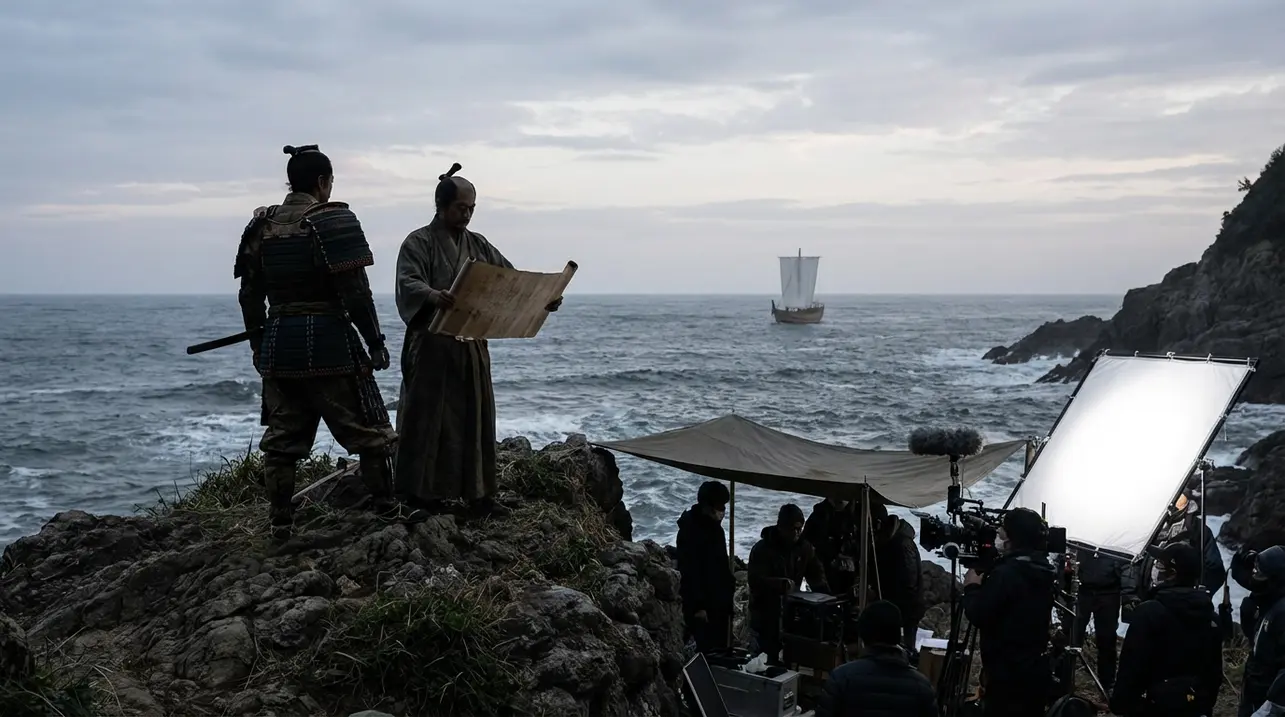
‘Shogun’ Creator Says Season 2 ‘Defies Expectations’
The announcement that 'Shogun' will return for a second season is a masterstroke of narrative audacity, a creative gamble that feels as bold and unexpected as the series' own 18 Emmy-winning first season. As a film critic who has spent years dissecting the anatomy of prestige television, I see this not merely as a renewal but as a profound statement on the evolution of the historical epic.The original miniseries, based on James Clavell's monolithic novel, was a closed loop—a tragic, beautiful, and complete arc culminating in the inevitable collision of two titanic wills, Lord Toranaga and John Blackthorne. Its perfection lay in its finality.For creators Rachel Kondo and Justin Marks to now declare that the story 'defies expectations' by continuing is to challenge the very contract they made with their audience. It’s a move that invites immediate skepticism: is this the organic unfolding of a grander vision, or a capitulation to the streaming era's insatiable hunger for franchiseable content? The pressure is immense.The first season wasn't just a hit; it was a cultural reset, marrying brutal political realism with exquisite, almost painterly composition, setting a new bar for what a television adaptation could achieve. To follow that requires more than just continuing the plot; it demands a reinvention of the show's own grammar.The challenges are legion. The source material's natural conclusion has been reached, meaning the writers' room is now charting uncharted territory, building on Clavell's historical framework but weaving new tapestries from whole cloth.This ventures into the perilous realm of fan fiction, albeit of the most lavishly funded kind. They must maintain the brutal geopolitical chess game that defined Season 1—the delicate balance of the Council of Regents, the ever-present threat of Portuguese Jesuit influence, the intricate codes of bushido—while introducing new conflicts that feel equally consequential.The risk of diminishing the impact of the first season's sacrifices and hard-won resolutions is real. Furthermore, the production must scale up without losing its intimate, tactile authenticity.The season's success will hinge on whether it can deepen our understanding of this world rather than simply widen it. Will it explore the simmering tensions within a now-consolidating Toranaga camp, where former allies become new threats? Can it give characters like the formidable Mariko—whose arc was so devastatingly complete—a legacy that feels earned rather than nostalgic? The creators' talk of 'new challenges' suggests a pivot, perhaps focusing on the monumental task of nation-building and the moral corrosion of absolute power, themes ripe for exploration.
#featured
#Shogun
#season 2
#production
#Emmy Awards
#television series
#historical drama
Stay Informed. Act Smarter.
Get weekly highlights, major headlines, and expert insights — then put your knowledge to work in our live prediction markets.
This move also reflects a broader, fascinating shift in television economics: the death of the limited series. In an industry where brand recognition is currency, even a story designed as a one-off masterpiece is too valuable to leave behind.
The true test for 'Shogun' Season 2 will be whether it can justify its own existence not through plot mechanics, but through thematic necessity. Does it have something new and essential to say about destiny, sacrifice, and the cost of empire? Or will it be a beautifully mounted but ultimately unnecessary postscript? As production begins, all eyes will be on whether Kondo, Marks, and their team can pull off this high-wire act, crafting a successor that doesn't just match its predecessor's spectacle, but expands its soul. The gamble is as dramatic as anything on screen.