EntertainmentmusicTours and Concerts
Garbage's Shirley Manson Criticizes Modern Music Industry and Beach Balls
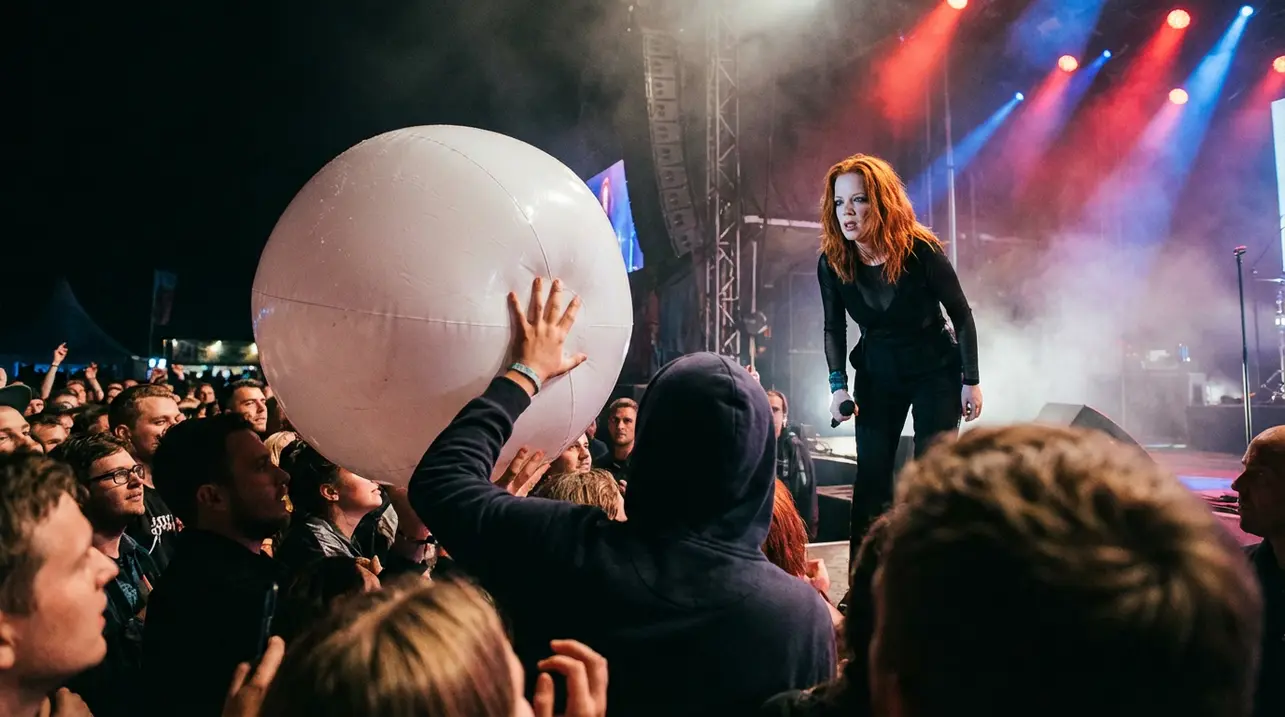
The roar of a festival crowd is a sacred thing, a raw, collective energy that artists spend their lives chasing. But at a recent performance in Melbourne, Garbage’s iconic frontwoman Shirley Manson heard a different sound cutting through the din of her band’s industrial-tinged rock: the hollow, percussive *thwonk* of a beach ball.And she’d had enough. Stopping the show, Manson launched into a blistering critique that went far beyond the inflatable nuisance itself, targeting the very culture of passive distraction it represents in the modern music industry.For Manson, a figure who has spent three decades weaponizing her voice against apathy and misogyny, the beach ball became the perfect symbol for an era where the live experience is too often reduced to a backdrop for social media content and casual disengagement. This wasn't just a rock star tantrum; it was a pointed manifesto from an artist who has always demanded that her audience actually listen.The incident, captured on fan phones and quickly viral, taps into a long-simmering tension in live music. Where does communal fun end and disrespect begin? Festival culture, especially in the sun-drenched landscapes of Australia, has long embraced a certain playful chaos.But for performers like Manson, who trade in catharsis and confrontation, the sight of a giant orb bouncing over heads during a song like ‘Stupid Girl’ or ‘Only Happy When It Rains’ isn't just annoying—it’s a fundamental disconnect. It speaks to a transactional shift in the artist-audience relationship, exacerbated by streaming and smartphone addiction, where music becomes ambient noise rather than a focused art form.Industry veterans have quietly echoed her frustrations for years. The beach ball, the endless sea of screens, the chatter during quiet moments—they all chip away at the shared vulnerability that defines a transformative concert.Manson’s outburst recalls similar moments from legends like Bob Dylan, who famously chastised a crowd for talking, or more recently, artists like Tool, who have banned phones from shows to reclaim that intensity. Her critique, however, feels uniquely urgent now.In a post-pandemic landscape where live music is both more precious and more expensive, the expectation of a deeper, more present connection has heightened. Manson is challenging a passive consumption model that the industry itself has often encouraged through VIP packages, sponsored activations, and events designed more for Instagram than for immersion.The consequences of ignoring this rift are real. When audiences treat shows as disposable entertainment, artists may retreat, delivering rote performances or bypassing the festival circuit altogether.
#Shirley Manson
#Garbage
#beach balls
#festival performance
#Melbourne
#music industry
#editorial picks news