EntertainmentmusicTours and Concerts
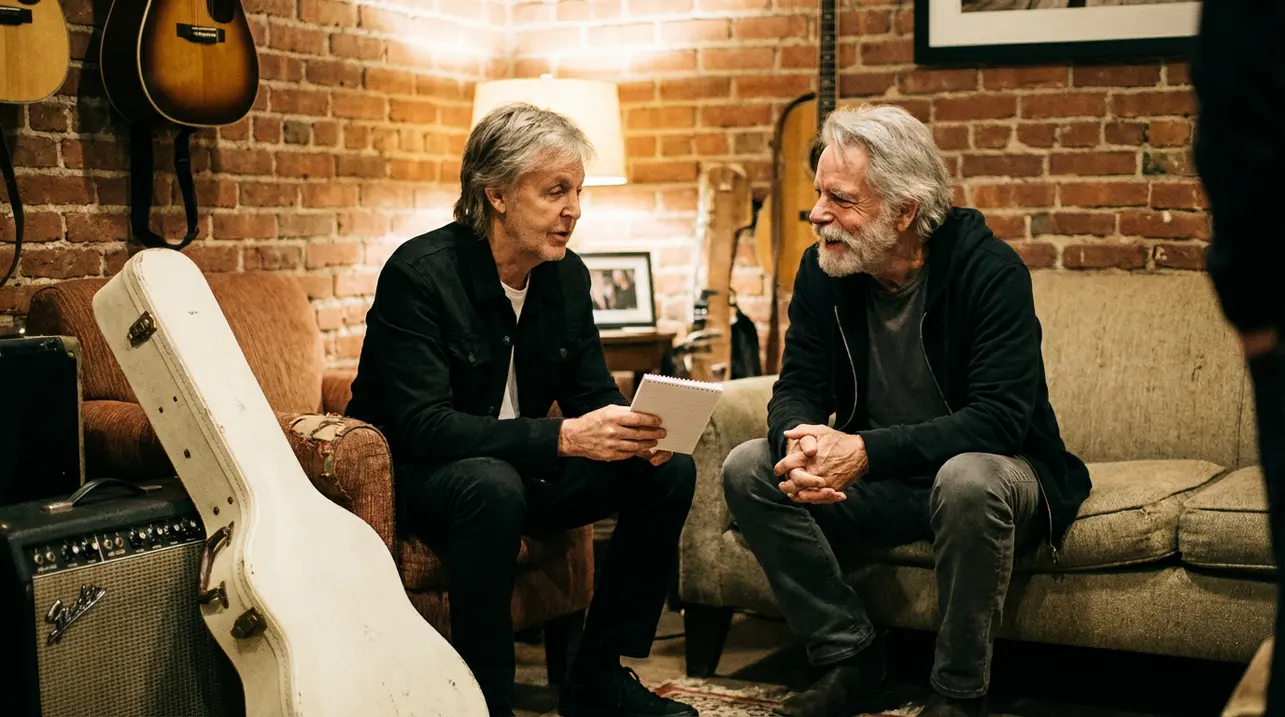
Paul McCartney pays tribute to Bob Weir as inspirational musician.
In a world of fleeting trends and manufactured pop stars, genuine musical reverence between legends still carries a profound weight. The recent tribute from Sir Paul McCartney to Grateful Dead luminary Bob Weir isn't just a nice note between icons; it’s a resonant chord struck across the entire landscape of American and British rock history, a testament to the enduring power of artistic kinship.McCartney, the melodic architect of The Beatles’ revolution, took a moment to acknowledge Weir, the rhythmic heartbeat and complex harmonic innovator of the Dead’s endless journey, writing, “His humour, friendship and musicianship inspired me and will inspire many people into the future. ” To the casual observer, this might seem like a simple, polite gesture.But within the deeper grooves of music lore, this statement is a seismic affirmation, bridging two seemingly disparate sonic universes that have, in truth, been in quiet conversation for decades. The Beatles’ studio perfectionism and pop concision famously defined one pillar of the 1960s, while the Grateful Dead’s improvisational, live-wire exploration of American roots music defined another.Yet, both were fundamentally bands, collective organisms where interplay was everything. McCartney, the consummate bassist and songwriter who understood the glue of harmony and rhythm, hears in Weir not just a guitarist, but a foundational element.Weir’s role in the Dead was uniquely supportive and subtly revolutionary—his rhythm guitar work wasn’t mere chording; it was a contrapuntal conversation, weaving through Jerry Garcia’s leads and Phil Lesh’s melodic bass lines to create a tapestry of sound. This is a language McCartney, who redefined the bass from a background instrument to a lead melodic voice, inherently understands.The inspiration McCartney cites speaks to a shared ethos: music as a living, breathing, collaborative act. Beyond the notes, the mention of “humour” and “friendship” is telling.The Dead’s enterprise was built on community, a traveling carnival of fans and family, while The Beatles’ saga, though ending in fracture, began in the tight, joking camaraderie of Liverpool and Hamburg. These are not just musicians who played together; they are artists who built worlds with their bands.For McCartney to highlight these personal qualities underscores that the legacy he honors is as much about cultural spirit as technical skill. The tribute also arrives at a poignant moment, as the torch of the 60s and 70s rock era is actively being passed.With the loss of so many key figures, the public gestures between surviving titans become historical markers. McCartney’s words canonize Weir’s influence not just on jam-band progeny, but on the very fabric of songcraft.It prompts a re-evaluation: listen to the quirky rhythmic shifts in “Friend of the Devil” or the jazzy voicings in “Estimated Prophet,” and you can hear the kind of sophisticated, genre-blending ambition that McCartney himself pursued in songs like “Blackbird” or “Helter Skelter. ” Furthermore, this nod illuminates the often-underrated cross-pollination between the British Invasion and the San Francisco sound.While scenes were geographically and stylistically distinct, they shared the same cultural oxygen. The Dead covered “Hey Jude” in their live sets; The Beatles’ embrace of psychedelia on “Revolver” and “Sgt.Pepper” ran parallel to the Acid Tests. McCartney’s inspiration from Weir suggests this influence was not a one-way street but a mutual recognition among masters.In essence, McCartney’s brief statement is a masterclass in legacy. It moves beyond the typical hall-of-fame platitude and zeroes in on the specific alchemy—the musicianship, the camaraderie, the wit—that makes a band truly immortal. It reminds us that inspiration in rock 'n' roll isn't always about the screaming fans or the chart positions; sometimes, it’s in the quiet respect between two players who, from different stages, understood the same profound truth: that the music never stops, and its future inspiration is secured in the bonds forged in its creation.
#Paul McCartney
#Bob Weir
#Grateful Dead
#tribute
#musicianship
#featured