Entertainmenttheatre & artsArt Exhibitions
Katherine Bradford's Moonlit Visions and other art reviews.
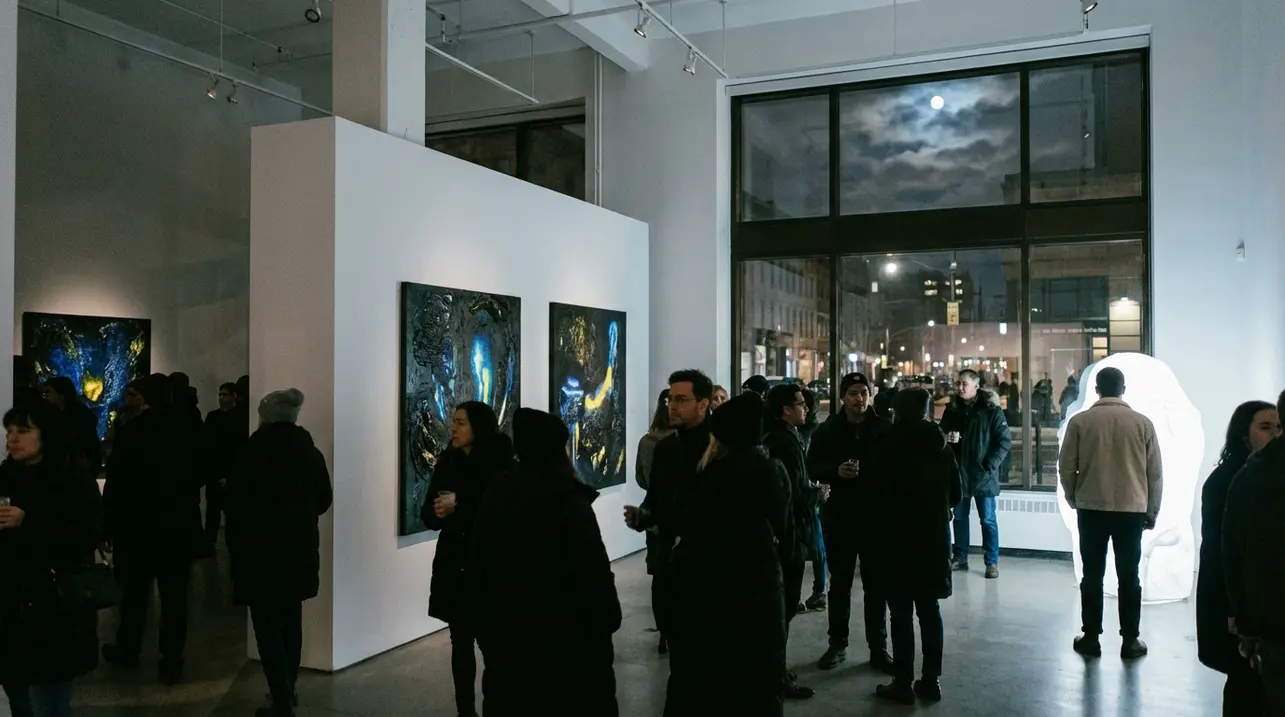
In the hushed, reverential spaces of the gallery world, a quiet revolution is often more deafening than any opening night clamor. This week’s artistic dispatches—spanning from Katherine Bradford’s introspective canvases to the seismic institutional critiques of Theaster Gates and Pyaari Azaadi—paint a portrait of a cultural moment at a profound crossroads.Bradford’s ‘Moonlit Visions,’ which serve as our titular anchor, offer a perfect entry point. Her work, often populated by solitary, luminous swimmers and enigmatic figures adrift in cosmic seas, is less about narrative and more about the psychology of color and form.It’s a deeply personal lexicon, where a wash of cerulean or a slash of phosphorescent yellow doesn’t just depict light but embodies a state of being: contemplative, vulnerable, and yearning. To view a Bradford is to be granted access to a private, nocturnal meditation, a quality that has seen her late-career renaissance celebrated not as a trend but as the long-overdue recognition of a painter who has quietly honed a unique visual language for decades, operating outside the frenetic cycles of art market hype.This makes the contrast with Theaster Gates’s latest intervention all the more striking. Gates, the Chicago-based social practice architect, doesn’t just make objects for galleries; he weaponizes them.His current exhibition is less a display of artifacts and more a forensic audit of power. By incorporating materials literally salvaged from demolished public housing projects or dormant bank archives into his sculptures and installations, Gates forces the white cube to confront the very histories of racial and economic dispossession it often aestheticizes from a safe distance.His work is a charging station, transforming cultural capital into tangible community investment, and in doing so, it holds a mirror up to the entire art-industrial complex, questioning who it serves and what it preserves. It’s in this charged atmosphere that the radical orbit of artist Pyaari Azaadi gains its formidable gravity.Azaadi’s practice—a blistering fusion of digital media, performance, and text that dismantles colonial and patriarchal frameworks—is the antithesis of silent contemplation. It is a loud, urgent, and necessary noise.Operating through a diaspora consciousness, their work creates what scholar Gayatri Gopinath might term a ‘queer regionality,’ forging connections across borders of identity and nation that defy simple categorization. To engage with Azaadi’s project is to understand that the revolution will not only be televised but will be memed, streamed, and performed in a defiant idiom that legacy institutions often struggle to comprehend, let alone curate.
#featured
#Katherine Bradford
#Theaster Gates
#Pyaari Azaadi
#contemporary art
#exhibition
#art review
#curatorial criticism
#visual arts