Hut 8’s AI data center deal is bigger than meets the eye: Benchmark lifts price target to $85
CH
11 hours ago7 min read
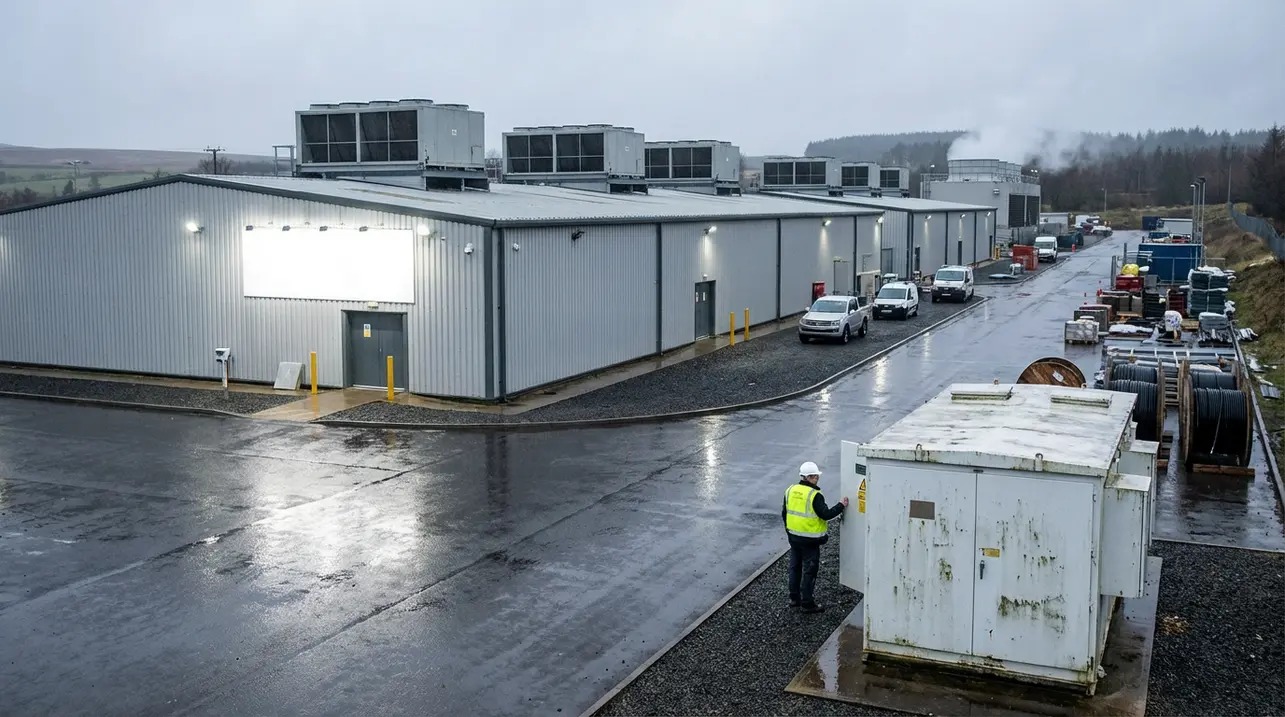
The recent announcement that Hut 8 has inked a major AI data center deal is one of those stories where the headline only scratches the surface. Sure, Benchmark raising its price target to $85 is a significant vote of confidence, but the real narrative here is about a fundamental and accelerating convergence between the worlds of traditional finance, crypto infrastructure, and the voracious appetite of artificial intelligence.This isn't just a bullish note on a single stock; it's a signal flare for a new industrial paradigm. To understand why, you have to look at what Hut 8 actually is.It's a legacy Bitcoin miner, a company built on the energy-intensive proof-of-work model. The crypto winter and the post-halving economics have forced every player in that space to seek diversification or face obsolescence.Hut 8's pivot into high-performance computing (HPC) and AI infrastructure is a masterclass in adaptation. They're leveraging their core competency—securing and managing massive, power-hungry computing facilities—and redirecting it toward the most capital-intensive demand wave of our time: AI training and inference.This deal, the specifics of which are still emerging, likely involves providing ready-to-go, powered, and connected data center space for a large AI cloud provider or a hyperscaler. The beauty of it is in the asset repurposing.Those mining sites, often located near cheap power sources, are being retrofitted from single-purpose machines to flexible digital power plants. It's a bridge from the decentralized, trustless world of Bitcoin to the centralized, compute-hungry engines of modern AI.From a TradFi perspective, this transforms Hut 8's investment thesis. It's no longer a pure-play on Bitcoin's price volatility, which is a hard sell for institutional portfolios.It's now a play on the secular, non-cyclical growth of AI compute, wrapped in a company with proven operational chops in extreme environments. Benchmark's target reflects a rerating of the entire business model.The financial mechanics are compelling. AI data center contracts are typically long-term, with fixed or inflation-linked pricing, providing revenue visibility that mining never could.This stabilizes cash flows and de-risks the balance sheet, allowing for more strategic investments and potentially even dividends down the line. It also opens the door to a whole new class of investors—those who want exposure to AI infrastructure but are wary of the capex-heavy, low-margin nature of pure-play data center REITs, or the volatility of chipmakers.
#featured
#Hut 8
#AI data center
#Benchmark
#price target
#bitcoin mining
#infrastructure
#stock analysis
Stay Informed. Act Smarter.
Get weekly highlights, major headlines, and expert insights — then put your knowledge to work in our live prediction markets.
Hut 8 becomes a unique hybrid. But let's talk about the broader landscape.
We're witnessing the birth of a new asset class: tokenized compute. While Hut 8's move is a traditional corporate pivot, it exists on a spectrum with more crypto-native experiments like Akash Network or Render, which aim to create decentralized markets for GPU power.
Hut 8's deal is a massive, centralized, bilateral agreement, but it validates the underlying thesis that compute is the new oil, and its distribution will be a defining business of the next decade. The regulatory angle is fascinating, too.
Bitcoin mining has been under political scrutiny for its energy use. Repurposing that infrastructure for AI, a politically favored industry, is a brilliant regulatory arbitrage.
It turns a potential liability into a strategic asset, aligning the company with national priorities around AI sovereignty and technological leadership. This isn't lost on policymakers in the US and Canada, where Hut 8 primarily operates.
Looking ahead, the consequences are multi-layered. For the crypto mining sector, expect a wave of imitators.
Companies with strong balance sheets and strategic site locations will follow suit, creating a new sub-sector of 'converted miners. ' This could tighten the supply of mining capacity, potentially benefiting Bitcoin's network security in a roundabout way.
For the AI industry, it adds a new, agile source of infrastructure at the edge, potentially alleviating some of the GPU shortage pressures. For investors, it creates a fascinating narrative stock—a bridge between two of the most disruptive technological forces of the 21st century.
The risks remain, of course. Execution is key; retrofitting facilities is complex.
They are now competing with giants like Digital Realty and Equinix, and must prove they can meet the rigorous service-level agreements of AI clients. The capital requirements for this transition are non-trivial.
But the signal is clear. Hut 8 isn't just building data centers; it's building a financial and technological bridge.
The $85 price target isn't just a number—it's a bet that the company has successfully navigated its own existential crisis and is now riding a much larger, more durable wave. In the merging currents of TradFi and DeFi, of crypto and AI, Hut 8 may have just charted a course that others will be forced to follow.