AIchips & hardwareAI Data Centers
US Intensifies Space AI Data Center Race After China's Lead
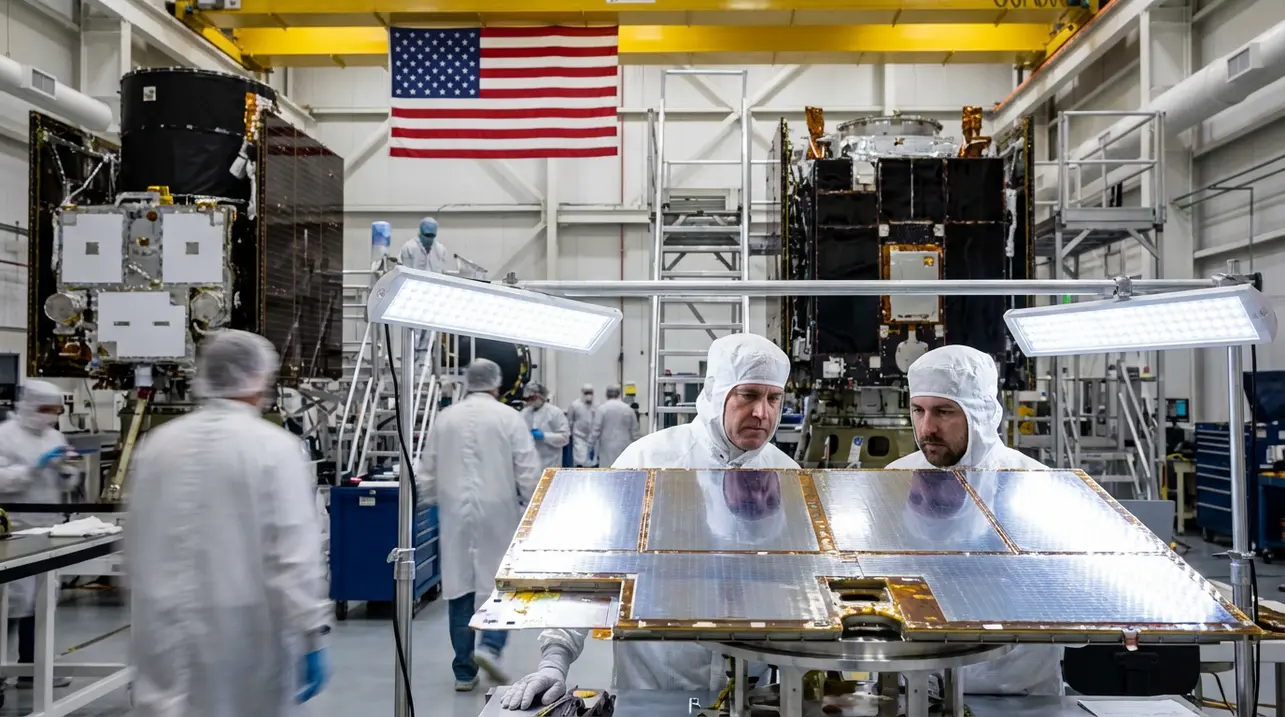
The final frontier is no longer just about exploration; it’s becoming the next critical battleground for computational supremacy, with the United States now scrambling to catch up after China has boldly seized an early lead in the audacious race to deploy AI data centers in orbit. This isn't science fiction—it's a strategic pivot with profound implications, echoing the Cold War-era space race but fueled by the 21st century's insatiable demand for processing power and data sovereignty.The catalyst for this new chapter was a stark declaration from Beijing-based computer scientist Han Yinhe, a researcher at the prestigious Institute of Computing Technology of the Chinese Academy of Sciences, who bluntly stated that China leads in both the peak performance of space-based computing and the completeness of its supporting technological framework. This confidence stems from China's concerted national initiatives, which reportedly include advanced research into radiation-hardened processors, innovative thermal management for the vacuum of space, and sophisticated laser-based communication systems to shuttle vast datasets between orbital servers and ground stations.The rationale for lofting these complex, energy-hungry facilities beyond Earth's atmosphere is compelling: space offers near-unlimited physical real estate for sprawling solar arrays to power them, a naturally frigid environment to aid in cooling, and the potential for ultra-low-latency data relay across the globe via satellite constellations, bypassing terrestrial infrastructure bottlenecks and geopolitical data chokepoints. For the U.S. , this Chinese advance represents a clarion call, triggering intensified efforts from both NASA, through partnerships with commercial entities like SpaceX and Blue Origin for launch capabilities, and the Department of Defense, which views space-based computing as a critical national security asset.The technological hurdles remain immense, from the exorbitant cost of launching and maintaining hardware in the harsh radiation environment of space to developing entirely new architectures for fault-tolerant, self-repairing orbital servers. Yet, the potential payoff is a paradigm shift: imagine a constellation of orbital data centers training next-generation AI models on global datasets without being constrained by any single nation's data laws, or providing real-time Earth observation analytics for climate science, agriculture, and disaster response on an unprecedented scale.This race also raises urgent questions about the militarization of space and the creation of a new 'space cloud' that could redefine global internet governance and economic competition. As Thomas Green might observe, this endeavor channels the spirit of Elon Musk's Mars vision but applies it to immediate, terrestrial technological dominance—it's about building the high-performance computing backbone for the next era of AI, and whoever controls that orbital infrastructure may well control the future's intellectual high ground. The stakes couldn't be higher, as we witness not just a competition for technological bragging rights, but a fundamental re-architecting of where and how humanity's most advanced thinking machines will operate.
#space data centers
#AI hardware
#US-China competition
#orbital computing
#featured