AIroboticsHumanoid Robots
My new neighbors are robots
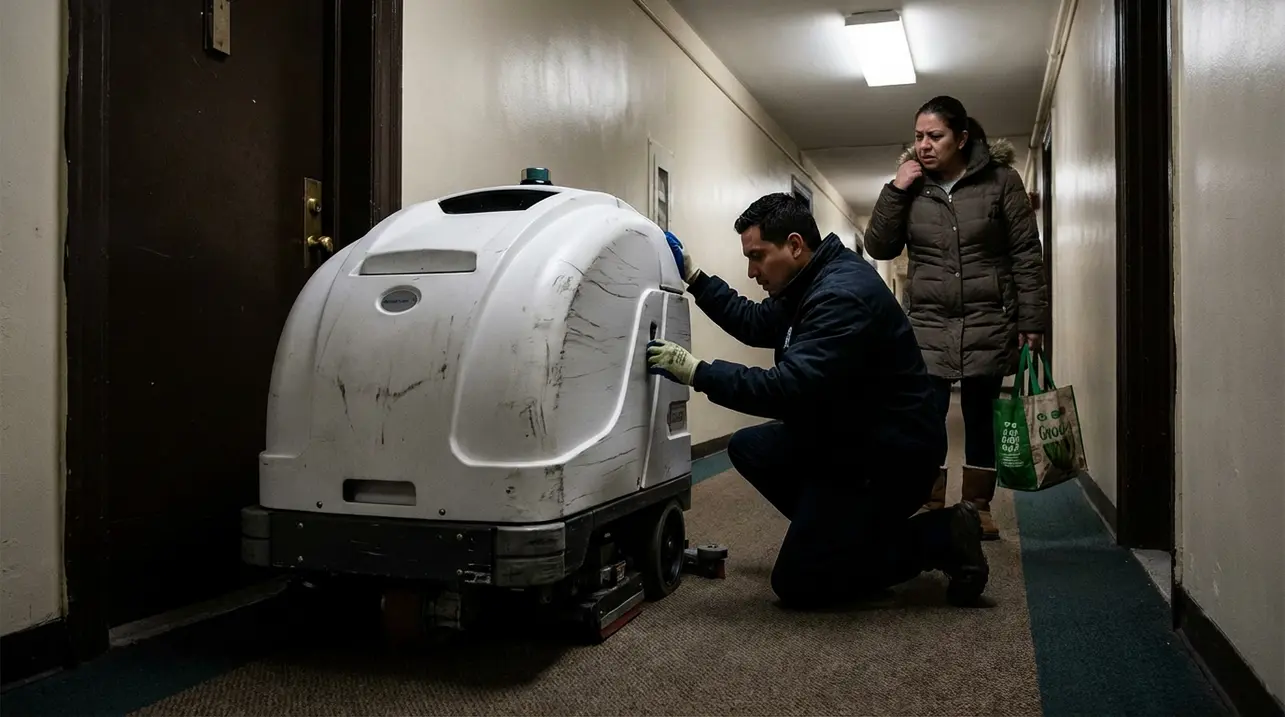
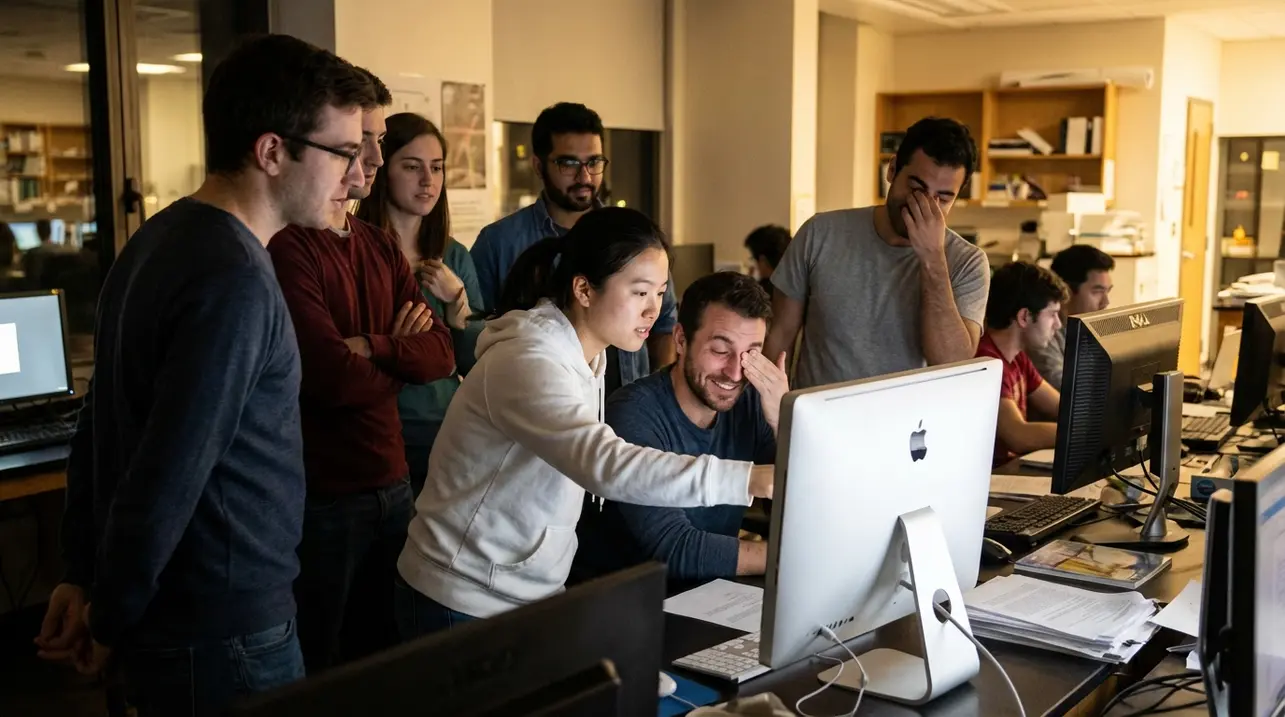
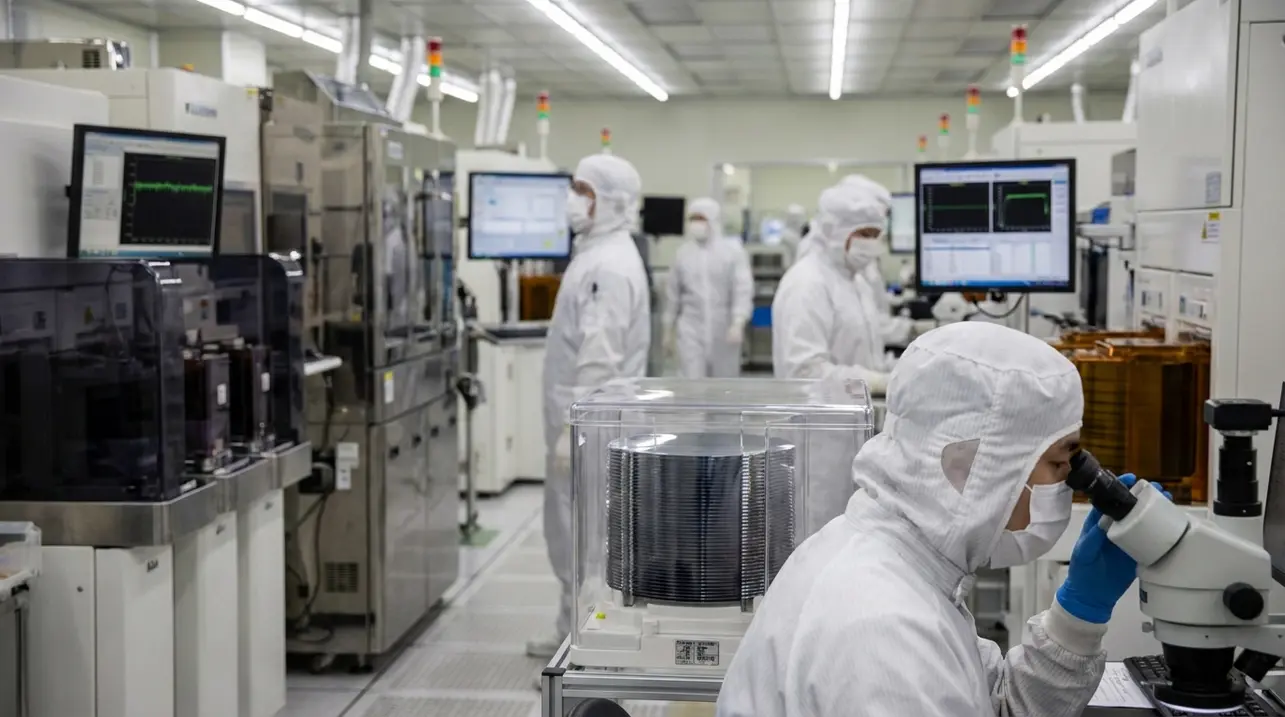
The robots in my building are multiplying, a quiet infiltration that began with a single, doghouse-sized floor cleaner. It was a clumsy, commercial-grade Roomba that talked if you got in its way—which, somehow, I always did.My landlord, thrilled with this technical marvel in our sprawling New York City block, soon upgraded its capabilities, granting it wireless elevator access. Now it rides up and down all day, a tireless janitorial specter.Pleased with this complexity, he expanded the fleet with two larger models and promised window-cleaning drones by spring. This microcosm of automation reflects a macro trend: a Barclays Research report projects humanoid robots as a potential $200 billion industry by 2035 under the most optimistic scenarios.Plummeting hardware costs and the AI boom fuel investor dreams of general-purpose robot butlers like the 1X Neo and Figure 03. Yet, as James Vincent detailed in Harper’s, the promises of robotics startups often diverge from technological reality—a gap I witnessed firsthand in MIT labs.There, I saw the Unitree G1, a nimble, backflipping robot that, as Will Knight noted for Wired, signals China’s potential to lead a hardware revolution through cheap, iterative design. However, a dancing robot is not an intelligent one.The true intelligence, the 'brain' for these physical forms, relies on advanced semiconductors—Nvidia chips made from purified sand. This grounding fact connects our futuristic aspirations to a fragile material reality.Chris Miller’s 'Chip War' outlines the geopolitical stakes: with Taiwan producing 90% of advanced chips, a conflict could halt the digital economy and cede control of the robot revolution. Back in my hallway, the robots, which I’ve had to physically move, possess a safety feature that causes them to freeze if startled—once trapping me in an elevator.These failures are essential. Technicians regularly tend to them, a reminder that the path to embodied AI is a long process of trial and error.Even Elon Musk admits Tesla’s Optimus production will start 'agonizingly slow. ' It prompts a fundamental question, one echoing Asimov’s cautionary tales: in our race to build these companions, what exactly is the rush?.
#robotics
#AI
#automation
#humanoid robots
#chips
#geopolitics
#featured