

AIchips & hardwareGoogle TPU
Google Considers Orbiting AI Data Centers for Solar Power
TH
Thomas Green
7 months ago7 min read
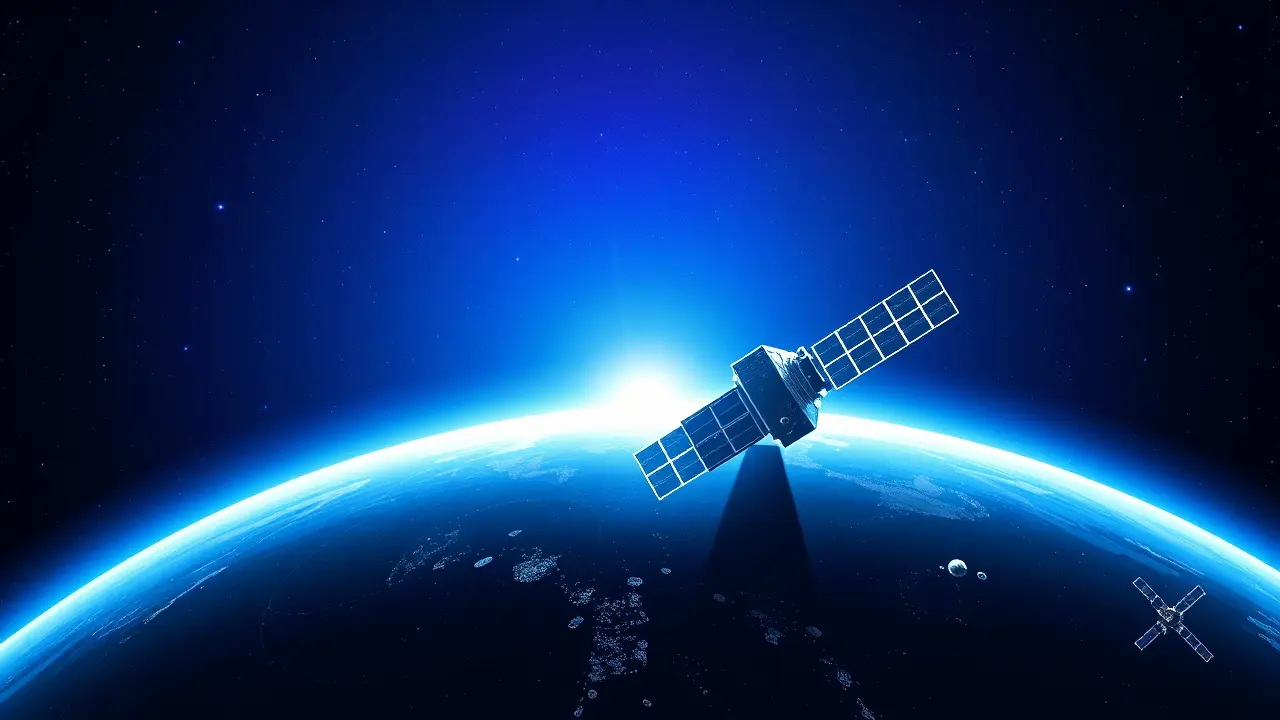
The concept of placing artificial intelligence infrastructure in orbit, an idea that might seem ripped from the pages of a science fiction novel, is being seriously explored by Google through an ambitious research initiative dubbed Project Suncatcher. This literal moonshot aims to address one of the most pressing and environmentally damaging consequences of the current AI boom: the colossal energy consumption of terrestrial data centers.The core proposition is elegantly simple yet profoundly complex—deploy solar-powered satellites equipped with Google's proprietary Tensor Processing Units (TPUs) into low Earth orbit, where they can tap into a near-limitless, 24/7 source of clean solar energy. In the vacuum of space, unencumbered by atmospheric interference or the day-night cycle, a solar panel's productivity can skyrocket to up to eight times that of its Earth-bound counterparts, a staggering efficiency gain that could fundamentally alter the calculus of AI's carbon footprint.Google senior director Travis Beals has framed this not as a fringe experiment but as a plausible future, stating that space may ultimately become the optimal environment for scaling AI computational power, a vision that echoes the cosmic ambitions of figures like Elon Musk but pivots them toward solving a terrestrial crisis. However, the path to orbital AI is fraught with monumental engineering and physics challenges that read like a checklist for a deep-space mission.The very proximity to the sun that provides the abundant energy also bathes the delicate TPU silicon in intense radiation, a hostile environment that can rapidly degrade electronic components and cause catastrophic bit flips. Google's initial radiation tolerance testing suggests its current-generation chips could potentially survive a five-year mission without permanent failure, a promising data point but one that likely requires further hardening for long-term viability.Perhaps an even more daunting hurdle is the need for ultra-high-speed, low-latency data links between these orbital data centers, requiring transmission capabilities in the realm of tens of terabits per second—a feat that demands exponentially more power over the vast distances of space compared to fiber-optic cables on Earth. Google's proposed solution is as ingenious as it is precarious: maneuvering fleets of TPU-equipped satellites into tight-knit formations, flying within mere kilometers of each other to create a distributed, in-space computing cluster.This ballet of orbital mechanics would not only facilitate the necessary data throughput but also reduce the fuel required for routine 'station keeping' maneuvers. Yet, beyond the physics and engineering, the ultimate arbiter of Project Suncatcher's fate will be cold, hard economics.Launching heavy, sensitive computing hardware into space remains prohibitively expensive, but Google's internal analysis projects a fascinating crossover point, suggesting that the cost-efficiency of orbital data centers could become 'roughly comparable' to their terrestrial equivalents by the mid-2030s, driven by declining launch costs and the rising value of uninterrupted, carbon-free power. To move from theoretical paper to tangible prototype, Google has partnered with the Earth-imaging company Planet on a 'learning mission' slated for 2027, which will launch a pair of prototype satellites to validate the performance of their hardware and models in the harsh reality of space and test the critical optical inter-satellite links for distributed machine learning tasks. This endeavor sits at a fascinating intersection of the climate crisis and the AI revolution, forcing a conversation about whether humanity's next great computational leap might require us to literally look to the skies for a sustainable solution, transforming low Earth orbit from a mere communications highway into the foundational infrastructure for our intelligent future.
#featured
#Google
#Project Suncatcher
#AI data centers
#space
#satellites
#solar power
#Tensor Processing Units
Stay Informed. Act Smarter.
Get weekly highlights, major headlines, and expert insights — then put your knowledge to work in our live prediction markets.
Related News









1 month ago
Billy Corgan and Diplo debate AI use in music industry.
1 month ago
Black Forest Labs' Self-Flow makes AI training 2.8x more efficient
1 month ago
Meta and Broadcom Extend AI Chip Partnership to 2029

2 months ago
Outpoll Weekly Recap: Entertainment (April 20 – 26, 2026)

2 months ago
Outpoll Weekly Recap: AI (April 20 – 26, 2026)
Comments
It's quiet here...Start the conversation by leaving the first comment.