

AIchips & hardwareAI Data Centers
AI Data Centers Strain Electrical Grid and Economy
OL
Oliver Scott
7 months ago7 min read
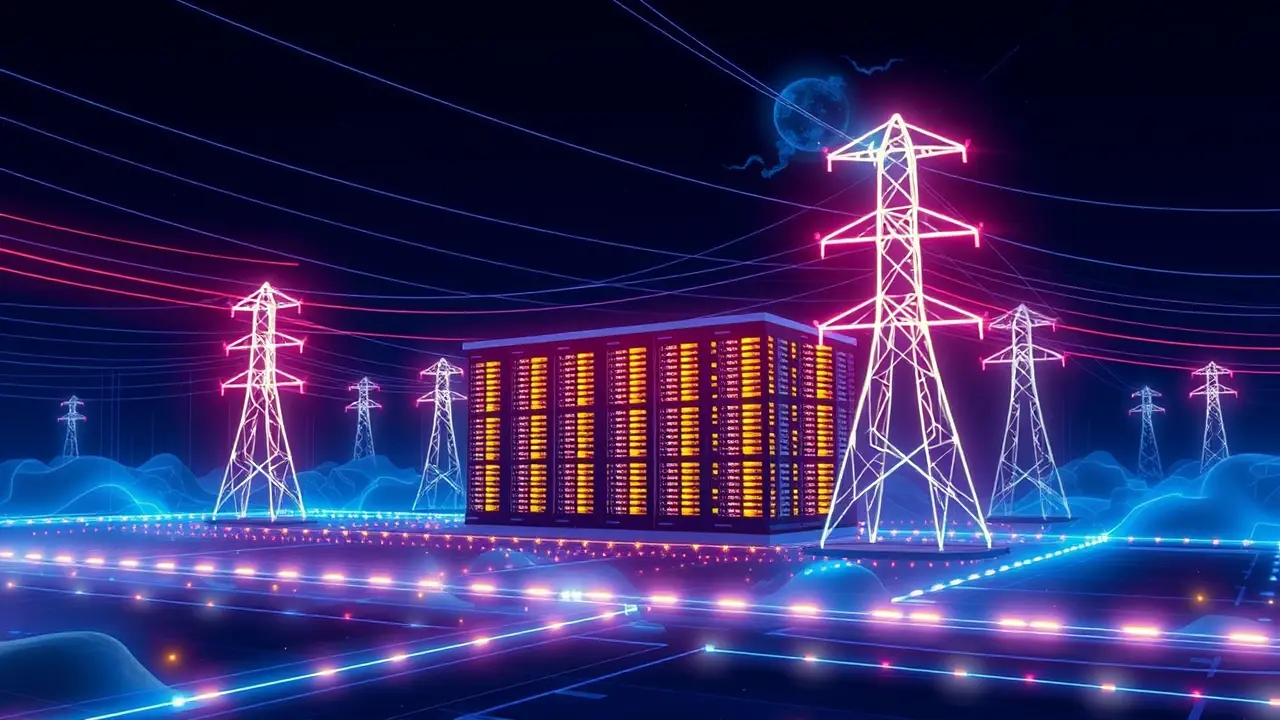
The sudden, voracious energy demand from artificial intelligence data centers is creating a systemic shock to national power grids, a risk scenario unfolding with the velocity and potential disruption of a geopolitical flashpoint. Consider the raw numbers: a single, massive AI data center campus can now consume electricity on a scale comparable to the entire city of Philadelphia, a metropolitan area of 1.6 million people. This isn't merely an industrial trend; it's a fundamental re-architecting of the American economic base, where the new factory isn't a sprawling complex of assembly lines in the Rust Belt but a humming, windowless fortress of silicon in a drought-stricken region, its economic output measured in petaflops rather than automobile units.The critical question, one that keeps energy traders and national security analysts awake at night, is one of sustainability and consequence: how long can the U. S.economy, and indeed the global digital infrastructure, ride this tiger before a supply-demand imbalance triggers a cascading failure? The bullish narrative, aggressively promoted by tech giants and their Wall Street backers, frames this as an inevitable and glorious industrial revolution, a necessary capital expenditure to secure a dominant position in the AI-driven future. They point to the immediate economic benefits—soaring stock valuations for chip manufacturers like NVIDIA, a construction boom in select localities, and the perception of unassailable technological leadership.Yet, from a risk analysis perspective, this bullish case represents a dangerously simplistic single-scenario forecast, ignoring a web of interconnected vulnerabilities. The electrical grid, particularly in key growth corridors like Northern Virginia, Texas, and the Pacific Northwest, was not designed for this scale of instantaneous, concentrated, and utterly inflexible load.These are not factories that can power down for a few hours during peak demand; an AI training cluster running for weeks on end is a thermodynamic beast that must be fed a constant, massive diet of electrons, 24/7/365. This creates a precarious dependency on baseload power, primarily natural gas in the current U.S. energy mix, just as policymakers are pushing for a transition to more intermittent renewables like wind and solar.The likely consequence, in a high-probability risk scenario, is a dual crisis: a dramatic spike in electricity costs for residential and traditional industrial consumers, effectively creating a regressive tax to subsidize the AI boom, and a potential physical capacity shortfall leading to rolling blackouts that could cripple not just the digital economy but also hospitals, water systems, and transportation networks. Historical precedents are sparse, as the scale is unprecedented, but one can look to the California energy crisis of 2000-2001, where market manipulation and supply constraints led to chaos; the current situation differs in cause but shares the same potential for severe economic and social disruption.A more ominous scenario involves the re-powering of decommissioned or aging coal-fired plants to meet the demand, a direct reversal of climate goals and a geopolitical gift to nations arguing for a slower energy transition. Expert commentary is divided but increasingly alarmed.Energy economists warn of 'demand destruction' in other sectors, while grid operators like PJM Interconnection are publicly revising their long-term load forecasts upward in a state of near-disbelief. The counter-argument, that AI itself will optimize grid management and accelerate fusion or next-generation geothermal, is a high-risk bet on technologies that remain years, if not decades, from commercial deployment.The immediate future, therefore, points toward a period of severe strain, where the very infrastructure powering our digital future becomes its most critical point of failure. The strategic implications are profound, potentially forcing a re-evaluation of national AI development priorities, the location of critical compute infrastructure, and the urgent need for a Manhattan Project-scale investment in grid modernization and advanced nuclear power. The American economy is currently propped up on a digital foundation that is starting to crackle and smoke under an electrical load it was never meant to bear, and the question is no longer if there will be a reckoning, but when, and how severe the shock will be.
#featured
#AI data centers
#energy consumption
#electrical grid
#economic impact
#infrastructure
Stay Informed. Act Smarter.
Get weekly highlights, major headlines, and expert insights — then put your knowledge to work in our live prediction markets.
Related News











1 month ago
Billy Corgan and Diplo debate AI use in music industry.

1 month ago
Black Forest Labs' Self-Flow makes AI training 2.8x more efficient

1 month ago
Meta and Broadcom Extend AI Chip Partnership to 2029

2 months ago
Outpoll Weekly Recap: Entertainment (April 20 – 26, 2026)

2 months ago
Outpoll Weekly Recap: AI (April 20 – 26, 2026)
Comments
It's quiet here...Start the conversation by leaving the first comment.